Brutalist lighting decor is about fixtures that look raw, heavy and sculptural: matte black metal, cast forms, concrete-like textures and bold geometry. The way to make it work at home is to pair those strong shapes with warm bulbs at 2700K, layered light sources and a few softer materials. That keeps the drama and drops the cold, bunker-like feel. Below you’ll find what the style means in lamps, which finishes and shapes to look for, and how to place fixtures room by room.
TL;DR
- “Brutalist” in lighting usually means raw, textured, sculptural materials rather than a strict copy of Brutalist architecture.
- Look for heavy silhouettes, blackened or aged metal, matte finishes and simple geometry. Skip ornament.
- Use warm light, 2700K and below 3000K overall, in layers: ambient, task and accent. Cool white makes raw surfaces feel institutional.
- Let one fixture lead. A single oversized pendant or sculptural floor lamp does more than five competing statements.
- Balance hard fixtures with warm accents such as brass, rattan, linen or wood so the room feels curated, not austere.
Table of Contents
- What brutalist lighting actually means
- The look: shapes, materials and finishes
- Light and shadow are the real material
- Keep it warm: color temperature and layers
- Choosing and placing brutalist lamps room by room
- How to keep brutalist decor from feeling cold
- Photographing your finished room
- Buying brutalist lighting online with confidence
- Where to find these looks at Lights & Things
- Our perspective
- FAQ
- Sources
What brutalist lighting actually means
Brutalism began as an architectural movement. The style emerged in the 1950s in the United Kingdom, where buildings showed their bare materials and structure instead of decoration. The name comes from béton brut, French for “raw concrete.” Exposed concrete, angular shapes and a mostly monochrome palette became its signature.

That is also the logic behind the lamps. Foreign Policy’s history of the style points to clear structural expression and unclad materials like steel and concrete as core principles. In lighting, designers translate that into fixtures where the material and the form do the talking.
When shoppers search for brutalist lamps, they rarely want a miniature building. They want a lamp or pendant with the same attitude: honest, weighty, a little austere, and unmistakably an object. Designer Kelly Wearstler, describing her Lotura collection, calls the uniformity of cast metal characteristic of brutalist design, with an appreciation of materiality and structure over decoration. That is a good working definition for your own shopping: structure first, ornament last.
The look: shapes, materials and finishes
You can spot brutalist lighting decor by a short list of traits. Not every fixture needs all of them, but the best ones have most.
Shapes that read as brutalist
- Blocky or stacked forms. Cubes, cylinders, slabs and intersecting planes instead of curves and scrolls.
- Visible weight. Fixtures that look heavy, even when they are not, because the proportions are thick and the edges are clean.
- Exposed construction. Visible joints, arms and mechanisms, such as an articulating floor lamp, rather than hidden hardware.
- Negative space. A lot of empty wall or floor around a single strong object.
Wearstler’s Lotura collection is a good reference point for the shape language. It is built from textural, artisanal cast metal in intersecting forms that play with weight, and it spans floor lamps, table lamps, pendants and sconces in blackened bronze, aged brass and a powdery white.
Materials and finishes
Real concrete lamps exist, but you do not need concrete to get the effect. Interior Design magazine’s roundup of brutalist-inspired fixtures shows how wide the range is: board-formed concrete paired with patinated brass controls, powder-coated die-cast aluminum, and aluminum with borosilicate glass and diffusers. The common thread is a tactile, engineered surface.
For a home, these finishes tend to work best:
| Finish | Effect in the room | Best used for |
|---|---|---|
| Matte black or blackened metal | Graphic, strong silhouette | Pendants, floor lamps, sconces |
| Concrete or stone-look | Raw texture, visual mass | Table lamps, bases, decor pieces |
| Aged or weathered brass | Warmth against hard surfaces | Table lamps, accent lighting |
| Matte white or off-white | Softer, gallery-like contrast | Small spaces, bedrooms |
| Brushed steel | Cool, industrial edge | Kitchens, dining areas |
A useful palette rule: brutalist rooms build on a grayscale base of concrete gray, charcoal, black and off-white, then add warmth through natural materials such as rust patina, wood, jute and sisal. Your lamps can carry either side of that equation.
Light and shadow are the real material
The most overlooked part of brutalist lighting decor is what the light does after it leaves the fixture. In a style built on texture and mass, shadow is part of the design.

Hide the source, show the surface
Lotura’s fixtures use concealed sources to cast a multidirectional glow that washes surfaces upward and downward. STIRworld’s write-up describes the result as soft shadows, depth and texture. You can borrow that principle at home:
- Choose fixtures where the bulb is shielded or the light bounces off the fixture body.
- Aim light across a textured wall instead of straight at it. A plaster, brick or stone surface looks richer with a side wash.
- Let a floor lamp throw light up a wall in a corner, so the ceiling and wall both pick up a gentle gradient.
Keep a little darkness
Brutalist rooms are not evenly bright. Pools of light with calmer shadow between them make the objects look more important. If every corner is lit to the same level, the room reads flat and the sculptural lamps lose their effect. Dimmers are your best tool here, and we come back to them below.
Directional light reveals form
Lamps with a clear direction, such as an adjustable arm or a shade with a narrow opening, give you control over where shadow falls. They are practical for reading and also add a graphic line to the room.
Keep it warm: color temperature and layers
The single biggest mistake with this style is cold light. Raw, gray, hard-edged materials need a warm source or the room feels like a parking structure.
Architectural Digest’s lighting guidance recommends layering ambient, task and accent light below 3000K, with 2700K as a warm residential glow, and using dimmers and diffused shades to soften harsh light. Apply that directly:
- Ambient layer. General light that fills the room softly: a large pendant with a warm bulb, or a floor lamp that bounces light off the ceiling or wall.
- Task layer. Reading and work light: an adjustable floor lamp beside a chair, a table lamp on a desk or nightstand.
- Accent layer. Light that highlights something: a small lamp on a console, a sconce washing a wall, a lit sculpture.
Bulb labels list the color temperature in Kelvin (K). Look for 2700K on the box, and put every fixture in the room on a dimmer or a dimmable bulb where you can. If you want more room-by-room guidance on layering, our living room lighting checklist and guide to 2700 to 3000K lighting walk through it step by step.
Choosing and placing brutalist lamps room by room
Living room: one dominant piece
The living room can take the boldest fixture. Choose one hero: an oversized pendant over a seating group, or a sculptural floor lamp beside the sofa. Then support it with softer table lamps at lower scale.
If you are leaning toward a floor lamp as your statement, our look at sculptural floor lamps and why sculptural lamps command attention will help you judge scale and silhouette. For the full room plan, see how to light a living room.
Dining area and kitchen island
Pendants over a table or island are where industrial and brutalist shapes shine, because the fixture is seen from every angle. As a rule of thumb, hang island pendants 30 to 36 inches above the surface so they sit in the sightline without blocking it. Choose simple geometry in matte black, brushed steel or a dark patina, and keep the number of pendants odd or evenly spaced so the line looks deliberate.

Bedroom: soften the edges
In a bedroom, go lighter. A matte white or aged brass table lamp on each nightstand keeps the sculptural note without the weight. Warm, dimmable light is non-negotiable here. For more ideas, see our luxury bedroom lighting examples.
Corners and entryways
A dark corner is the easiest place to try a brutalist piece. A slim, architectural floor lamp turns it into a feature, and the uplight adds depth to the walls. Our corner floor lamp ideas cover what works in tight or awkward spots.
A quick sizing check
- Scale to the room. A big room can hold a big fixture. In a small room, one compact sculptural lamp reads better than a large one that crowds the walls.
- Leave breathing space. The style depends on negative space. Give each statement piece clear wall or floor around it.
- Match the weight. A heavy pendant needs a visually sturdy table or sofa beneath it. A delicate setting makes a chunky fixture look misplaced.
How to keep brutalist decor from feeling cold
Strength with softness is the goal. A home does not need to feel like a bunker, and the best brutalist-inspired rooms start with one architectural anchor and balance it with softer materials.
Try these moves:
- Add warm metals. Aged or weathered brass next to black metal makes a room look collected. A piece such as our weathered brass mini accent table lamp with dimmer brings that warmth to a shelf or nightstand while giving you dimming control.
- Bring in natural texture. Rattan, linen, wool, jute and wood take the edge off stone and steel. A rattan-shaded piece like our traditional brass floor lamp with a rattan shade is a softer companion to a sharper statement fixture across the room.
- Mix, don’t match. One brutalist-style fixture surrounded by simpler, softer lamps looks curated. A full set of identical heavy pieces looks like a theme.
- Use sculpture and statues as accents. A stone-look or dark metal figure on a console, lit by a small lamp, repeats the material language without adding more fixtures.
If you are borrowing the layered-warm approach from other styles, our boho lighting ideas show how texture and warmth work together, and the same principles apply when your base is darker and more graphic.
Photographing your finished room
Once the lighting is in, you may want to capture it. Dark finishes and low, warm light are hard for a phone camera, so a few practical room photo lighting setups help you show the layers without flattening them.
Buying brutalist lighting online with confidence
The style is about specific finishes and proportions, so you want to see the details before you buy. When you shop, check:
- Dimensions. Height, width and drop, so you can compare against your ceiling, table or wall.
- Finish description. Matte black, patinated, brushed or weathered tells you how the piece will catch light.
- Bulb compatibility. Make sure the fixture takes a dimmable bulb at 2700K so you can set the mood.
- Number of light sources. Multi-arm fixtures add ambient light, single heads suit accent and task.
- Delivery and return terms. Heavy fixtures are a bigger commitment, so clear shipping and return policies matter.
Where to find these looks at Lights & Things
We built our catalog so that you can light and style a room in one visit. Floor and table lamps cover the sculptural, accent and task layers, while ceiling lighting and chandeliers handle the ambient layer overhead, and our home decor pieces, including sculptures and statues, complete the look. Shopping with us comes with free shipping thresholds, easy returns, secure checkout, price matching and financing, which makes it easier to invest in a larger statement piece. You can start from our home page and browse by room or by category.
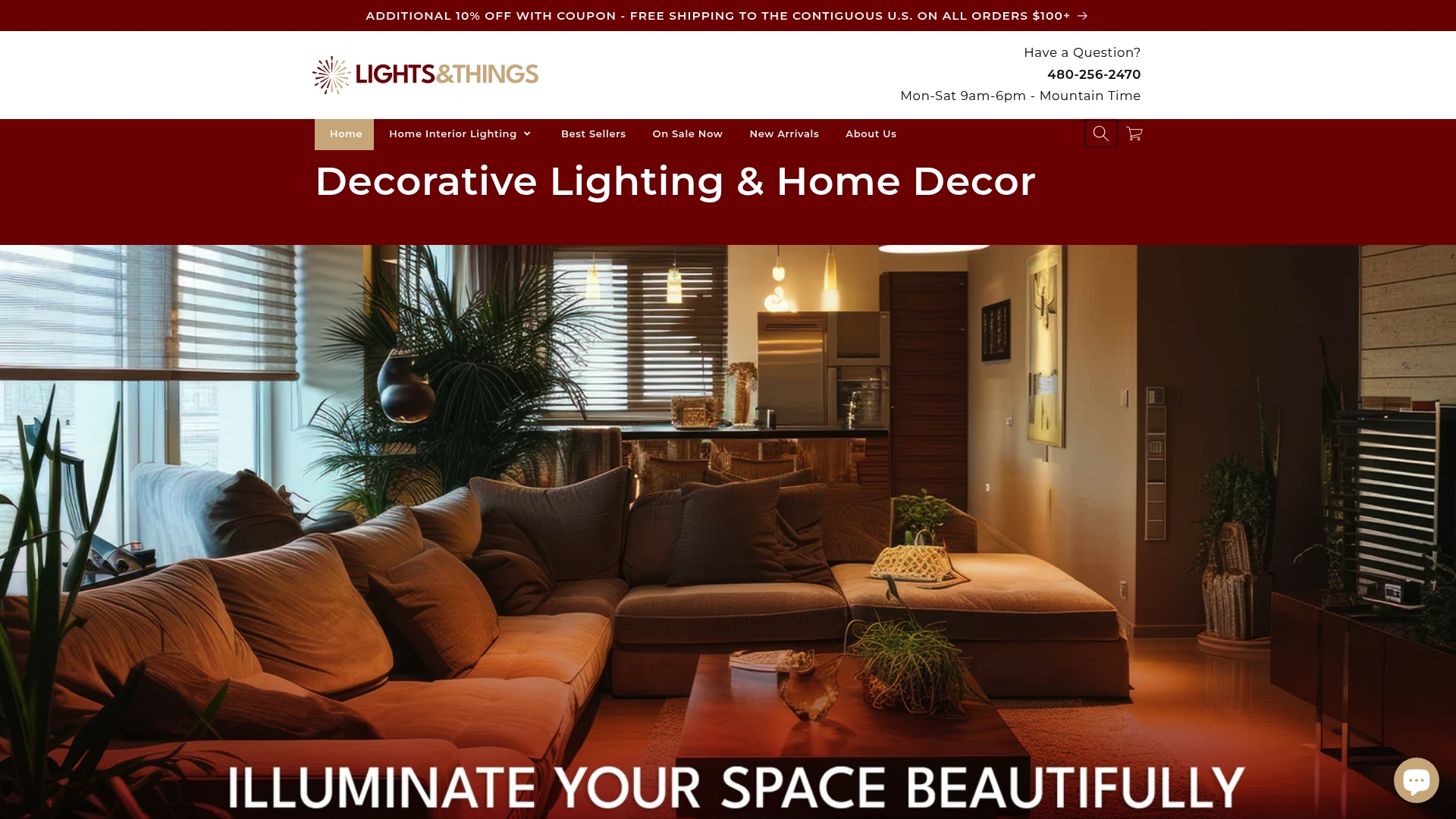
If you are planning a whole room, pick the hero piece first, then add a warm table lamp and a decor accent around it.
Our perspective
Brutalist lighting is a lesson in restraint. The fixture is not trying to be pretty. It is trying to be honest, and that is exactly why it works as a focal point.
We see the best results when shoppers treat one lamp as the anchor and let everything else support it. That means a strong pendant or floor lamp, warm 2700K light, and a few softer finishes such as weathered brass, rattan and natural fabric to keep the room inviting.
This is also why we pair decorative lighting with decor accents. A sculptural lamp needs a companion: a statue on a console, a textured accent beside it, a dimmer to set the mood. Put together in layers, raw form becomes a curated room, not a cold one.
Norm Blain
FAQ
What is the difference between brutalist lamps and industrial lamps?
Industrial lamps borrow from factories and workshops, with exposed bulbs, cages and utilitarian hardware. Brutalist lamps emphasize mass, raw texture and sculptural geometry, often in concrete, cast metal or blackened finishes. The two overlap, especially in matte black pendants, so choose by whether you want utility or sculpture.
Do brutalist lamps work in a small room?
Yes, if you limit the number of statement pieces. Choose one compact sculptural table or floor lamp, keep the surrounding surfaces clear, and use warm 2700K light so the room feels cozy rather than heavy. Lighter finishes like matte white or aged brass also keep the scale in check.
What color temperature is best for brutalist lighting?
Warm light. Designer guidance recommends layering light below 3000K, and 2700K is the warm residential glow that makes raw materials feel inviting. Pair it with dimmers so you can lower the level in the evening.
Is brutalist lighting the same as Brutalist architecture?
Not exactly. The architectural style is a mid-century movement built around exposed concrete and structural honesty. In lighting, the word is used more loosely for fixtures with a raw, textured, sculptural look. You can enjoy the aesthetic without matching the architecture.
Can I mix brutalist lamps with other styles?
Yes, and it usually looks better. Use one brutalist-style fixture as the anchor and balance it with softer pieces such as brass table lamps, rattan shades or natural textiles. Keep the finishes to two or three so the room reads as intentional.
Sources
- Brutalist architecture, Wikipedia
- A Short History of Brutalist Architecture, Foreign Policy
- First Look: Kelly Wearstler’s Lotura brutalist lighting, Wallpaper
- 10 Brutalist-Inspired Lighting Fixtures, Interior Design
- Sculptural illuminance: Kelly Wearstler’s Lotura collection, STIRworld
- Mood Lighting 101, Architectural Digest