Bedroom lamp styles ranked by design versatility and lighting function represent the most practical way to shop for bedside and ambient lighting. The standard industry term for this category is decorative table and floor lamp selection, and it covers everything from ceramic base nightstand lamps to minimalist LED fixtures. The right lamp does two jobs at once: it lights your space and anchors your decor. With the shift away from harsh overhead lighting toward layered, ambient bedroom lighting accelerating in 2026, choosing the right style matters more than ever.
1. Bedroom lamp styles ranked: what tops the list and why
The best overall bedroom lamp styles earn their rank by combining broad aesthetic appeal with practical lighting performance. These are the styles you will see recommended most consistently across interior design guides, and for good reason.
- Traditional ceramic base lamp. Ceramic bases in neutral tones or hand-painted finishes add grounded warmth to any bedroom. They pair well with linen or cotton drum shades and work in both classic and transitional rooms. Material choice directly affects perceived visual weight: ceramic reads as cozy and settled, making it ideal for rooms that need a sense of calm.
- Modern metal base lamp. Brushed brass, matte black, and chrome finishes define this category. Metal bases suit contemporary and industrial bedroom aesthetics. They are easy to clean and hold their finish well over time.
- Glass base lamp. Clear or frosted glass bases keep a room feeling open and airy. Glass bases reduce visual weight in smaller rooms, making them one of the top choices for compact bedrooms where you want light without clutter.
- Smart and tech-integrated lamp. These lamps include touch dimming, color temperature control, and app connectivity. They rank highest for usability in modern homes.
- Sculptural or statement lamp. Oversized silhouettes, unusual shapes, and bold materials turn a lamp into a focal point. A lamp’s silhouette functions as a decorative object even when the light is off, making daytime visual impact a real ranking criterion.
Each style serves a different bedroom personality. Ceramic and glass suit relaxed, layered interiors. Metal and smart lamps fit clean, minimal spaces. Sculptural lamps work best when the rest of the room is edited and calm.
2. How to choose bedroom lamps for different room sizes
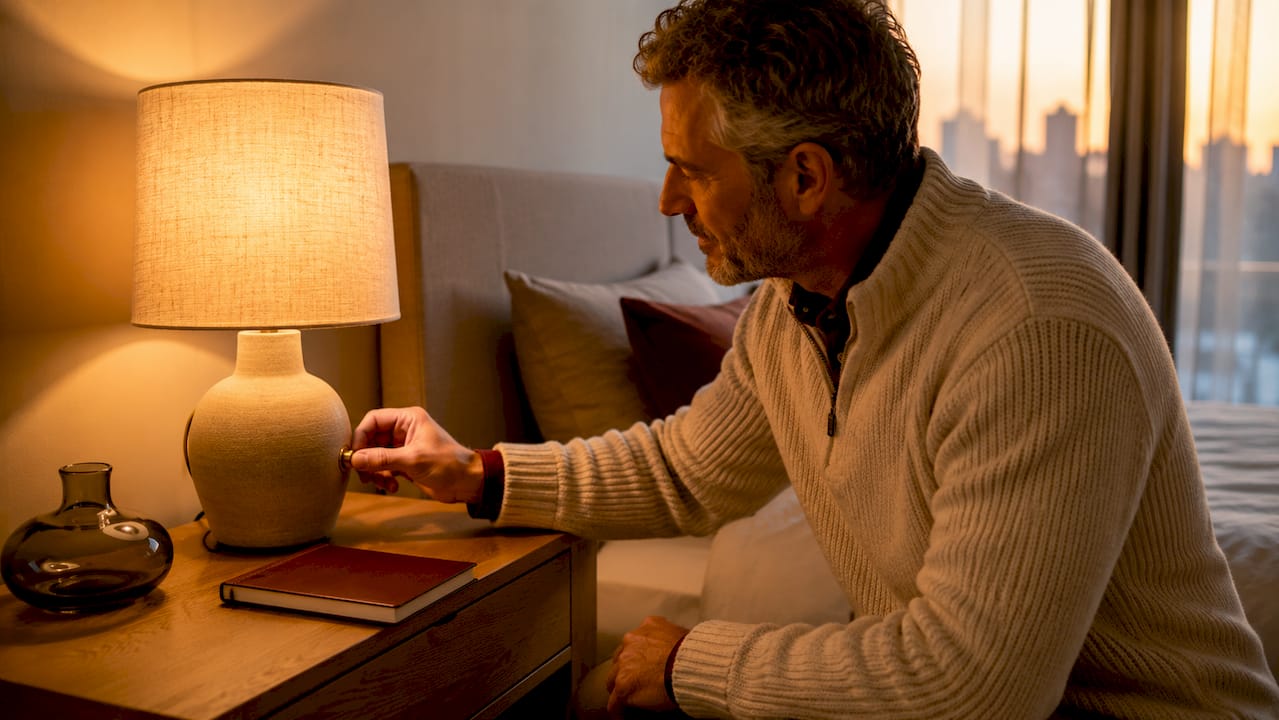
Lamp scale is the most overlooked factor when homeowners shop for bedroom lighting. A lamp that looks perfect online can overwhelm a small nightstand or disappear in a large room.
The clearest rule: the lamp base should leave at least half the nightstand surface free for other items. That means measuring your nightstand before you buy, not after. A 12-inch base on a 14-inch nightstand leaves almost no usable surface.
For small bedrooms, glass and slim metal bases are the best choice. They take up less visual space and keep the room feeling open. Wall-mounted swing-arm sconces are an even better option when floor and surface space is tight. They free up the nightstand entirely and direct light exactly where you need it.
For large bedrooms, a more substantial ceramic or sculptural base reads well from across the room. A lamp that is too small in a large space looks like an afterthought. Aim for a base height of 10–15 inches with a shade that brings the total fixture height to 26–32 inches for a standard nightstand setup.
Pro Tip: Measure your nightstand height and multiply by 1.5 to get the ideal total lamp height. This proportion keeps the shade at eye level when you are sitting up in bed, which is exactly where you want the light.
3. Top modern and tech-savvy bedroom lamp designs ranked
Modern bedroom lamps have moved well beyond simple on/off switches. The best designs now integrate technology that improves daily use without adding visual clutter.
- Touch dimmer lamps. A single tap adjusts brightness through three or four levels. These are the most popular tech feature in bestselling bedroom lamps right now.
- Lamps with built-in USB charging ports. Built-in USB charging ports appear in many top-selling bedroom lamps and remove the need for a separate charging block on the nightstand.
- Color temperature control lamps. These let you shift from warm white (2700K) for winding down to cool white (4000K) for reading or getting ready. The ability to match light color to your activity is a genuine usability upgrade.
- Minimalist LED strip lamps. Fixtures like the modern arc LED strip lamp use integrated LED strips rather than traditional bulbs. They produce even, diffused light with very low energy use.
- App and voice-compatible lamps. Smart lamps that connect to home automation systems let you control brightness and color from your phone or with a voice command. These rank highest for convenience in tech-forward homes.
The top three ranked bedroom lamps carry a combined 11.61% click-through rate and 9.25% conversion rate, with tech features like touch dimming and USB charging driving that purchase intent. Buyers are not just looking for a light source. They want a fixture that works with their evening routine.
4. Comparing traditional and contemporary bedroom lamp styles
Choosing between traditional and contemporary lamp styles comes down to your bedroom’s existing aesthetic and your personal priorities.
| Criteria | Traditional styles | Contemporary styles |
|---|---|---|
| Materials | Ceramic, wood, fabric shades | Metal, glass, integrated LED |
| Light quality | Warm, diffused glow | Adjustable, often cooler tones |
| Style appeal | Classic, cozy, timeless | Clean, minimal, current |
| Maintenance | Fabric shades collect dust | Easy-wipe metal and glass surfaces |
| Price range | Wide, from budget to premium | Wide, with tech features adding cost |
Traditional ceramic and wood lamps create warmth and texture. They suit bedrooms with upholstered headboards, layered textiles, and natural materials. Contemporary metal and glass lamps suit rooms with clean lines, neutral palettes, and minimal decor.
The most practical advice: match the lamp’s material to the dominant material in your bedroom. A wood-framed bed pairs naturally with a ceramic or linen-shade lamp. A platform bed with a lacquered finish calls for a metal or glass base. Mixing the two intentionally, such as a brass base with a linen shade, creates a transitional look that suits a wide range of bedroom styles. LightsThings covers this approach in detail in its guide to transitional lighting style.
5. Which bedroom lamp styles work best for specific use cases?
The best lamp depends entirely on how you use your bedroom in the evening. A lamp that works beautifully for reading is often wrong for ambient relaxation, and vice versa.
- Reading. You need a directional lamp with an adjustable arm or a focused shade. Swing-arm sconces mounted to the wall are the top-rated option for readers. They let you angle light directly onto the page without lighting the whole room.
- Ambient relaxation. A dimmable lamp with a warm bulb (2700K–3000K) and a fabric or frosted shade creates the soft glow that signals the brain to wind down. Drum shades and globe shades diffuse light evenly and avoid harsh spots.
- Shared bedrooms. Directional shades and swing-arm sconces reduce light spill far better than broad drum shades. If one partner reads while the other sleeps, a directional lamp is not optional. It is the considerate choice.
- Getting ready. A lamp with color temperature control lets you shift to a cooler, brighter light in the morning. This is where tech-integrated lamps earn their price premium.
- Small accent or mood lighting. A low-wattage lamp on a dresser or shelf adds depth to the room without competing with the main bedside lamp. This layered approach is what separates a well-designed bedroom from a functional one.
Pro Tip: If you read in bed regularly, choose a lamp with a shade that directs light downward and forward, not outward. A coolie or empire shade shape does this better than a drum shade.
For a full breakdown of how to match lamp type to your bedroom habits, the LightsThings guide on picking a table lamp is worth bookmarking.
Key takeaways
The single most important rule in bedroom lamp selection is this: match the lamp’s scale, material, and light direction to how you actually use the room, not just how it looks in a photo.
| Point | Details |
|---|---|
| Scale matters most | The lamp base should leave at least half the nightstand surface free. |
| Material signals mood | Glass bases keep rooms airy; ceramic bases add warmth and weight. |
| Tech features drive purchases | Touch dimming and USB charging are the top features in bestselling lamps. |
| Use case shapes style | Readers need directional light; ambient relaxation needs soft, dimmable glow. |
| Silhouette is decor | A lamp’s shape functions as a decorative object even when the light is off. |
Why I think most people buy the wrong bedroom lamp
By Norm Blain
Most homeowners choose a bedroom lamp based on how it looks in a product photo, which is almost always a staged, well-lit environment that has nothing to do with their actual bedroom. The lamp arrives, goes on the nightstand, and within a week they realize the shade is too wide, the light is too harsh, or the base crowds out everything else on the surface.
The fix is simpler than most people expect. Measure the nightstand first. Decide what you actually do in bed at night, whether that is reading, scrolling, or falling asleep to a podcast. Then choose the lamp that solves that specific problem. A beautiful ceramic base with a wide drum shade is a poor reading lamp. A slim swing-arm sconce is an awkward choice for a room that needs warm ambient light.
The other thing I have noticed is that people underestimate the daytime role of a lamp. When the light is off, the lamp is still there. Its silhouette, its material, its proportion relative to the bed and nightstand, all of that contributes to how the room feels at 2:00 PM just as much as at 10:00 PM. Choosing a lamp with a strong visual identity, whether that is a sculptural base or a distinctive shade shape, makes the whole room feel more considered.
My honest recommendation: buy one lamp you genuinely love before buying a matching pair. Live with it for a week. If it works for your habits and your room, then buy the second one.
— Norm Blain
Quality bedroom lamps worth exploring at LightsThings
Finding a lamp that balances style and function is easier when you have a well-curated selection to work from.
LightsThings carries a range of bedroom lamps that cover every style ranked in this article, from sleek chrome table lamps with a contemporary edge to crystal-accented designs that add warmth and texture. If you want tech integration, the chrome and crystal lamp with USB charging combines a statement look with practical bedside functionality. For homeowners who want a statement piece that works as both a light source and a decorative anchor, the full LightsThings bedroom lighting collection offers options across every price point, with free shipping thresholds, easy returns, and price matching to make the decision straightforward.
FAQ
What is the most popular bedroom lamp style in 2026?
Touch-dimmable lamps with metal or glass bases rank as the most purchased bedroom lamp style in 2026. Tech features like USB charging and three-way dimming drive the highest conversion rates among buyers.
How do I choose the right lamp size for my nightstand?
The lamp base should leave at least half the nightstand surface free. Measure the nightstand width before buying and choose a base no wider than half that measurement.
Are glass base lamps good for small bedrooms?
Glass bases are one of the best choices for small bedrooms because they reduce visual weight and keep the room feeling open. Clear or frosted glass creates the impression of more space compared to ceramic or wood bases.
What lamp style works best for reading in bed?
Directional lamps with adjustable arms or swing-arm sconces work best for reading. They focus light on the page without illuminating the entire room, which is especially useful in shared bedrooms.
What is the difference between ambient and task lighting in a bedroom?
Ambient lighting uses soft, dimmable lamps with diffused shades to create a relaxed atmosphere. Task lighting uses directional, brighter fixtures aimed at a specific area, such as a book or a mirror.