Transitional lighting style is defined as a purposeful blend of traditional warmth and modern simplicity, creating fixtures and room schemes that feel timeless rather than trend-driven. Interior designers recognize it as a 50/50 marriage of classic and contemporary elements, keeping familiar silhouettes while stripping away excess ornament. The result is lighting that works with almost any furniture mix you already own. If you have ever felt your room was neither fully traditional nor fully modern, transitional lighting is the answer. The 70-20-10 design rule, which allocates 70% warm neutrals, 20% grounded accents, and 10% richer tones, gives this style its balanced visual structure and keeps it from feeling either stuffy or stark.
What is transitional lighting style, and how does it work?
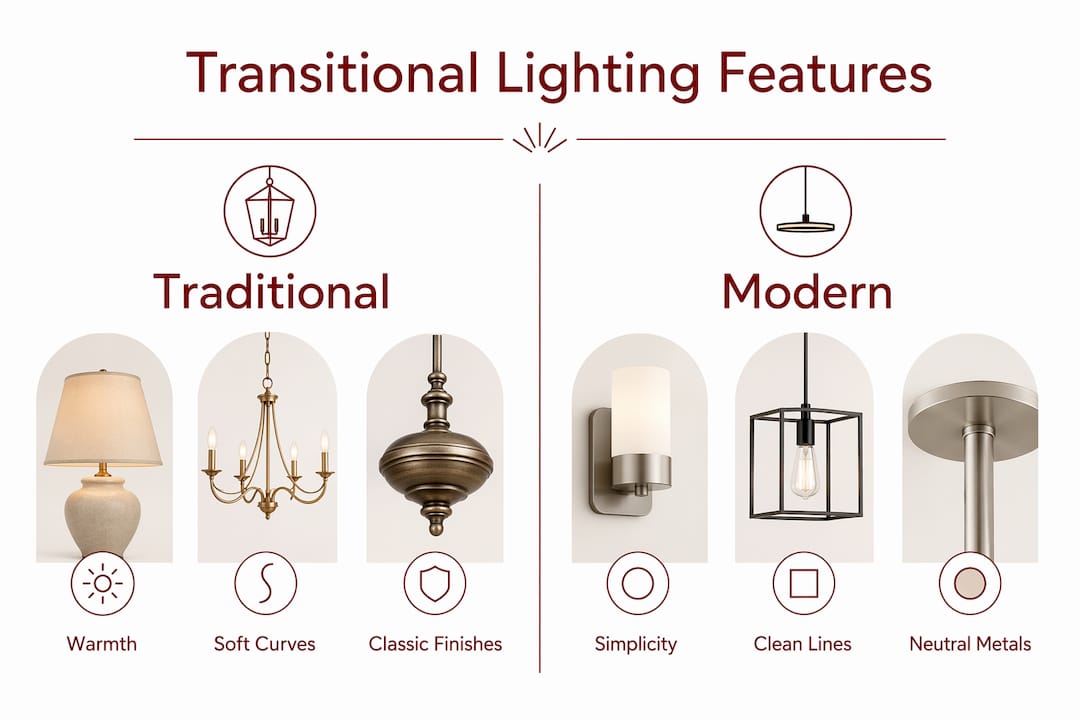
Transitional lighting style sits deliberately between two design worlds. It borrows the soft curves and warmth of traditional design, then pairs them with the clean lines and restrained detail of modern style. The goal is a fixture that reads as neither dated nor cold.
The style works because it prioritizes restraint. A transitional chandelier, for example, has a recognizable arm structure like a traditional piece, but the arms are smooth and unadorned rather than scrolled or gilded. That single design decision places the fixture in both camps at once. Homeowners find this flexibility valuable because it means one fixture can anchor a room through multiple rounds of furniture updates without ever looking out of place.
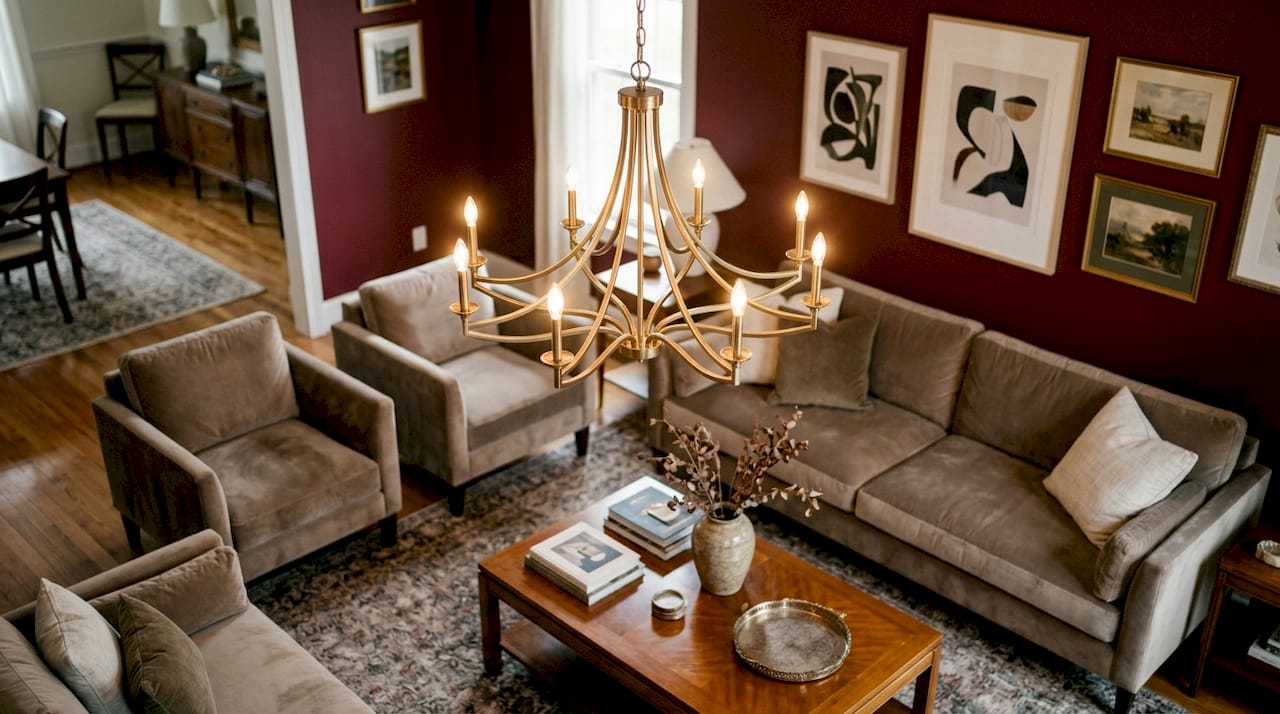
Lighting also functions as a visual thread that ties together contrasting textures and furniture eras. A brushed brass pendant above a farmhouse table and a sleek upholstered sofa makes both pieces feel intentional rather than accidental. That unifying role is what separates transitional lighting from simply mixing styles at random.
Key characteristics and finishes of transitional light fixtures
The clearest way to identify a transitional fixture is by its silhouette and finish. Transitional pieces use simple silhouettes with neutral finishes like brushed brass, bronze, matte black, and polished nickel. These finishes read as warm without being flashy, and clean without being cold.
Here is what to look for when evaluating a fixture:
- Silhouette: Soft curves or gentle geometric shapes. No heavy scrollwork, no exposed Edison bulbs in an industrial cage.
- Finish: Brushed or matte over polished where possible. Mixed metals, such as a bronze body with nickel accents, add visual interest without breaking the balance.
- Scale: Proportional to the room. A fixture that is too large dominates; one that is too small disappears.
- Detail level: Minimal but present. A subtle ribbed shade or a simple drum form signals craftsmanship without ornamentation.
- Bulb type: Warm LED at 2700K–3000K. This color temperature mimics incandescent warmth and keeps the room feeling inviting.
Crystal chandeliers sit too far in the traditional camp. Exposed-bulb industrial fixtures sit too far in the modern camp. Both break the transitional balance. The sweet spot is a fixture you could describe as “classic but clean.”
Pro Tip: When mixing metals in a room, keep one finish dominant and use the second as an accent on hardware or lamp bases. This creates cohesion rather than confusion.
How to layer lighting in transitional interiors
Layered lighting is the technique that separates a well-designed transitional room from one that simply has nice fixtures. Combining ambient, task, and accent lighting on separate dimmers gives you full control over the room’s mood at any time of day.
Here is how to build the three layers in a transitional space:
-
Ambient lighting provides overall illumination. In transitional design, this is typically a central chandelier or a flush mount with a soft diffuser. A dimmable chrome chandelier works well here because it delivers even light while its clean lines stay style-neutral.
-
Task lighting targets specific activities. In a living room, this means a floor lamp positioned beside a reading chair. In a kitchen, it means under-cabinet strips or focused pendants above a prep area. Choose fixtures with the same finish as your ambient source to maintain cohesion.
-
Accent lighting adds depth and drama. Wall sconces flanking a fireplace or a picture light above artwork are classic transitional choices. They draw the eye without demanding attention.
Place each layer on its own dimmer switch. This single step gives you the ability to shift the room from bright and functional to warm and atmospheric without changing a single fixture. Bulb color temperature matters here too. Staying within the 2700K–3000K range across all three layers keeps the light consistent and prevents jarring color shifts between zones.
Pro Tip: Pair a modern silhouette floor lamp with a traditional table lamp in the same room, both using warm bulbs on dimmers. The contrast in shape with the unity in tone is the defining transitional mix.
How to apply transitional lighting in every room
Transitional lighting design adapts to every room in the home, but each space has its own priorities. The table below summarizes the key fixture choices and standards by room.
| Room | Fixture type | Key standard |
|---|---|---|
| Living room | Central chandelier + floor lamp + table lamp | Mix modern and traditional silhouettes; warm bulbs on dimmers |
| Dining room | Understated chandelier or linear pendant | Center over table; bottom of fixture 30–36 inches above tabletop |
| Kitchen | Pendants over island + recessed ambient | Match pendant finish to hardware for cohesion |
| Bathroom | Sconces flanking mirror | Mount at 60–65 inches from floor to fixture center |
| Entryway | Statement pendant or semi-flush | Scale to ceiling height; brushed or matte finish |
A few room-specific notes are worth expanding on:
- Living rooms benefit most from the three-layer approach. A chrome arc floor lamp beside a sofa with a traditional table lamp on the end table creates exactly the kind of silhouette contrast that defines the style.
- Dining rooms call for restraint. An understated chandelier with clean detailing, rather than a crystal cascade, keeps the focus on the table and the people around it.
- Bathrooms have a specific technical standard. Mounting sconces on each side of the mirror at 60–65 inches high mimics professional vanity lighting and eliminates the harsh shadows that an overhead-only setup creates.
- Entryways set the tone for the entire home. A transitional pendant in a matte black or brushed brass finish signals the design language visitors will see throughout the space.
Mistakes to avoid when choosing transitional lighting
The most common mistake in transitional lighting design is ignoring fixture scale. A fixture that is too large becomes a distracting focal point. One that is too small reads as an afterthought. Scale balance is the factor that makes lighting harmonize with all other room elements rather than compete with them.
Watch for these additional pitfalls:
- Going too ornate: Heavy scrollwork, crystal drops, and gilded finishes push a fixture into traditional territory. The room loses its modern edge.
- Going too minimal: Bare-bulb pendants and stark geometric forms push toward industrial or modern. The room loses its warmth.
- Mixing too many finishes: Three or more metal finishes in one room create visual noise. Stick to two, with one dominant.
- Ignoring the existing furniture: Transitional lighting works because it supports mixing old and new furnishings without requiring a full replacement. If your fixture fights your sofa, the fixture is wrong for the room.
- Using cool white bulbs: Bulbs above 3000K read as clinical in a residential space. Warm white at 2700K–3000K is the correct range for transitional interiors.
Pro Tip: Before purchasing a fixture, hold a photo of it next to a photo of your room. If the fixture’s detail level matches neither your most traditional piece nor your most modern piece, it is likely the right transitional choice.
Key takeaways
Transitional lighting style succeeds because it uses restrained silhouettes, neutral finishes, and layered warm light to unify traditional and modern elements in any room.
| Point | Details |
|---|---|
| Define the style first | Transitional lighting blends traditional warmth and modern simplicity using the 70-20-10 color and finish rule. |
| Choose the right finishes | Brushed brass, bronze, matte black, and polished nickel keep fixtures style-neutral and versatile. |
| Layer all three light types | Ambient, task, and accent lighting on separate dimmers give you full control over mood and function. |
| Match scale to the room | Fixtures must be proportional to the space; oversized or undersized pieces break visual harmony. |
| Use warm bulbs throughout | Staying in the 2700K–3000K range across all fixtures keeps the room feeling cohesive and inviting. |
Why transitional lighting is the smartest long-term choice
I have spent years watching homeowners agonize over lighting decisions, and the pattern is consistent. People who choose strongly traditional or strongly modern fixtures eventually feel trapped by them. The moment they update a sofa or paint a wall, the fixture looks wrong. Transitional lighting does not do that to you.
What I find most underappreciated about this style is how much it relies on restraint rather than budget. You do not need expensive materials to achieve a quality transitional look. Lighting creates the visual thread that ties contrasting textures and furniture eras together, and a well-chosen fixture at a modest price point does that job just as well as a premium one. The design work happens in the selection, not the price tag.
The 70-20-10 rule is the most practical framework I have seen for keeping a transitional room from drifting too far in either direction. Apply it to your finishes, your wall colors, and your accent choices, and the room holds together even as individual pieces change over time. Transitional lighting is not a compromise. It is a deliberate choice to keep your options open while still having a room that feels curated and intentional.
— Norm
Lightsthings has the transitional fixtures your home needs
Finding fixtures that genuinely hit the transitional balance, clean enough for a modern room, warm enough for a traditional one, is harder than it sounds. Lightsthings carries a curated range of chandeliers, floor lamps, and table lamps built around exactly that balance.

The collection includes dimmable options in brushed chrome and warm-finish styles that work across living rooms, dining areas, and entryways. The adjustable chrome chandelier and the spiral dimmable floor lamp are strong starting points for any transitional scheme. Browse the full selection at Lightsthings to find fixtures that fit your room’s scale, finish, and layering needs, with free shipping thresholds, easy returns, and price matching to back your purchase.
FAQ
What is transitional lighting style?
Transitional lighting style is a design approach that blends traditional and contemporary elements in equal measure, using simple silhouettes, neutral finishes, and warm bulbs to create fixtures that feel timeless and versatile.
What finishes work best for transitional light fixtures?
Brushed brass, bronze, matte black, and polished nickel are the standard finishes for transitional fixtures. These tones are warm without being ornate and clean without being cold.
What bulb color temperature should I use in transitional lighting?
Use bulbs in the 2700K–3000K range throughout your transitional space. This warm white range mimics incandescent light and keeps the room feeling inviting rather than clinical.
How high should bathroom vanity sconces be mounted?
Mount bathroom sconces on each side of the mirror with the fixture center at 60–65 inches from the floor. This height eliminates harsh shadows and provides balanced, flattering illumination.
Can transitional lighting work with furniture I already own?
Transitional lighting is specifically suited to homes with mixed furniture styles. It acts as a visual thread that unifies contrasting textures and eras without requiring you to replace existing pieces.