A bedroom table lamp is defined as a portable light fixture placed on a nightstand or dresser to provide localized, adjustable illumination for reading, relaxing, and ambient lighting. Picking the right table lamp for your bedroom means balancing three things: size, light quality, and style. Get all three right, and your lamp does more than light the room. It anchors the space, sets the mood, and makes the whole setup feel considered. This guide walks you through each decision point so you can choose with confidence, not guesswork.
How to pick a table lamp for your bedroom: size and scale
Size is the first thing to get right, and it trips up more shoppers than any other factor. A lamp that is too tall towers over the nightstand and throws light in the wrong direction. One that is too short disappears visually and fails to illuminate your book or phone screen at the right angle.
The standard rule in lighting design is that the shade’s bottom should sit about 20 inches above the mattress surface. That height puts the light source at eye level when you are sitting up in bed, which is exactly where you need it for reading without straining your neck or squinting.
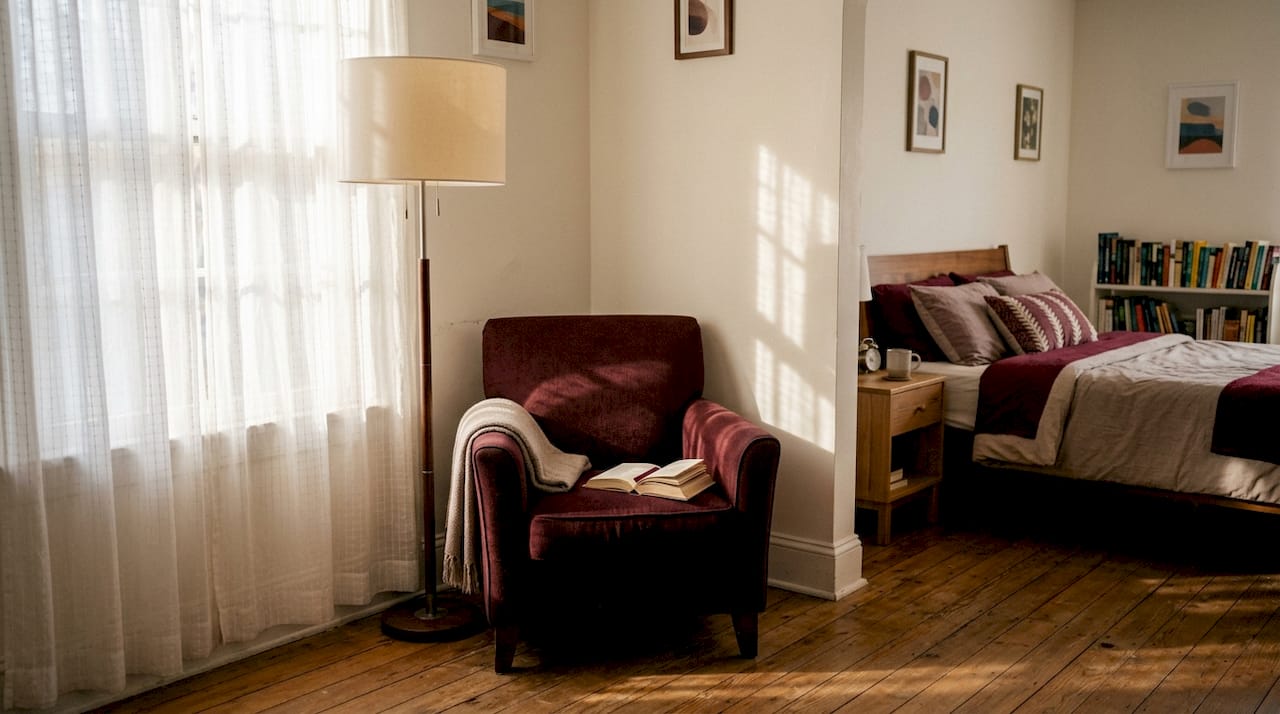
Your nightstand size matters just as much as lamp height. A small, compact nightstand calls for a slender base and a narrower shade. A wide, substantial nightstand can support a larger, more sculptural base without looking crowded. The lampshade width should be about two-thirds the width of the lamp base. That ratio keeps the proportions balanced and prevents the shade from looking either pinched or oversized.
| Nightstand width | Recommended lamp height | Ideal shade width |
|---|---|---|
| Under 16 inches | 20–24 inches total | 8–10 inches |
| 16–22 inches | 24–28 inches total | 10–14 inches |
| Over 22 inches | 26–30 inches total | 14–18 inches |
Pro Tip: Measure from the top of your mattress to the top of your nightstand before shopping. That number tells you exactly how much lamp height you have to work with.
What light quality does a bedroom table lamp need?
Light quality separates a lamp that looks good from one that actually works. Two metrics matter most: lumens and color temperature.
Lumens measure brightness. For a bedside lamp, 200 to 400 lumens is the right range. That level is bright enough for reading but soft enough to avoid flooding the room with harsh light. Anything above 400 lumens starts to feel clinical in a bedroom setting.
Color temperature, measured in Kelvin, controls whether light feels warm or cool. Warm white light in the 2700K to 3000K range is the standard recommendation for bedrooms. That range mimics the soft glow of incandescent bulbs and signals to your brain that it is time to wind down. Cooler light above 4000K is better suited for offices and kitchens, not spaces designed for rest.
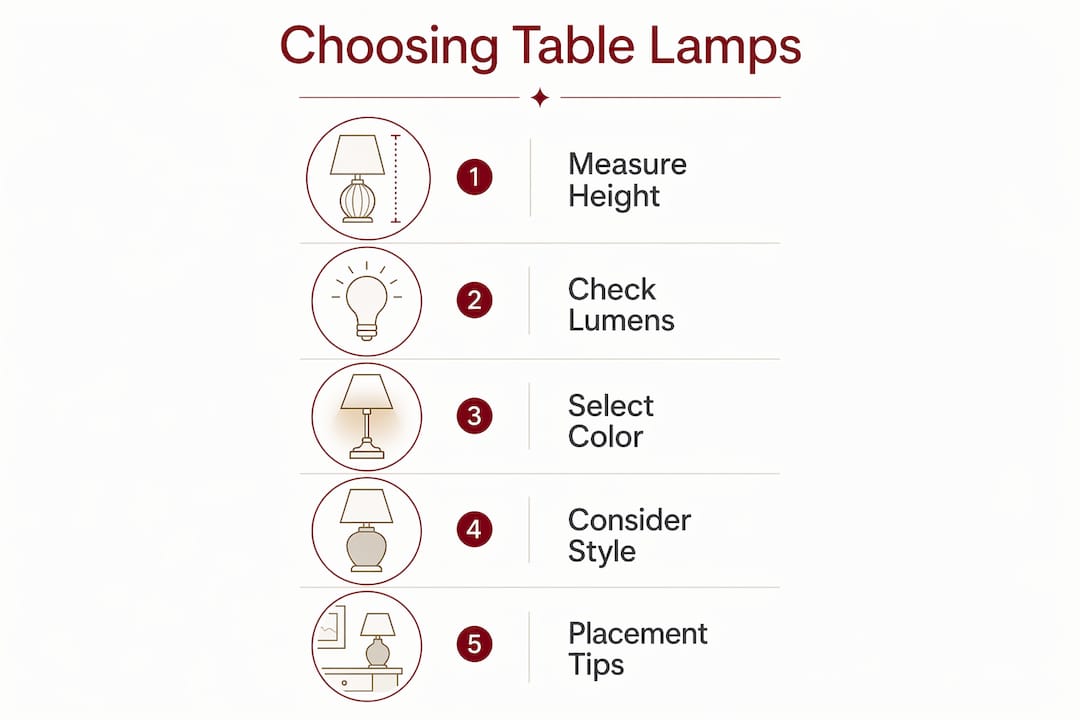
Dimmability is the third factor, and it is often underestimated. Dimmable lamps let you shift from bright reading light to a soft, low glow without changing bulbs or moving to a different fixture. That flexibility makes a single lamp serve two distinct purposes across the same evening.
Bulb types compatible with most bedside lamps include:
- LED bulbs: Long lifespan, low heat output, and available in the full 2700K–3000K range. The most practical choice for most bedrooms.
- Smart bulbs: Brands like Philips Hue allow you to adjust both brightness and color temperature from your phone or a voice assistant.
- Incandescent bulbs: Warm and flattering, but they run hot and use more energy than LEDs.
- Edison-style filament bulbs: Decorative and warm, ideal when the bulb is visible through an open or glass shade.
Pro Tip: If your lamp does not have a built-in dimmer, pair it with a smart bulb that dims through an app. You get full brightness control without replacing the fixture.
What table lamp style works best for your bedroom decor?
A well-chosen lamp style makes the room feel cohesive and personalized rather than assembled from mismatched pieces. The lamp base, shade shape, and finish all communicate a design language. When that language matches your room, the effect is subtle but powerful.
Start by identifying your bedroom’s overall aesthetic. Then match the lamp to it deliberately.
- Modern and contemporary: Clean lines, geometric bases, and matte or metallic finishes. A chrome table lamp with a cylindrical shade fits this category well. Avoid ornate details or curved, traditional silhouettes.
- Midcentury modern: Tapered shades, angled bases, and warm wood or brass accents. A light wood lamp with a touch dimmer reads as midcentury without being a costume piece.
- Minimalist: One material, one color, no decoration. The lamp should almost disappear into the room while still doing its job.
- Rustic or organic: Natural textures like linen shades, ceramic bases, or wood grain finishes. These lamps add warmth without competing with other natural elements in the room.
- Eclectic or maximalist: This is where you can use the lamp as a statement piece. A sculptural base or an unexpected color becomes a focal point rather than a background element.
Shade material also affects the quality of light. Fabric shades diffuse light softly and reduce glare. Glass or metal shades direct light more sharply and create stronger contrast. For a bedroom, fabric shades in white, cream, or linen almost always produce the most flattering, relaxing glow.
Finish consistency matters too. If your nightstand has brushed brass hardware, a lamp with a brass or gold base ties the two pieces together. A matte black lamp works well in rooms with black metal bed frames or dark furniture accents.
Placement tips and functional features that make bedside lamps work harder
Placement determines whether your lamp actually does its job or just looks good. The goal is to position the shade so the bottom of the shade falls between your head and your book when you are sitting up in bed. That position eliminates shadows on the page and keeps direct light out of your eyes.
Here are the key placement and feature considerations to work through before you buy:
- Position relative to the bed. The lamp should sit close enough to reach without stretching but far enough back that you do not knock it over reaching for your phone. Six to eight inches from the edge of the nightstand is a reliable starting point.
- Switch type. Touch switches are the most convenient for bedside use because you do not have to locate a small knob in the dark. Pull chains work but require more coordination. Rocker or toggle switches on the cord are a practical middle ground.
- USB charging ports. USB ports built into the lamp base eliminate the need for a separate charger on the nightstand. That one feature reduces cord clutter significantly and keeps your phone within reach while charging overnight.
- Stability. A lamp with a wide, weighted base is less likely to tip when you reach past it in the dark. Avoid tall, narrow bases on small nightstands where the risk of knocking the lamp is higher.
- Cord management. A lamp with a short cord or a cord that routes cleanly along the back of the nightstand keeps the surface looking tidy. Some lamps include a built-in cable channel for this purpose.
Pro Tip: If you share the bed, position each lamp so its light cone stays on your side. A directional shade or an adjustable arm lamp gives you reading light without disturbing your partner.
Key takeaways
The most effective bedroom table lamp balances the right height, warm light in the 2700K–3000K range, and a style that matches your existing decor.
| Point | Details |
|---|---|
| Height above mattress | Place the shade bottom about 20 inches above the mattress for ideal reading light. |
| Brightness range | Choose 200–400 lumens for bedside use to avoid harsh or insufficient light. |
| Color temperature | Warm white at 2700K–3000K supports relaxation and signals wind-down time. |
| Style coordination | Match lamp finish and shade material to your existing furniture and room aesthetic. |
| Functional features | Prioritize dimmability, touch switches, and USB ports for everyday convenience. |
Why I think most people overthink style and underthink light quality
Lighting professionals have noted a clear shift away from harsh overhead fixtures toward layered, dimmable table lamps that create a cozy, cocooning feel in the bedroom. I have seen this play out in real rooms, and the difference is striking. A single dimmable lamp on each nightstand does more for a bedroom’s atmosphere than any ceiling fixture ever will.
The mistake I see most often is choosing a lamp based on how it looks in a product photo, then realizing it is the wrong scale for the actual nightstand. A lamp that looks elegant in isolation can look absurd next to a low platform bed or a narrow floating shelf. Always measure first.
The second mistake is ignoring color temperature. People buy a lamp they love, then fill it with a cool daylight bulb because it was on sale. The result is a beautiful fixture producing unflattering, restless light. A warm LED bulb in the 2700K range costs the same and changes everything.
My honest recommendation: get the size and light quality right first. Style is easier to adjust. You can swap a shade, change a bulb, or add a dimmer switch. You cannot easily fix a lamp that is the wrong height for your bed or too bright for the room.
— Norm
Bedroom table lamps worth considering at Lightsthings
Lightsthings carries a curated selection of bedroom table lamps built around the principles covered here: dimmable LED technology, warm finishes, and proportions that work on real nightstands.

The Amsterdam series, available in chrome, black, silver, and light wood finishes, features touch dimmer controls and integrated LED strips that make brightness adjustment effortless. The modern arc design table lamp suits contemporary and minimalist bedrooms with clean lines and a compact footprint. Every lamp ships with free shipping on qualifying orders, easy returns, and price matching, so you can buy with confidence.
FAQ
What is the ideal height for a bedside table lamp?
The bottom of the lampshade should sit about 20 inches above the mattress surface. That height delivers light at the right angle for reading without causing glare.
How many lumens do I need for a bedroom table lamp?
A bedside lamp needs 200–400 lumens for comfortable reading and ambient light. More than 400 lumens tends to feel too bright for a relaxing bedroom environment.
What color temperature is best for bedroom lamps?
Warm white light in the 2700K–3000K range is best for bedrooms. That temperature creates a soft, calming glow that supports winding down before sleep.
Should a bedroom table lamp be dimmable?
A dimmable lamp is the most practical choice for a nightstand. It lets you use full brightness for reading and dial down to a soft glow for relaxing or falling asleep.
How do I match a table lamp style to my bedroom decor?
Match the lamp’s finish and base material to your existing furniture hardware and dominant textures. A chrome lamp pairs with modern metal accents, while a wood base complements natural or midcentury decor.