Coordinating lamps with furniture means selecting fixtures that share at least two design elements, such as color, tone, texture, or shape, with your existing room features to create visual harmony. Interior designers call this building a “design link,” and it is the foundation of cohesive residential lighting. You do not need to match lamps exactly to your furniture. You need them to respond to it. The result is a room that feels intentional and curated rather than assembled by accident. LightsThings carries a wide range of lamp styles and finishes built specifically for this kind of thoughtful coordination.
How to coordinate lamps with furniture: the core design elements
The four characteristics that determine whether a lamp fits a room are color, tone, texture, and shape. Sharing at least two of these with existing room elements creates an intentional design link. That link is what separates a room that looks styled from one that looks assembled.
Color is the most visible connection. Your lamp does not need to repeat a furniture color exactly. It should pull from the room’s existing palette. A lamp with a warm amber base works in a room with honey oak furniture and cream textiles. A lamp with a charcoal ceramic base anchors a room with dark upholstery and gray rugs.
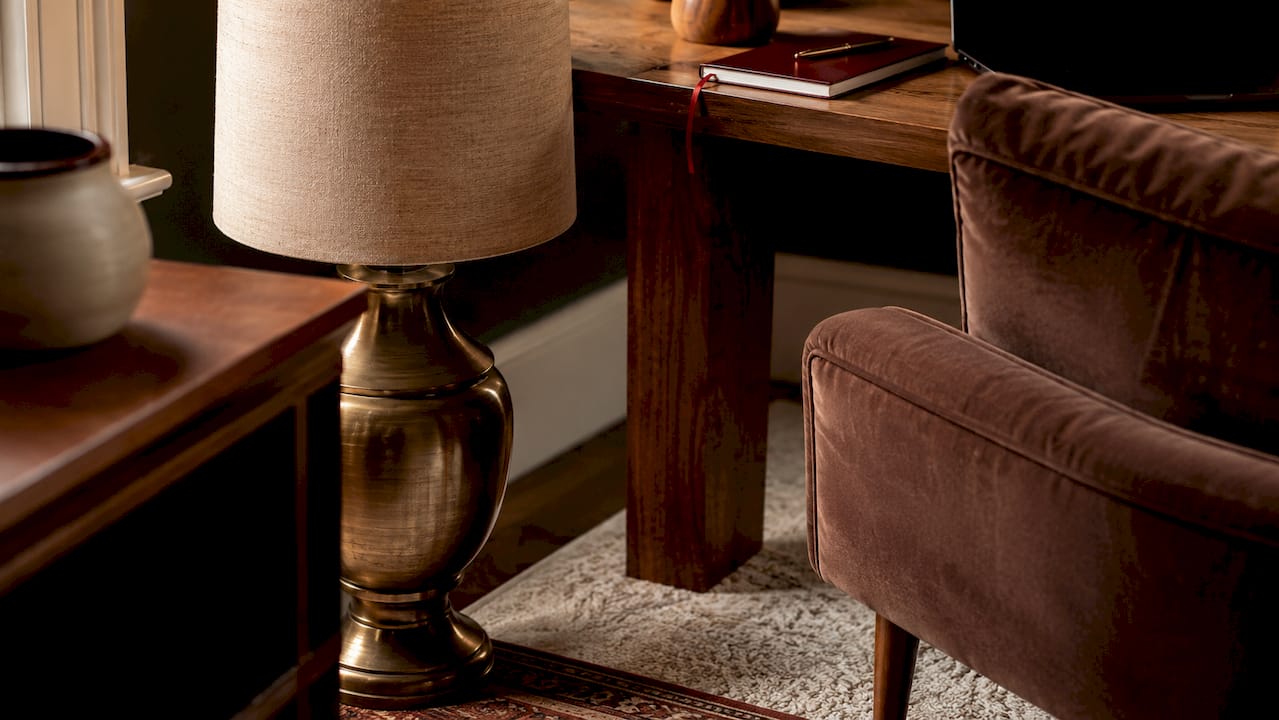
Tone is subtler but equally powerful. Warm tones include brass, gold, amber, and terracotta. Cool tones include chrome, silver, slate, and navy. A polished brass lamp can work with black hardware if the room also contains warm wood furniture and warm textiles. The key is that the lamp’s temperature should match the room’s dominant temperature, not just the nearest piece of furniture.
Texture affects how a lamp reads in a room. A matte ceramic base feels grounded and organic. A glossy lacquered base feels polished and modern. A woven rattan base adds warmth and informality. Match the lamp’s surface quality to the dominant texture in your furniture. Linen sofas pair well with fabric or matte shades. Leather furniture reads better alongside smooth, structured bases.
Shape is the design element most homeowners overlook. Curved lamp bases complement rounded furniture silhouettes, while angular bases reinforce geometric furniture lines. A sculptural arc floor lamp suits a room with organic, flowing furniture. A clean rectangular table lamp anchors a room with boxy, modern pieces.
- Match lamp color to the room’s palette, not just the nearest furniture piece.
- Align lamp tone (warm or cool) with the room’s dominant temperature.
- Pair lamp texture with the surface quality of your primary furniture.
- Echo furniture silhouettes in your lamp base shape.
Pro Tip: Hold a lamp photo next to a photo of your room on your phone. If the lamp looks like it belongs in a different room entirely, the tone or shape is off.
How to build a hierarchy of finishes for cohesive lamp coordination
A finish hierarchy prevents your room from looking either too matchy or too chaotic. Designers assign three levels to finishes: lead, supporting, and accent. Each level plays a specific role.
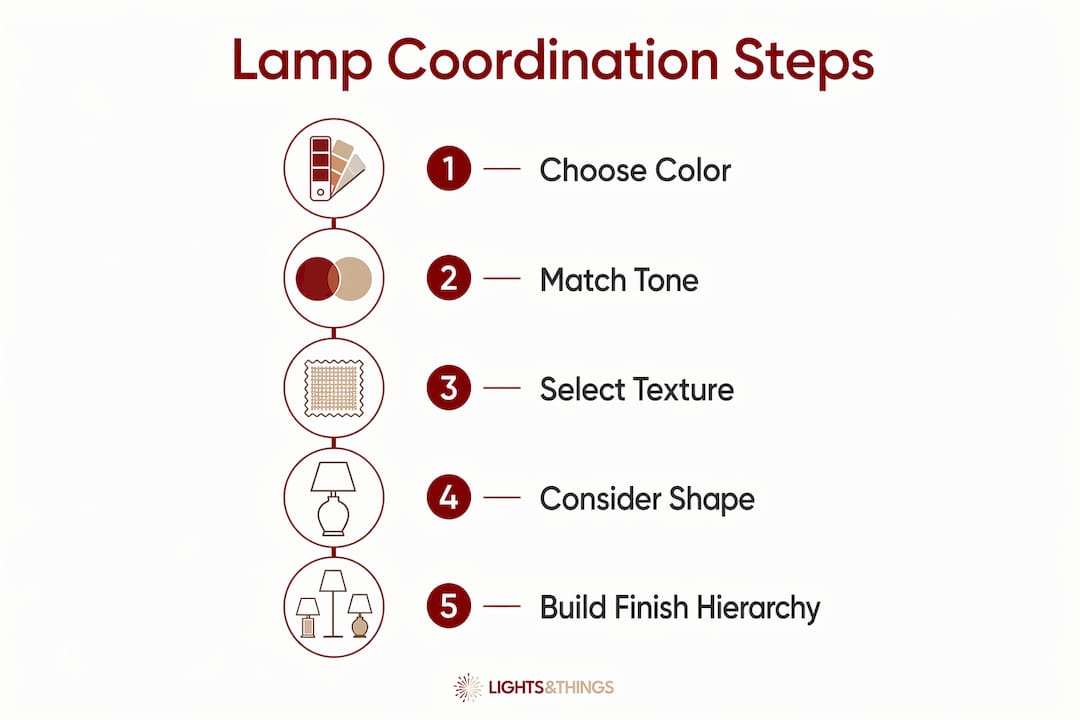
Your lead finish is the dominant one. It appears on the largest or most visible pieces, such as a sofa frame, a dining table, or a major hardware finish like door handles. Your supporting finishes reinforce the lead without copying it exactly. Your accent finishes add small touches of contrast that keep the room from feeling flat.
Here is how to apply this hierarchy when selecting a lamp:
- Identify your lead finish. Walk through the room and note the finish that appears most often or on the largest pieces. Brushed nickel hardware throughout a kitchen and living area is a lead finish. A dark walnut dining table is a lead finish.
- Identify your supporting finishes. These are the secondary materials in the room. Cream upholstery, light oak shelving, and warm linen curtains are all supporting finishes. They reinforce the lead without competing with it.
- Choose a lamp that echoes one lead and one supporting finish. A lamp with a brushed nickel base and a cream linen shade connects both levels at once. That single fixture ties the room together without forcing a match.
- Use the lamp shade to soften transitions. A warm white shade warms a cool metal base. A dark shade grounds a light-colored base. The shade is your most flexible tool for adjusting a lamp’s temperature.
- Add accent through small details. A lamp with a small brass ring detail works as an accent in a room where brass is not the lead finish. It adds depth without competing.
Using a finish hierarchy prevents the staged, showroom look that makes a room feel unlived in. It also accommodates rooms that have been furnished gradually over time, which describes most real homes.
Pro Tip: If your room has mixed metals already, choose a lamp that contains both. A base with a brushed nickel body and a small brass accent acts as a visual bridge without forcing you to commit to one finish.
When should you mix lamp styles instead of matching them?
The biggest misconception about lamp styling is that all lamps in a room must match. Mixing lamp styles adds personality and a lived-in feeling. The goal is not uniformity. The goal is harmony.
Matching pairs work best in specific situations:
- Symmetrical setups: Two identical table lamps on a console table or matching nightstands on either side of a bed create formal balance. This works well in traditional or transitional interiors.
- Single surface placements: When two lamps share one surface, matching them reads as intentional rather than repetitive.
Varied lamps work better in most other situations. A floor lamp in one corner, a table lamp on a side table, and a different table lamp on a console can all coexist if they share at least one design element, such as finish or shade color.
Distributing lamps in a triangular layout with an odd number of fixtures creates balanced, natural illumination and avoids dark corners. Three lamps placed at three different heights and positions in a room produce better visual balance than two matching lamps on a single surface. This approach also makes a room feel layered rather than staged.
Scale matters as much as style. Floor lamps should not block movement, and table lamps should be proportional to the surface they sit on. A large ceramic table lamp on a small side table overpowers the furniture. A slim, tall table lamp on a wide console disappears. Proportion is what makes a lamp feel placed rather than parked.
You can learn more about pairing floor and table lamps to build a layered lighting scheme that adds character without losing cohesion.
Practical steps to coordinate lamps with your existing furniture
This process works in any room, whether you are starting fresh or working with furniture you already own.
- Audit your room’s dominant colors and finishes. Note the three most visible colors and the two most common finishes. Write them down. This becomes your reference list when shopping.
- Identify your lead element. This is often a rug, a sofa, or a curtain. The lead element sets the room’s tone and is the piece your lamp should respond to most directly.
- Choose a lamp finish that connects to your lead and supporting elements. Use the hierarchy method. A lamp does not need to match everything. It needs to connect to at least two things already in the room.
- Test the lamp in ambient and evening light. Lamp finishes look different under natural daylight versus warm evening light. A brass lamp that looks yellow in daylight can look rich and warm at night. Always evaluate your lamp in the lighting conditions you actually use the room in.
- Use accessories to solve visual disconnects before replacing lamps. Adding a pillow that repeats a lamp’s color often solves a visual disconnect faster than buying a new lamp. Curtains and rugs serve the same function. Before you return a lamp, try adding a textile that bridges the gap.
- Adjust placement before adjusting the lamp itself. Moving a lamp from a side table to a console, or from a corner to beside a chair, can change how it reads in the room entirely.
| Common mistake | Better approach |
|---|---|
| Matching all lamps to one furniture piece | Connect lamps to the room’s overall palette and temperature |
| Ignoring lamp scale | Match lamp height and base size to the furniture it sits beside |
| Buying lamps in store lighting | Test finishes in your room’s actual light conditions |
| Replacing lamps when they feel off | Add a textile first to bridge the visual gap |
| Using only matching pairs | Mix styles with a shared finish or shade color for a layered look |
For living room setups specifically, the guide on best table lamps for living room covers how to select lamps that complement both the style and scale of your furniture.
Key Takeaways
Coordinating lamps with furniture requires connecting fixtures to the room through at least two shared design elements, color, tone, texture, or shape, rather than forcing exact matches.
| Point | Details |
|---|---|
| Share two design elements | Choose lamps that connect to existing furniture through color, tone, texture, or shape. |
| Use a finish hierarchy | Assign lead, supporting, and accent roles to finishes before selecting a lamp. |
| Mix styles intentionally | Use matching pairs for symmetrical setups and varied lamps for distributed placements. |
| Apply the triangle layout | Place three lamps at different heights and positions for balanced, natural illumination. |
| Solve disconnects with textiles | Add a pillow or curtain that echoes the lamp’s color before replacing the fixture. |
What I’ve learned from years of watching rooms come together
The advice I give most often is this: stop trying to match and start trying to connect. Matching creates showrooms. Connecting creates homes. A room where every lamp, every pull, and every frame is the same finish looks like a catalog page. A room where a brass lamp sits beside a walnut table, anchored by a linen shade that picks up the curtain color, looks like someone actually lives there.
Renters often feel stuck because they cannot paint walls or change fixed hardware. The good news is that lamps are one of the most impactful changes you can make without touching a single wall. A well-chosen floor lamp in a rental living room shifts the entire mood of the space. It draws the eye, adds warmth, and makes the furniture feel deliberate rather than default.
The other thing I have noticed is that people wait too long to experiment. They buy a lamp, place it once, and decide it does not work. Placement is everything. I have seen lamps that looked wrong on a side table look exactly right on a console, simply because the surrounding furniture changed the visual context. Move the lamp before you return it.
Layering finishes over time is also more realistic than redesigning all at once. Start with one lamp that connects to your lead element. Add a second that echoes a supporting finish. The room builds itself gradually, and it ends up feeling more personal than anything assembled in a single shopping trip.
— Norm Blain
Lamps that work with your furniture, not against it
Finding the right lamp gets much easier when you can filter by finish, shape, and style in one place. LightsThings carries an extensive range of floor and table lamps in finishes from brushed brass to matte black, with bases ranging from sculptural ceramic to clean metal, so you can match the design language of almost any furniture style.
The full decorative lighting collection includes options at every price point, from accessible accent pieces to statement lamps priced above $1,000 for rooms that call for something more substantial. Free shipping thresholds, easy returns, and price matching mean you can order with confidence and test a lamp in your actual space before committing. Browse by finish or style to find the fixture that connects to what you already own.
FAQ
What does it mean to coordinate lamps with furniture?
Coordinating lamps with furniture means selecting fixtures that share at least two design characteristics, such as color, tone, texture, or shape, with existing room elements to create visual harmony rather than exact matches.
Do lamps have to match furniture exactly?
Lamps do not need to match furniture exactly. They should respond to the room’s overall warm or cool temperature and connect to at least two existing design elements to feel intentional.
How many lamps should a living room have?
Three lamps placed in a triangular layout at different heights and positions create balanced illumination and visual interest. This odd-number approach avoids dark corners and prevents a flat, staged look.
How do I choose the right lamp size for my furniture?
Match the lamp’s scale to the surface it sits on. A table lamp should be proportional to its side table or console, and a floor lamp should not block foot traffic or overpower nearby seating.
Can renters effectively coordinate lamps with furniture?
Renters can create significant style impact through lamp selection alone. Choosing lamps that connect to existing furniture finishes and textiles transforms a space without requiring any permanent changes to walls or fixtures.