Luxury lighting design is the intentional layering of ambient, task, accent, and decorative light sources using premium materials and independent controls to shape both mood and function in a residential space. The industry term is architectural lighting design, though “luxury lighting design” captures the aesthetic ambition that drives most homeowners to pursue it. At its core, this discipline treats light as a design material, not an afterthought. The four-layer framework of ambient, task, accent, and decorative lighting forms the foundation of every high-end residential scheme. Understanding how those layers work together is the first step toward creating a home that feels genuinely curated.
What is luxury lighting design and why does it start with layers?
Luxury lighting design is built on a four-layer framework that addresses comfort, clarity, architectural shaping, and visual anchoring at the same time. Each layer serves a distinct purpose, and each must be independently controllable to give you flexibility across different times of day and activities.
Here is how the four layers function:
- Ambient lighting provides the base level of general illumination for a room. Think recessed ceiling fixtures, flush mounts, or cove lighting that fills a space evenly without harsh shadows.
- Task lighting focuses light on specific activities. A reading lamp beside an armchair, under-cabinet lighting in a kitchen, or a pendant over a desk all fall into this category.
- Accent lighting creates drama and draws attention to architectural features, artwork, or textured surfaces. Directional spotlights and picture lights are the most common tools here.
- Decorative lighting functions as sculptural art. A crystal chandelier or a hand-blown glass pendant does not just illuminate. It anchors the room visually and signals the design intent of the entire space.
The real power of this system comes from independent control. When you can dim your ambient layer while keeping accent lights at full intensity, you shift the room from a bright, functional environment to an intimate, gallery-like setting in seconds. That adaptability is what separates luxury interior lighting from a simple collection of fixtures.
| Layer | Primary Function | Common Fixture Types |
|---|---|---|
| Ambient | General illumination | Recessed lights, cove lighting, flush mounts |
| Task | Activity-focused light | Desk lamps, under-cabinet strips, reading lamps |
| Accent | Highlighting and drama | Spotlights, picture lights, wall washers |
| Decorative | Visual anchor and art | Chandeliers, sculptural pendants, statement floor lamps |

How do 2026 luxury lighting trends shape residential design?
The dominant shift in high-end lighting trends for 2026 is away from stark minimalism and toward what designers call “intentional warmth.” Natural materials like alabaster and verdigris are replacing polished chrome as the default choice for statement fixtures. Handcrafted, asymmetrical silhouettes are now preferred over perfectly symmetrical forms. This reflects a broader cultural move toward pieces that feel made rather than manufactured.
Alongside this material shift, sculptural statement pieces are taking center stage in living rooms, entryways, and dining spaces. A single oversized pendant with an organic, irregular form can define an entire room’s personality. The fixture becomes the art, and the light it casts becomes the atmosphere.
Two other trends are reshaping how homeowners think about their ceiling infrastructure:
- “Quiet Luxury” ceiling design uses ultra-miniature recessed spotlights to eliminate visual clutter. The goal is “see the light, not the fixture.” Clean ceilings make decorative pieces read more powerfully because there is no visual competition above them.
- The “resimercial” trend brings commercial-grade technical performance into residential spaces. Flicker-free dimming and anti-glare optics, once reserved for offices and hotels, are now standard expectations in high-end homes. These features reduce eye strain and extend fixture lifespan significantly.
Pro Tip: If you are renovating, plan your recessed ceiling infrastructure before selecting decorative fixtures. Changing ceiling wiring after walls are finished is expensive. Getting the invisible layer right first makes every statement piece look better.
What practical steps should homeowners take when designing luxury lighting?
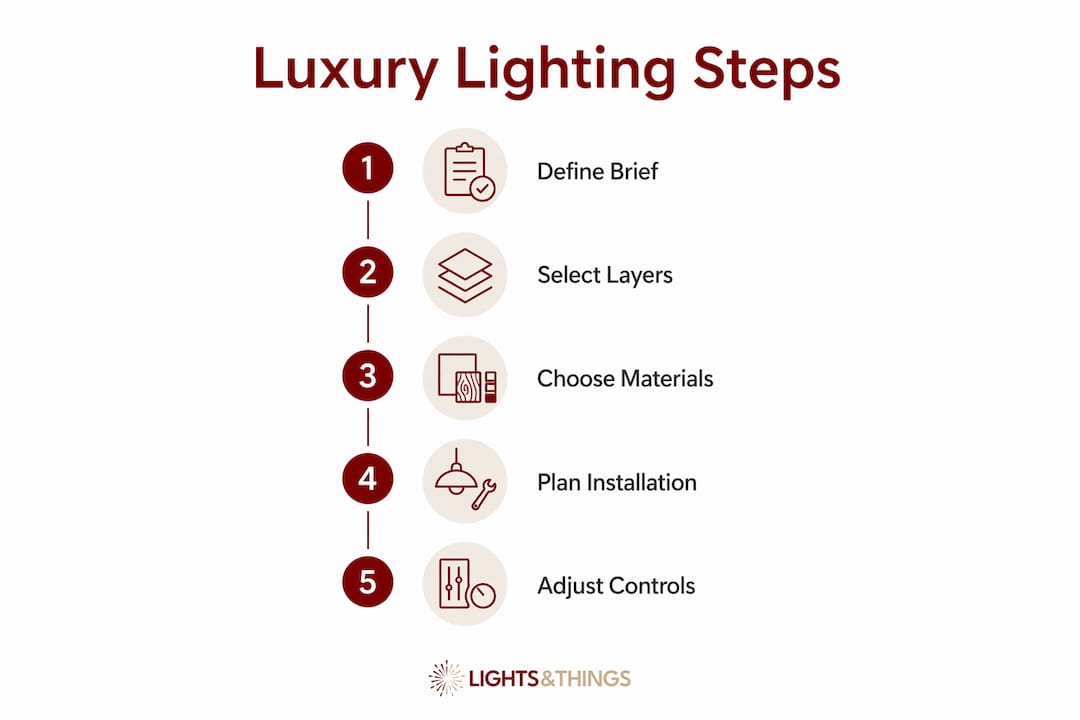
The most common mistake homeowners make is choosing fixtures before defining their lighting needs. Expert guidance is clear: start with a lighting brief that defines the emotional register and behavioral outcomes for each zone in your home. Ask yourself what you want each room to feel like at 7:00 AM versus 9:00 PM. That answer shapes every fixture decision that follows.
A practical approach to designing luxury lighting follows this sequence:
- Write a lighting brief for each room. Define the activities that happen there, the mood you want at different times, and any architectural features worth highlighting. This document guides every purchase decision.
- Plan your layers before selecting fixtures. Decide where ambient, task, accent, and decorative sources will sit. Mark them on a floor plan if possible.
- Choose fixtures that balance form and function. A beautiful chandelier that produces harsh, uncontrollable light is a design failure. Check color rendering index (CRI) ratings, dimming compatibility, and beam angles before buying.
- Prioritize invisible infrastructure. Hidden ceiling lighting keeps the visual field clean and lets your decorative pieces breathe. Spend money on quality recessed hardware before spending it on visible fixtures.
- Mix statement pieces with supporting fixtures. Lighting works like music: statement fixtures carry the melody, while ambient and accent sources provide harmony. A room with only statement pieces feels chaotic. A room with only ambient light feels flat.
- Consult a lighting professional for complex spaces. Open-plan living areas, double-height ceilings, and rooms with significant artwork benefit from coordinated architectural lighting design that accounts for spatial hierarchy and shadow control.
Pro Tip: When selecting table lamps or floor lamps, check whether the shade material diffuses or directs light. A linen shade creates soft ambient glow. A metal shade with a downward opening focuses light for reading. Both are useful, but they serve different layers.
What materials and fixture styles define luxury lighting?
Premium materials are what separate a luxury fixture from a standard one. Crystal, brass, hand-blown glass, alabaster, and verdigris are the defining materials of high-end lighting. Each one affects light quality differently. Crystal refracts light into prismatic patterns across walls and ceilings. Alabaster diffuses light into a warm, even glow that feels almost candlelike. Brass adds warmth and patinas beautifully over time, making fixtures look richer with age.
Fixture style choices also carry significant weight in how a room reads. The most common luxury fixture categories are:
- Chandeliers: The definitive statement piece for dining rooms, entryways, and living rooms. A crystal chandelier anchors a room vertically and signals the design ambition of the entire space.
- Sculptural pendants: Single or clustered pendants with artistic forms work well over kitchen islands, reading nooks, and bedroom seating areas. Their scale and silhouette matter as much as the light they produce.
- Floor lamps: A well-chosen dimmable floor lamp serves both the task and ambient layers simultaneously. Tall arc styles fill corners and add vertical interest. Sculptural bases function as decor even when the lamp is off.
- Wall sconces: Sconces add layered light at eye level, which is the most flattering height for human faces and surfaces. They work especially well in hallways, beside beds, and flanking fireplaces.
The best luxury fixtures function as decorative art pieces when unlit and as precision light sources when switched on. That dual role is the clearest marker of genuine quality. When you browse bedroom lamp styles or explore elegant lighting concepts for living spaces, prioritize fixtures that earn their place in both states.
Key Takeaways
Luxury lighting design succeeds when four independently controlled layers, premium materials, and a clear lighting brief work together to shape both mood and function in every room.
| Point | Details |
|---|---|
| Start with a lighting brief | Define mood and function for each zone before selecting any fixture. |
| Layer all four light types | Ambient, task, accent, and decorative layers must work together and be controlled independently. |
| Prioritize invisible infrastructure | Clean ceilings with recessed spotlights make decorative statement pieces read more powerfully. |
| Choose materials intentionally | Crystal, alabaster, brass, and hand-blown glass each affect light quality and room atmosphere differently. |
| Balance melody and harmony | Pair bold statement fixtures with subtle supporting lights to avoid visual chaos or flatness. |
Why most homeowners get luxury lighting wrong
I have seen hundreds of beautifully furnished rooms that feel somehow off. Nine times out of ten, the problem is lighting. Not the fixtures themselves, but the absence of a plan behind them.
The fixture-first approach is the most common trap. A homeowner falls in love with a chandelier, buys it, hangs it, and then wonders why the room still feels incomplete. The chandelier is the melody, but there is no harmony underneath it. No accent light pulling attention to the fireplace. No warm ambient layer softening the corners. The statement piece ends up fighting for attention in a room that has no supporting structure to make it shine.
What I find most interesting is that the invisible work matters more than the visible. The recessed spotlights nobody notices, the dimmer switches that cost $80 each, the cove lighting tucked behind a ceiling reveal. These are the decisions that make a room feel like it was designed rather than decorated. The lighting brief process feels tedious to most homeowners, but it is the single step that separates a curated space from an expensive-looking one.
My honest advice: spend 20% of your lighting budget on the brief, the plan, and the infrastructure. Then spend the rest on fixtures you genuinely love. That order of operations changes everything.
— Norm Blain
LightsThings: where luxury lighting comes together
Putting a well-designed lighting scheme into practice starts with finding fixtures that deliver on both form and function.
LightsThings carries a curated range of premium ceiling lighting, chandeliers, sculptural floor lamps, and decorative accents built for exactly this kind of intentional design. Whether you are anchoring a dining room with a statement chandelier or layering a living room with a dimmable floor lamp that doubles as sculpture, the catalog covers every layer of a luxury scheme. LightsThings also offers free shipping thresholds, easy returns, price matching, and financing, so you can invest in quality without friction. Browse the full LightsThings collection and find the pieces that make your lighting plan real.
FAQ
What is the difference between luxury lighting design and regular lighting?
Luxury lighting design uses a four-layer framework of ambient, task, accent, and decorative sources with independent controls, while standard lighting typically relies on a single overhead fixture per room. The difference shows up in mood adaptability, material quality, and how intentionally each light source serves the space.
How do I start designing luxury lighting for my home?
Write a lighting brief for each room before selecting any fixtures. Define the activities, moods, and architectural features you want to address, then plan your four layers before making any purchases.
What materials are used in luxury light fixtures?
The most common luxury lighting materials are crystal, brass, hand-blown glass, alabaster, and verdigris. Each material affects light quality differently, from crystal’s prismatic refraction to alabaster’s soft, diffused glow.
What is “Quiet Luxury” in ceiling lighting?
“Quiet Luxury” uses ultra-miniature recessed spotlights to keep ceilings visually clean. The goal is to hide the light source so decorative fixtures read as art rather than competing with functional hardware above them.
Do I need a lighting professional for a luxury lighting project?
Complex spaces like open-plan living areas or rooms with double-height ceilings benefit significantly from professional guidance. A lighting designer coordinates spatial hierarchy, shadow control, and fixture placement in ways that are difficult to achieve through fixture selection alone.