Sculptural decor accents are three-dimensional art pieces that add depth, texture, and character to any living space. Unlike flat wall art, they occupy real volume in a room, casting shadows, catching light, and changing appearance as you move around them. The industry term for this category is “accent sculpture,” though decorators also call them tabletop sculptures, statement pieces, or decorative objects. Current design thinking favors fewer, more impactful pieces over clusters of competing small items. Getting the scale, placement, and lighting right is what separates a curated room from a cluttered one.
1. Sculptural decor accent examples by size and placement
Scale is the single most important decision you make when choosing a sculptural accent. A piece that is too small disappears on a large console table. A piece that is too large overwhelms a side table and crowds the room.
Sizing guidance for furniture surfaces breaks down clearly by surface type:
| Surface | Ideal surface width | Recommended sculpture arrangement |
|---|---|---|
| Coffee table | 36–48 inches | One medium sculpture or a cluster of 2–3 varied pieces |
| Console table | 48–72 inches | One large statement piece or an odd-numbered group of 3–5 |
| Side table | 18–24 inches | One small-to-medium sculpture, ideally under 12 inches tall |
| Bookshelf | 12–36 inches per bay | Two or three pieces of varied height, mixed with books |
| Floor | Open floor space | Large floor sculpture, 24 inches or taller, as a room anchor |
Coffee tables work best with a single medium sculpture or a tight cluster of two or three pieces at different heights. The goal is to create a focal point without blocking sightlines across the table. Console tables, which are typically longer and narrower, can carry a large statement piece on one end balanced by a plant or stack of books on the other.
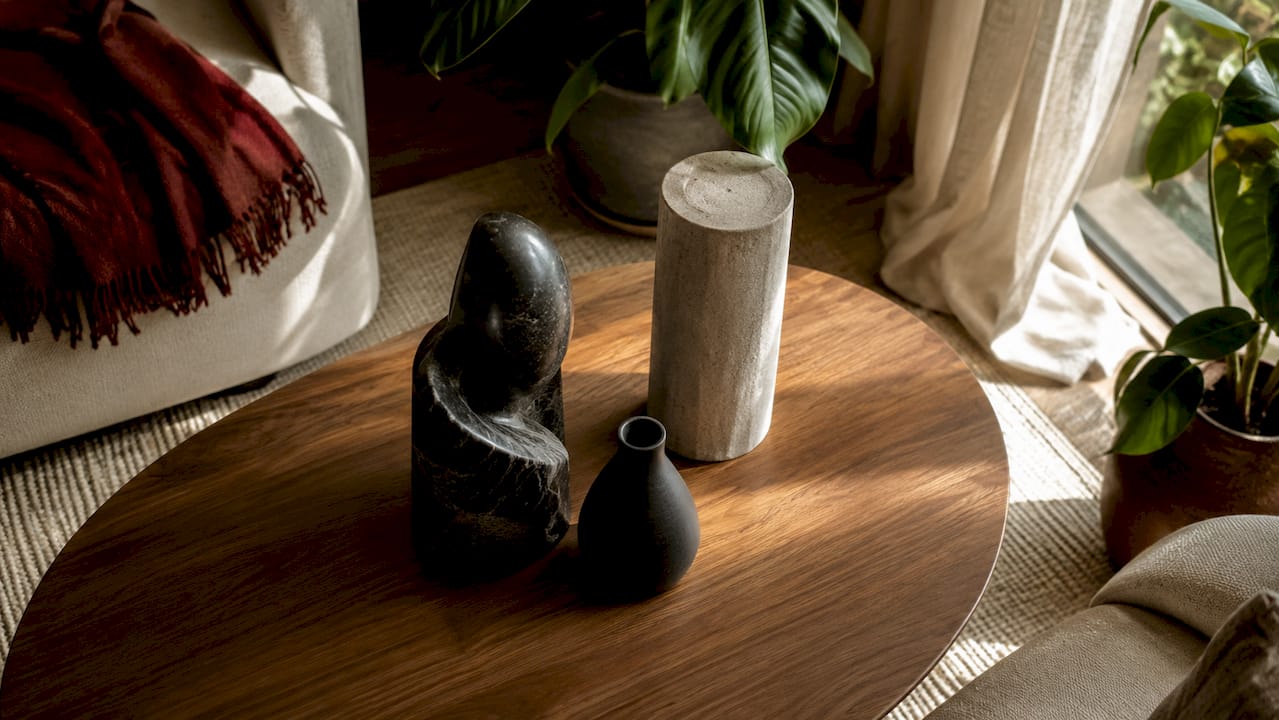
Side tables call for restraint. One well-chosen piece, a ceramic vessel, a small bronze figure, or a geometric resin form, reads more confidently than three competing objects. Grouping by scale and theme prevents visual competition and keeps the eye moving naturally through the room.
Pro Tip: When placing a sculpture near wall art, keep the sculpture’s height at roughly one-third the height of the artwork behind it. This proportion lets both pieces breathe without one overpowering the other.
Triangular compositions with the tallest piece placed off-center and odd-numbered groupings of three or five pieces generate visual energy and balance in tabletop displays. This is the same compositional logic used in professional window displays and gallery installations.
2. Modern accent sculptures that make a statement
Abstract and geometric forms dominate modern interior design right now. They create focal points without demanding a narrative, which makes them versatile across many room styles.
The materials you choose shape the mood of the piece as much as the form does. Here is a breakdown of the most popular sculptural materials in 2026 and what each brings to a space:
- Brushed metal (steel, brass, aluminum): Reflects light and adds an industrial or glamorous edge depending on finish. Pairs well with leather, concrete, and dark wood.
- Ceramic and stoneware: Matte surfaces absorb light softly, adding warmth. Works in organic, Japandi, and transitional interiors.
- Resin and acrylic: Allows bold color and translucency. Ideal for contemporary and eclectic spaces.
- Reclaimed wood and natural fiber: Adds texture and an organic quality. Communicates a grounded, earthy aesthetic.
- Recycled and industrial materials: Kinetic art, industrial steel, and recycled textiles reflect sustainability values while adding tactile interest. These pieces often become conversation starters.
Whimsical and organic forms, think flowing figures, abstract botanicals, and asymmetric vessels, add personality to rooms that might otherwise feel too polished. A single bold ceramic sculpture on a neutral console table does more for a room’s character than a dozen small matching accessories.
Pro Tip: Mixing sculptural eras creates sophistication. A contemporary geometric bronze next to a weathered terracotta vessel signals confidence and a collected aesthetic, not confusion.
3. How to use lighting to enhance sculptural decor accents
Lighting is what makes a sculpture come alive after dark. Flat overhead lighting flattens form and erases shadow. Side lighting and top-down accent lighting reveal texture, depth, and silhouette.
Accent lighting placed close to a sculpture creates shadows that emphasize the piece’s three-dimensional form. A table lamp positioned to the side of a ceramic sculpture, for example, casts a soft gradient across its surface that overhead lighting never achieves.
Here are the most effective lighting strategies for sculptural accents:
- Table lamps: Position beside or slightly behind a tabletop sculpture for gentle, directional light. Choose a lamp with a shade that directs light downward and to the side.
- Adjustable floor lamps: Arc floor lamps with a dimmable head work well for larger sculptures on console tables or floor placements. An arc floor lamp can direct focused light over a piece without requiring ceiling installation.
- Recessed spotlights: Fixed or adjustable ceiling spots aimed at a sculpture create a gallery-style effect. Best for permanent installations.
- Natural light: Natural light enhances sculptural texture during the day while adjustable accent lighting takes over at night for dramatic effect. Place sculptures near windows where morning or afternoon light rakes across their surface.
- Uplighting: A small uplight placed at the base of a large floor sculpture creates dramatic shadows on the ceiling and wall behind it.
For transitional lighting styles that complement sculptural accents, a dimmable fixture gives you the most control over mood throughout the day. Avoid placing sculptures in dark corners where no light source can reach them. A beautiful piece in shadow is a wasted opportunity.
4. Styling sculptural decor accents with complementary elements
A sculpture rarely stands alone in a well-styled room. The objects around it, books, plants, textiles, and trays, determine whether the overall display feels curated or accidental.
Contrast and tension between a sculpture and its surroundings create more compelling design than strict matching. A matte black abstract sculpture on a white marble console, surrounded by a trailing pothos and a stack of art books, creates dialogue between organic and geometric, dark and light, living and still.
Here are the key compositional elements and their visual effects:
- Books: Add horizontal mass and height variation. Stack two or three horizontally, then place a small sculpture on top for a layered vignette.
- Plants: Introduce organic line and color. A trailing plant softens the hard edges of a geometric sculpture.
- Trays: Define the boundary of a display and prevent it from spreading across a surface. Corrals smaller objects into a cohesive group.
- Candles: Add warmth and vertical line. Taper candles in a holder echo the vertical presence of a tall sculpture.
- Textiles: A folded linen throw or a woven runner beneath a display adds texture at the base level.
| Compositional element | Pairing approach | Visual effect |
|---|---|---|
| Sculpture + books | Stack books horizontally, sculpture on top or beside | Layered height, intellectual warmth |
| Sculpture + plant | Place plant to one side, let it trail or arch | Organic contrast, softened edges |
| Sculpture + tray | Contain both within a tray boundary | Defined, intentional grouping |
| Sculpture + candle | Vary heights, keep candle taller or shorter | Vertical rhythm, warmth |
| Sculpture + textile | Lay textile beneath the display | Grounded base, added texture |
The odd-numbered rule and triangular compositions apply here too. When building a vignette on a console table, use three or five objects total, place the tallest off-center, and vary the heights of the remaining pieces. This creates visual energy without chaos.
Pro Tip: Use your sculpture as the accent color anchor in a neutral room. A terracotta ceramic piece on a gray console table pulls the eye and sets the palette for the entire space without requiring you to repaint a wall.
Color theory plays a real role in sculptural styling. Complementary colors, those opposite each other on the color wheel, create the most visual tension and energy. Analogous colors, those adjacent on the wheel, create harmony and calm. Choose your approach based on the mood you want the room to carry.
Key Takeaways
Sculptural decor accents work best when scale, placement, lighting, and complementary styling all reinforce each other rather than compete.
| Point | Details |
|---|---|
| Match scale to surface | Coffee tables suit 36–48 inch arrangements; side tables need restraint with one small-to-medium piece. |
| Use odd-numbered groupings | Groups of three or five with the tallest piece off-center create visual energy and balance. |
| Light from the side | Accent and side lighting reveal sculptural form; flat overhead lighting flattens it. |
| Contrast beats matching | Tension between a sculpture and its surroundings creates more compelling design than uniformity. |
| Fewer pieces, more impact | Sophisticated interiors anchor around one or two strong sculptural pieces rather than many small ones. |
Why sculpture is the most underused design tool in most homes
Most people treat sculpture as an afterthought. They buy a piece because it fills a gap on a shelf, not because it says something about the room. That approach produces spaces that feel furnished but not designed.
The real power of a sculptural accent is its three-dimensional presence. Sculptures should be experienced from multiple angles because their silhouette and shadow change as you move around them. This is something a painting or a print simply cannot do. When you place a sculpture, walk around it. Check it from the sofa, from the doorway, and from across the room. If it reads well from every angle, you have placed it correctly.
I have also noticed that the rooms people remember most are the ones where a sculpture communicates something personal. A piece made from reclaimed materials, a figure that reflects a cultural connection, or an abstract form that the owner simply cannot explain but loves. Sculptures made from recycled or reclaimed materials communicate environmental values without a single word. That kind of intentionality is what separates a memorable room from a catalog photo.
My honest advice: buy one sculpture you genuinely love before you buy five that merely coordinate. A single piece with real presence will do more for a room than a shelf full of safe, matching objects. Restraint is not minimalism. It is confidence.
— Norm Blain
Lighting and decor that complete your sculptural displays
The right lighting fixture does not just illuminate a room. It frames your sculptural accents and gives them the presence they deserve.
At LightsThings, you will find a curated range of floor lamps and chandeliers designed to work alongside decorative accents, not just overhead. The adjustable arc floor lamp is a practical choice for directing focused light over a console table sculpture without ceiling work. For rooms where a chandelier sets the overall mood, the Xiamen LED adjustable chandelier offers directional flexibility that fixed fixtures cannot match. Browse the full collection to find pieces that complement your sculptural accent styling.
FAQ
What are the best sculptural decor accent examples for a coffee table?
A single medium sculpture or a cluster of two to three pieces at varied heights works best on a coffee table in the 36–48 inch range. Use odd-numbered groupings and keep the tallest piece off-center for visual balance.
How do I use a sculpture as an accent piece without overcrowding a space?
Place one well-scaled sculpture as the focal point and limit surrounding objects to two or three complementary items such as books, a plant, or a candle. Sophisticated interiors favor fewer, more impactful pieces over clusters of competing small objects.
What lighting works best for highlighting sculptural accents?
Side or top-down accent lighting, such as a table lamp or adjustable floor lamp positioned close to the sculpture, creates shadows that reveal depth and texture. Flat overhead lighting eliminates the shadow play that makes three-dimensional pieces visually interesting.
What materials are most popular for modern accent sculptures in 2026?
Brushed metal, ceramic, resin, and recycled or reclaimed materials are the leading choices. Each brings a different surface quality and mood, from the reflective edge of steel to the matte warmth of stoneware.
Should a sculpture match the color palette of the room?
Matching a sculpture exactly to the room’s palette is less effective than using contrast. Contrast and tension between a sculpture and its surroundings create more compelling design than strict color uniformity. Use the sculpture as an accent color anchor instead.