Home decor accent pieces are the curated items that transform a house into a warm, personal, and visually complete home. Interior designers define them as the decorative accessories that add texture, color, and focal interest beyond the core furniture. A solid home decor accent pieces checklist covers everything from throw pillows and rugs to statement lighting and sculptural objects. The 60-30-10 color rule remains the standard framework for balancing these pieces: 60% dominant neutral, 30% secondary color, and 10% accent color. Getting this checklist right means the difference between a room that feels finished and one that feels forgotten.
1. What are the essential accent pieces for your living room?
The living room is where your accent piece checklist does the most work. Three anchor pieces create about 70% of the visual impact in a living room: the sofa, the rug, and the primary lighting fixture. Get those three right, and every smaller accent you add will feel intentional rather than random.
Once your anchors are in place, build out the checklist with these core categories:
- Throw pillows: Aim for 5–7 pillows per sofa in a mix of sizes and textures. Vary the fabric, not just the color, to create depth.
- Area rug: Choose a rug large enough so all front legs of your furniture sit on it. Painter’s tape on the floor helps you visualize the right size before you buy.
- Throw blanket: Drape one over the arm of your sofa or a chair. It adds warmth and softens the room’s overall feel.
- Wall art or mirrors: A large framed print or an oversized mirror creates an immediate focal point. One strong piece outperforms a scattered gallery wall in most living rooms.
- Decorative tray: Use a tray on your coffee table to group candles, a small plant, and a few books. It corrals smaller items and makes the surface look styled rather than cluttered.
- Vases and vessels: A tall ceramic vase or a cluster of smaller ones adds organic shape. Fill with dried pampas grass, eucalyptus, or fresh stems depending on the season.
- Books for display: Stack 10–15 books horizontally on shelves or the coffee table. They add color, height, and a sense of personality.
- Candle holders: Group pillar candles or taper holders in varying heights on a mantel or sideboard.
Pro Tip: Soft textures and greenery prevent spaces from feeling cold or unfinished. A single indoor plant on a side table does more for a room’s warmth than three decorative objects of the same size.
2. How do you style accent pieces without creating clutter?
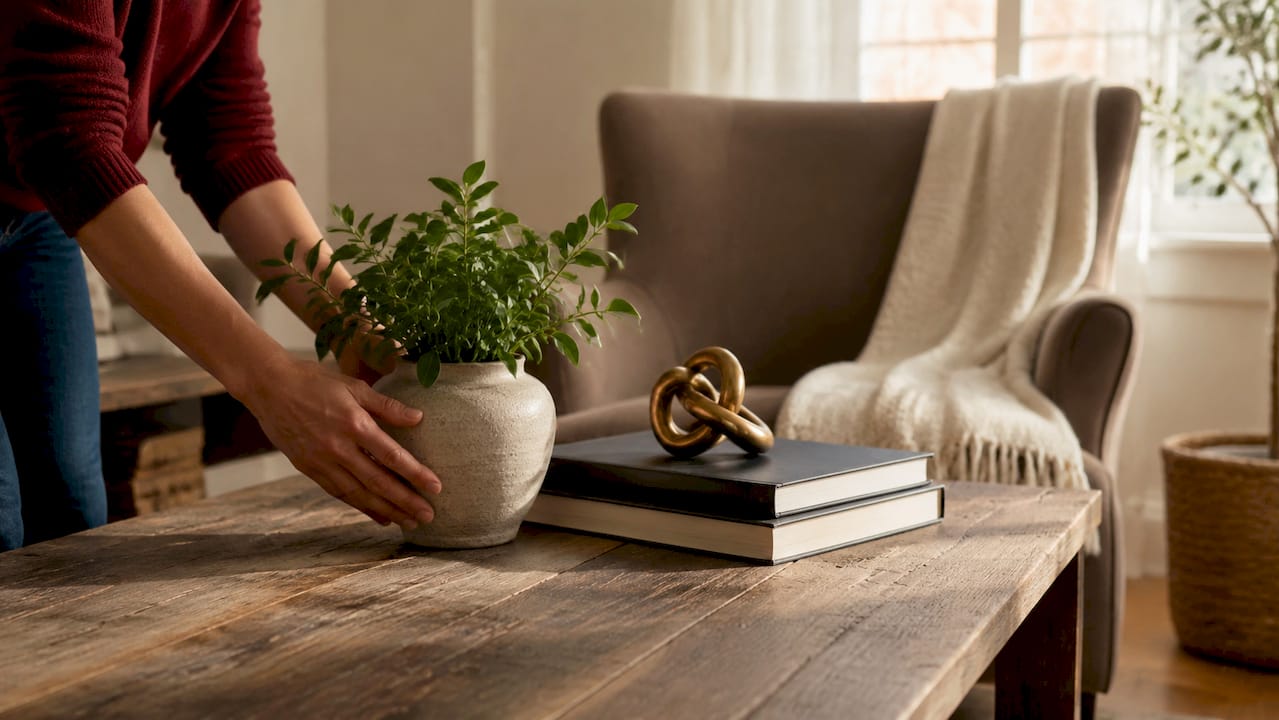
Styling is a skill, and the most common mistake is adding too many pieces without a clear system. The rule of odd numbers is the most reliable technique: group items in threes or fives, never twos or fours. An odd grouping reads as intentional; an even grouping reads as symmetrical and stiff.
Follow these steps to style with confidence:
- Start with one focal point. One large statement piece creates a stronger visual anchor than multiple small items scattered around. Choose an oversized art print, a sculptural object, or a bold lamp, then build around it.
- Add height variation. Use risers, stacked books, or pedestals to create different levels within a grouping. A flat arrangement of same-height objects looks unfinished.
- Apply the 60-30-10 framework. Let your dominant color cover most surfaces, introduce your secondary color through textiles, and use your accent color sparingly in small objects like vases or candle holders.
- Edit ruthlessly. After you arrange a surface, remove one item. If the grouping still looks complete, leave it out. Restraint is what separates a curated room from a crowded one.
- Layer textures, not just colors. Combine matte ceramics with glossy glass, rough linen with smooth velvet. Texture variation creates visual interest even within a neutral color palette.
Pro Tip: Step back and view each arrangement from the room’s main entry point. That is the angle most people see first, and it reveals whether your groupings read as balanced or busy.
3. Accent pieces for the bedroom, dining room, entryway, and bathroom
Every room in your home benefits from a tailored accent piece checklist. The key is matching the function of the room with the type of accent that serves it best.
Bedroom:
- Decorative pillows in a mix of sizes, layered in front of sleeping pillows
- A folded throw at the foot of the bed for texture and warmth
- Personal photo frames on the nightstand or dresser for intimacy
- A small tray on the dresser to organize jewelry and small items stylishly
- A bedside table lamp that provides warm, low-level light for reading
Dining room:
- A centerpiece vase or sculptural object on the dining table, scaled to the table’s length
- Candlesticks or a candelabra for ambient light during meals
- A decorative bowl or tray on a sideboard to anchor that surface
- Framed art at eye level on the walls to complete the room’s visual frame
Entryway:
- A decorative mirror to reflect light and make the space feel larger
- A small tray or bowl on the entry table for keys and mail
- A statement lamp or wall sconce to set the tone for the rest of the home
- A basket or decorative box for storing shoes or scarves out of sight
Bathroom:
- A ceramic or glass soap dispenser to replace plastic pump bottles
- A small potted plant, such as a pothos or air plant, that thrives in humidity
- Rolled towels in a basket for both storage and texture
- A framed print or small piece of art to make the space feel considered
Soft textures and greenery are critical in every room. They absorb sound, add warmth, and signal that a space is lived in rather than staged.
4. What lighting accent pieces should you add to enhance mood?
Lighting is the most underused category on most home styling checklists. Statement lighting pieces serve as both functional elements and artistic focal points. A chandelier or sculptural floor lamp does double duty: it illuminates the room and acts as a decor object in its own right.
A complete lighting plan layers three types of light in each room:
| Lighting type | Purpose | Example fixture |
|---|---|---|
| Ambient | General illumination for the whole room | Chandelier, flush mount |
| Task | Focused light for reading or working | Table lamp, floor lamp |
| Accent | Highlights art, architecture, or decor | Sconce, picture light |
Accent lighting sources include table lamps, floor lamps, sconces, and chandeliers, and mixing them creates depth that a single overhead fixture cannot. A modern arc floor lamp positioned beside a reading chair adds task light and visual height simultaneously. A sculptural chandelier over a dining table becomes the room’s centerpiece before you add a single candle.
When pairing fixtures with your existing decor, match the finish of your lighting to at least one other metal in the room. Chrome pairs with glass and lacquered surfaces. Matte black anchors industrial and minimalist spaces. Warm brass complements natural wood and earthy textiles.
Pro Tip: Aim for 2–3 light sources per room at minimum. A room lit by a single overhead fixture will always feel flat, regardless of how well the other accent pieces are styled.
5. Budget-friendly strategies and overlooked accent pieces
A tight budget does not mean a sparse room. Prioritizing statement pieces first is the most effective approach when funds are limited. One well-chosen large item delivers more visual impact than ten small ones of equal total cost.
- Use trays to group small accessories. A $20 tray makes a collection of candles, a small plant, and a few stones look like a deliberate vignette rather than random objects.
- Buy multi-use items. A woven basket stores blankets and adds texture. An upholstered ottoman serves as a footrest, extra seating, and a surface for a tray.
- Add plants. A pothos, snake plant, or fiddle-leaf fig costs less than most decorative objects and adds organic color and life to any room.
- Print and frame artwork. High-resolution art prints from public domain archives or design marketplaces, framed in simple black or natural wood frames, look polished at a fraction of gallery prices.
- Restyle what you already own. Moving a lamp from the bedroom to the living room, or relocating a vase to the entryway, often reveals that you already have what you need in the wrong place.
Decorating is iterative. Expert designers advise frequent editing and layering for balanced results rather than rushing to finish a room in one shopping trip.
Key takeaways
A complete home decor accent pieces checklist prioritizes anchor pieces first, applies the 60-30-10 color rule, layers three types of lighting, and groups accessories in odd numbers for visual balance.
| Point | Details |
|---|---|
| Anchor pieces first | Sofa, rug, and primary lighting create about 70% of a living room’s visual impact. |
| Use the 60-30-10 rule | Assign 60% to a dominant neutral, 30% to a secondary color, and 10% to accent pieces. |
| Layer your lighting | Include ambient, task, and accent sources, aiming for 2–3 fixtures per room. |
| Group in odd numbers | Arrange accessories in threes or fives with height variation to avoid clutter. |
| Edit before you add | Remove one item from each grouping after styling to test whether it still reads as complete. |
Styling is a process, not a project
People ask me all the time how long it takes to finish decorating a room. My honest answer: a well-styled room is never finished. That sounds discouraging, but it is actually freeing.
The rooms I have seen styled most beautifully were not completed in a single weekend shopping trip. They were built over months, sometimes years, with pieces added, moved, and occasionally removed as the homeowner’s taste evolved. Home styling trends in 2026 favor bold, expressive decor that showcases personal identity through pattern layering and statement lighting. That kind of confidence does not come from buying everything at once.
What I tell anyone starting a checklist is this: buy the anchor pieces first and live with them for a few weeks before adding anything else. You will quickly see what the room needs and, more importantly, what it does not. Most decorating mistakes come from filling space too quickly.
The other thing most guides skip is the value of stepping back. After you style a shelf or a coffee table, walk to the opposite side of the room and look at it from there. That distance reveals whether your groupings feel balanced or whether one side is pulling too much weight. Editing from a distance is the single habit that separates a room that looks curated from one that looks collected.
Experiment with textures and heights freely. Move things around. Let the room tell you what it needs. The checklist gives you a framework, but your instincts give it personality.
— Norm Blain
Lighting accent pieces from LightsThings
Lighting is the one accent category where the right piece does two jobs at once: it illuminates your space and anchors your entire decor scheme. LightsThings carries a curated range of statement fixtures built for exactly that purpose.
The LightsThings collection spans sculptural floor lamps, adjustable chandeliers, and crystal fixtures that work as art objects as much as light sources. If you are building out the lighting layer of your checklist, the Xiamen LED Adjustable Chandelier and the Modern Spiral LED Floor Lamp are strong starting points for living rooms and dining spaces. LightsThings offers free shipping on qualifying orders, easy returns, and financing options, so you can invest in a statement piece without the usual risk.
FAQ
What are home decor accent pieces?
Home decor accent pieces are decorative accessories added beyond core furniture to introduce texture, color, and focal interest. They include throw pillows, rugs, vases, art, mirrors, candle holders, and lighting fixtures.
How many accent pieces does a living room need?
A living room typically needs 2–3 light sources, 5–7 throw pillows, and a curated mix of 8–12 surface accessories grouped across the coffee table, shelves, and side tables.
What is the 60-30-10 rule in home decor?
The 60-30-10 rule assigns 60% of a room’s color to a dominant neutral, 30% to a secondary color, and 10% to accent pieces. It is the standard framework for balanced interior color schemes.
How do I avoid clutter when styling accent pieces?
Group items in odd numbers, vary their heights using risers or stacked books, and remove one piece from each arrangement after styling. One large statement piece creates more impact than several small ones.
What is the most overlooked accent piece in home decor?
Lighting is the most overlooked category. Most rooms rely on a single overhead fixture, but layering table lamps, floor lamps, and sconces creates the depth and warmth that make a room feel finished.