Coastal lighting means fixtures and lighting strategies that reproduce the soft, airy quality of seaside light while using materials and ratings that hold up to salt air and humidity. At its core, the style is about texture and light quality, not anchors and rope. Here is what matters most:
- Aim for warm, diffused light in a warm color temperature range; layer ambient, task, and accent sources on separate dimmers for flexibility after dark.
- Choose corrosion-resistant finishes (aged brass, bronze, powder-coated steel) and verify damp or wet ratings for any fixture near moisture.
- LightsThings curates coastal-ready fixtures across pendants, sconces, and table lamps. Norm Blain, who contributes editorial guidance for the brand, grounds these recommendations in real homeowner projects.
Table of Contents
- What actually defines coastal lighting style?
- How to layer lighting the coastal way
- Which fixture types and finishes read as coastal?
- Room-by-room coastal lighting guide
- Common coastal lighting mistakes to avoid
- How to choose coastal fixtures: a practical checklist
- Curated LightsThings picks that bring the look to life
- Key Takeaways
- Why the “coastal look” is harder to fake than it seems
- Ready to shop the coastal look at LightsThings?
- Useful sources and further reading
What actually defines coastal lighting style?
The visual signature is restraint. Think light, airy palettes built from sand, sea glass, and bleached wood tones, expressed through materials like rattan, woven seagrass, capiz shell, weathered timber, and watery or frosted glass. These textures scatter and soften light rather than directing it in a hard beam, which is exactly the effect you want. Regional differences shape the look considerably: West Coast homes favor minimalist natural-material fixtures, New England leans toward traditional brass lanterns, and Gulf Coast interiors blend tropical warmth with hurricane-resilient hardware.
The technical side is just as defining. Color temperature matters: 2700K–3000K produces the warm, golden glow that reads as late-afternoon coastal light. Anything above 4000K feels clinical and breaks the mood. For finishes, aged brass and oil-rubbed bronze resist salt air better than chrome or nickel, and powder-coated steel is a solid mid-range option. In genuinely exposed positions, solid brass, copper, or stainless steel are the most durable choices.
Sophisticated coastal lighting evokes the sea through texture and light quality rather than literal maritime decorations. Over-theming is the most common stylistic mistake homeowners make.
Pro Tip: Natural light orientation shapes your layering needs. East-facing rooms get gentle morning sun and need less ambient fill; south- and west-facing rooms benefit from layered lighting with glare control built in.
For a broader look at how fixture choices define a room’s character, the LightsThings guide on interior style and lighting covers the principles that apply across coastal and other aesthetics.
How to layer lighting the coastal way
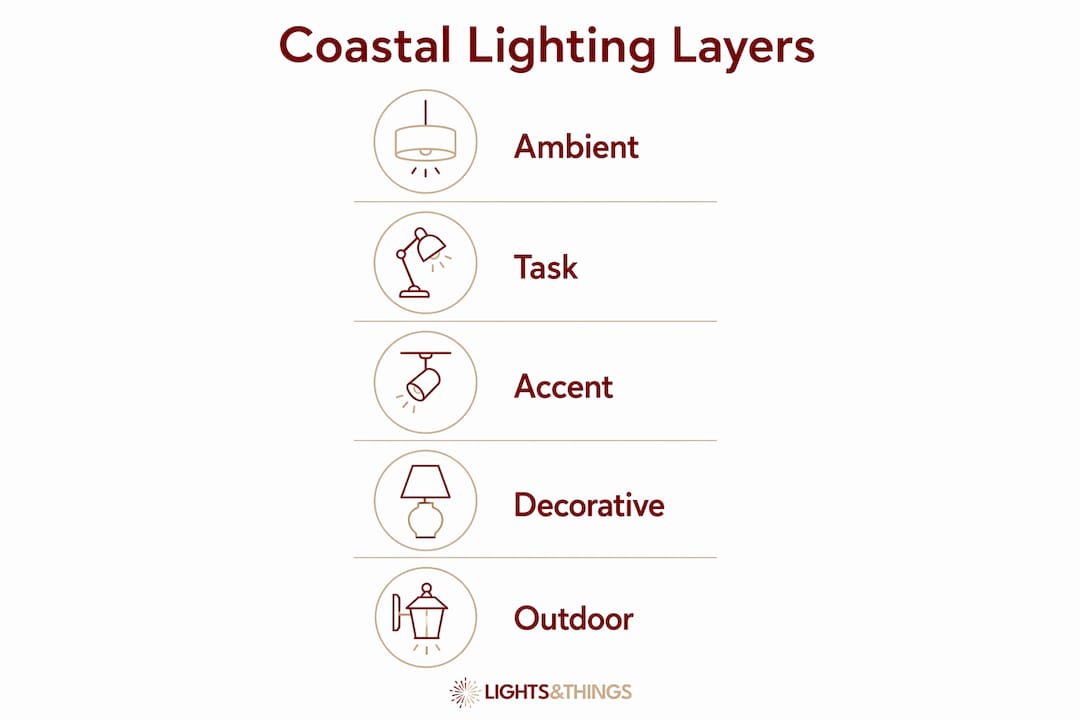
Three layers build the look: ambient, task, and accent. Each has a specific coastal purpose.
- Ambient lighting is the warm, diffuse foundation. A dimmable central pendant or lantern anchors the room; woven-fiber or frosted-glass shades spread light softly rather than casting a spotlight. This is the layer that sets the mood.
- Task lighting delivers purpose-driven clarity without disrupting the overall warmth. Under-cabinet strips in the kitchen, bedside sconces in the bedroom, and vanity fixtures in the bathroom all fall here. Keep task sources at 3000K–3500K so they read as bright but not harsh.
- Accent lighting adds texture and depth. A small directional fixture aimed at a textured wall, a table lamp with a linen shade beside a reading chair, or a low-wattage bulb inside a capiz chandelier all create the pools of warm light that define the coastal mood after dark.
For placement, the general rule is three to five light sources on at least two circuits per room. A single overhead fixture flattens the space and destroys the layered effect. Put pendants over islands and dining tables, sconces flanking beds or mirrors, and table lamps in corners to draw the eye around the room.
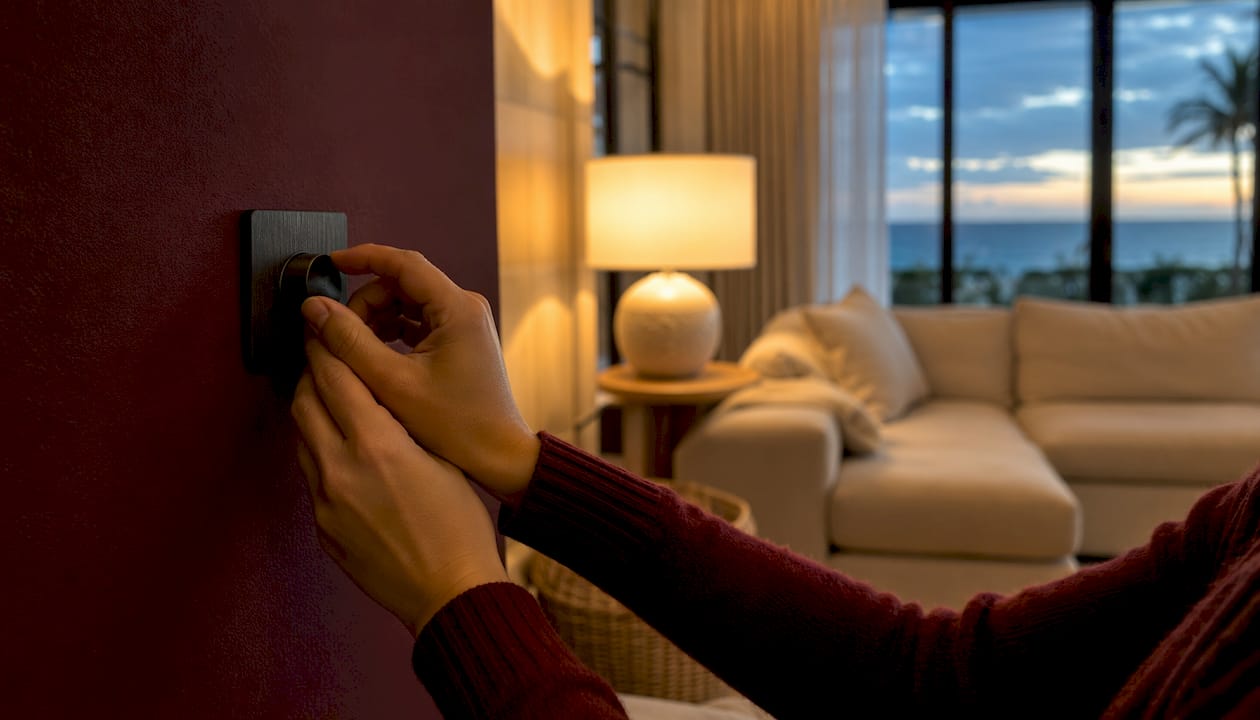
Pro Tip: Separate circuits and dimmers are not optional in a well-executed coastal scheme. Dimmers and separate circuits let you dial each layer independently, creating the “barefoot luxury” mood professionals describe. Budget for this in your electrical plan.
More detail on building accent layers is available in the LightsThings guide to accent lighting for homeowners.
Which fixture types and finishes read as coastal?
The fixture catalog for this style is wider than most homeowners expect. Here is a quick reference:
| Fixture Type | Coastal Application | Finish to Prioritize | Durability Note |
|---|---|---|---|
| Woven-fiber pendant | Living room, dining, bedroom | Natural or whitewashed | Indoor/semi-covered only |
| Capiz chandelier | Dining room, entryway | Brass or chrome frame | Indoor; fragile in humidity |
| Bulkhead/nautical sconce | Bathroom, porch, hallway | Solid brass, bronze, powder coat | Damp or wet rated |
| Ceramic table lamp | Bedside, console | Matte white, sea-glass blue | Standard indoor |
| Driftwood floor lamp | Living room corner | Natural/unfinished | Indoor only |
| Lantern pendant | Entry, kitchen island | Aged brass, matte black | Damp rated for covered porch |
Natural fiber pendants in rattan or seagrass soften light beautifully and add texture, but they belong only in protected indoor or semi-covered outdoor settings unless you specify treated or synthetic alternatives.
For finishes, aged brass and oil-rubbed bronze are the workhorses of the coastal palette. Matte black reads as more contemporary coastal and pairs well with whitewashed wood. Avoid polished chrome in salt-air environments; it corrodes faster than any other common finish. In exposed outdoor positions, solid brass, stainless steel, and powder-coated aluminum are the materials that actually last.
- Damp-rated fixtures: suitable for covered porches, bathrooms with no direct water spray
- Wet-rated fixtures: required for open porches, exterior walls, and any position exposed to rain
- Coastal/marine-grade: specified for homes within roughly one mile of the ocean, where salt-air corrosion is accelerated
Room-by-room coastal lighting guide
Living room
The living room calls for a dimmable central pendant or lantern as the anchor, sized generously so it reads from across the room. Pair it with two or three table lamps in corners and on side tables to create pools of warm light. If the room has significant glazing or ocean views, keep the fixture palette light and airy so it does not compete with the view. A well-planned living room typically uses a pendant plus multiple flanking sources for layered lighting.
Kitchen and dining
Oversized pendants over an island or dining table are the signature move. For ceiling height guidance, hang pendant bottoms at a height proportionate to the countertop and dining table to balance scale and sight lines. For low ceilings, a flush mount with a woven or frosted shade keeps the coastal feel without crowding the space. Scale matters: one undersized pendant over a large island looks timid; two or three pendants in a row read as intentional.

Bedroom
Bedside sconces free up nightstand space and keep the look clean. Wall-mounted reading sconces with a warm 2700K bulb and a linen or rattan shade are the most common choice. If you prefer table lamps, a ceramic or driftwood base with a drum shade in natural linen works well. Dimming is non-negotiable in a bedroom; the ability to drop the light to 10% at night is what makes the room feel restful.
Bathroom
Nautical-style vanity and bulkhead fixtures are both an aesthetic and functional choice here. Their original marine design prioritized moisture resistance, which translates directly to bathroom durability. For a single-sink vanity, target a bright but warm lumen output and a moderate color temperature for accurate grooming light. The NEC requires wet-rated fixtures within three feet of a tub or shower; damp-rated fixtures are acceptable beyond that zone. Avoid standard interior fixtures in high-moisture bathrooms near the coast.
Porch and outdoor
Outdoor coastal fixtures require sealed gaskets, wet-location ratings, and finishes specified for salt air. Solid brass, bronze, stainless steel, and powder-coated aluminum are the right materials. If your home is on or near the Gulf Coast or Florida’s Atlantic shore, check local sea turtle lighting ordinances, which restrict certain wavelengths and brightness levels on beachfront properties.
Pro Tip: Test any outdoor fixture placement at night before committing to installation. Poor placement and outward-aimed lights create glare that undermines coastal ambiance and can violate wildlife ordinances.
Common coastal lighting mistakes to avoid
The most frequent errors fall into four categories: over-theming with literal motifs, relying on a single light source, choosing undersized fixtures, and installing non-rated fixtures in moist or exposed areas.
The thematic trap is real. Homeowners who use ship wheels, anchors, or obvious props often create a kitschy result. Achieving the look through materials and light quality, rather than props, is what separates sophisticated coastal from a souvenir shop.
Correcting over-theming is straightforward: swap a literal anchor-motif sconce for a plain brass bulkhead fixture. The shape reads as nautical; the absence of the motif reads as refined. For scale, hold a piece of cardboard cut to the fixture’s diameter against the ceiling before ordering. A pendant that looks large in a product photo often disappears in a real room.
For non-rated fixtures in moist spaces, the fix is simply specifying correctly from the start. Check the label: “damp rated” or “wet rated” must appear on any fixture going into a bathroom, covered porch, or outdoor position. Standard interior fixtures corrode quickly in coastal conditions.
Pro Tip: Before final installation, mock up the fixture effect with a temporary task lamp or a bare bulb at the planned mounting height. This one step catches scale and placement errors that are expensive to fix after the electrician leaves. For guidance on proportion and scale, the LightsThings article on luxury lighting design is worth reading.
How to choose coastal fixtures: a practical checklist
Work through these questions for every fixture before you buy:
- Finish material: Is it aged brass, bronze, powder-coated steel, or stainless? Avoid chrome or nickel in salt-air environments.
- Moisture rating: Does the label say damp rated or wet rated? Match the rating to the location.
- Sealed gaskets: For outdoor and bathroom fixtures, confirm gaskets are present and the housing is sealed.
- Bulb compatibility: What base type and maximum wattage does the fixture accept? Confirm LED compatibility and dimmer compatibility.
- Color temperature: 2700K–3000K for ambient; 3000K–3500K for task. Avoid anything above 4000K in living and sleeping areas.
- CRI: Aim for CRI 90+ for spaces where color accuracy matters (bathrooms, kitchens). CRI 80+ is acceptable for ambient-only fixtures.
- Dimmer compatibility: Confirm the fixture and bulb are rated for the dimmer switch you plan to use.
- Mounting weight and ceiling type: Heavier fixtures (capiz chandeliers, large rattan pendants) require a rated ceiling box; confirm before installation.
For budget planning, coastal-style pendants and sconces are available across a range of prices, with more expensive options reflecting solid-brass or shell materials. Installation costs vary based on complexity and location. The LightsThings decorative lighting buying guide covers additional questions to ask retailers and contractors.
Pro Tip: Ask your retailer about finish maintenance before you buy. Unlacquered brass develops a natural patina that many homeowners love, but lacquered brass needs occasional touch-up to prevent peeling in humid conditions.
Curated LightsThings picks that bring the look to life
LightsThings carries a range of fixtures that map directly to the recommendations above. Here are three starting points:
- Woven-fiber pendant: A rattan or seagrass pendant in a natural or whitewashed finish works as the ambient anchor in a living room or dining area. Look for a frosted or diffuser panel inside the shade to soften the bulb. Price range: $80–$180. Pair with a 2700K LED bulb on a dimmer.
- Aged-brass bulkhead vanity fixture: A wall-mounted brass or bronze bulkhead sconce brings nautical character to a bathroom without literal motifs. Confirm damp rating. Price range: $120–$260. Use a 3000K–3500K bulb at 1,600–2,000 lumens for a single-sink vanity.
- Capiz-inspired chandelier alternative: A tiered chandelier with shell or frosted-glass elements reads as coastal in a dining room or entryway. Scale up: for a dining table 48 inches or wider, choose a fixture at least 24 inches in diameter. Price range: $200–$500+.
Browse the full decorative lighting collection at LightsThings to find pendants, sconces, and table lamps that match these specs. For ceiling-specific options, the ceiling lighting collection covers pendants and chandeliers sized for coastal living rooms and dining spaces.
Pro Tip: When pairing fixtures across a room, stick to one finish family. Mixing aged brass with matte black works; mixing three different metals in one space reads as unplanned. A curated lighting collection built around one or two finishes always looks more intentional.
Key Takeaways
Coastal lighting works because it prioritizes soft, diffused light and natural texture over literal nautical motifs, layered across multiple sources on dimmers.
| Point | Details |
|---|---|
| Light quality over motifs | Aim for 2700K–3000K warm light diffused through woven, glass, or shell materials. |
| Layer on separate circuits | Use three to five sources per room on at least two circuits with dimmers for full flexibility. |
| Match ratings to location | Specify damp-rated for bathrooms and covered porches; wet-rated for open outdoor positions. |
| Avoid literal theming | Choose texture-based fixtures (rattan, brass, capiz) rather than anchor or ship-wheel motifs. |
| LightsThings as your resource | LightsThings offers curated coastal pendants, sconces, and table lamps with guidance from Norm Blain. |
Why the “coastal look” is harder to fake than it seems
Most homeowners assume coastal lighting is just a matter of buying the right fixture. The harder truth is that the mood comes from how light behaves in a space, not from what the fixture looks like in a product photo. A rattan pendant hung over a single bare bulb on a non-dimmed circuit will look exactly like what it is: one light source in a room that needed three.
The neutral layering principles that work in Scandinavian and organic-modern interiors apply here too. Warmth comes from accumulation: a low pendant, two table lamps, maybe a small accent source in a corner. Each layer adds depth. Remove one and the room flattens. This is why the dimmer and separate-circuit guidance matters so much in practice.
The other thing most guides understate is regional specificity. A Gulf Coast home in Florida needs hurricane-rated hardware and sea-turtle-compliant outdoor fixtures. A New England beach house can lean into traditional brass lanterns without worrying about the same ordinances. Knowing your region’s constraints before you shop saves money and avoids a second installation visit. The slow-living design principles trending in 2026 align naturally with coastal aesthetics: fewer, better fixtures chosen with intention rather than a room full of themed props.
Ready to shop the coastal look at LightsThings?
LightsThings makes it straightforward to find fixtures that match the specs in this guide, without sorting through thousands of unfiltered results. The decorative lighting collection is organized by style and finish, so you can move from pendant to sconce to table lamp within a single aesthetic. Free shipping thresholds, easy returns, and financing options mean you can commit to a full layered scheme without the usual risk of a single large purchase.

Start with the decorative lighting collection to find pendants, sconces, and table lamps that fit the coastal palette. If you need ceiling-specific options for a dining room or living room, the ceiling lighting collection covers chandeliers and pendants sized for the spaces described above.
Useful sources and further reading
- Coastal Beach Home Lighting Guide, Marisol Gullo Interiors: layering strategy, dimmer guidance, material durability, and outdoor fixture specs.
- Coastal Lighting Inspirations for Beachfront Homes, YG Marley: regional U.S. variations in aesthetic and material choices.
- 36 Coastal Decor Ideas, The Spruce: designer guidance on avoiding literal nautical clichés and using texture instead.
- Nautical Vanity Lighting, Kleender: bathroom fixture recommendations, lumen targets, and color temperature guidance.
- 10 Easy Pieces: Outdoor Nautical Bulkhead Lighting, Remodelista: curated outdoor bulkhead fixture examples with wet-location ratings.
- Avoiding Common Outdoor Lighting Mistakes, FLC Select: practical corrective tips for placement and glare errors.
- How Lighting Defines Interior Style, LightsThings (Norm Blain): author credit and broader stylistic context for coastal and other design aesthetics.