Curating a home lighting collection means selecting and arranging fixtures with intention, combining ambient, task, and accent lighting to build a layered atmosphere that serves both your daily needs and your personal style. Most rooms suffer not from too little light, but from the wrong kind, placed in the wrong spots. A single overhead fixture flattens a space and strips it of warmth. The design principle of lighting layers solves this by distributing light at multiple heights and angles, creating depth, comfort, and visual interest throughout your home.
What are the three layers of lighting and how do they work together?
A well-designed lighting plan rests on three distinct layers: ambient, task, and accent. Each layer serves a different purpose, and together they create the kind of depth that makes a room feel finished and inviting.
Ambient lighting is the foundation. It provides general, overall illumination for a room. Chandeliers, flush-mount ceiling fixtures, and recessed lights all fall into this category. Ambient light sets the baseline brightness and defines the room’s mood at its most open setting.
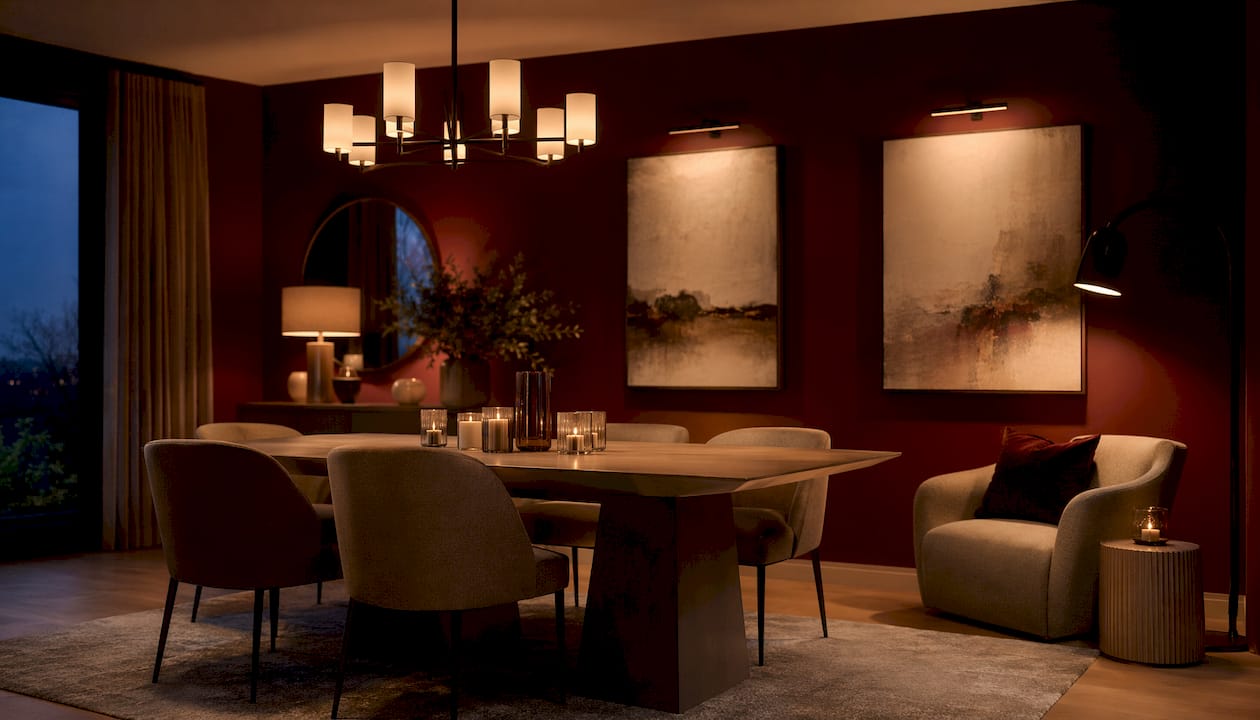
Task lighting is focused and functional. It targets specific activities like reading, cooking, or applying makeup. Reading lamps beside a sofa, under-cabinet lights in a kitchen, and vanity lights in a bathroom are all task fixtures. Without task lighting, you end up squinting under a ceiling light that was never designed for close work.
Accent lighting adds drama and personality. Sconces, picture lights, shelf lighting, and directional spotlights all fall here. Accent light draws the eye to artwork, architectural features, or decorative objects. It is the layer most homeowners skip, and it is the one that makes the biggest visual difference.
A balanced lighting plan includes all three types regardless of room size or function. Large living rooms can support 10 or more light sources without feeling cluttered. That number sounds high, but when you count floor lamps, table lamps, sconces, and a chandelier together, it adds up fast.
- Ambient: Chandeliers, recessed lights, flush-mount ceiling fixtures
- Task: Reading lamps, under-cabinet lights, desk lamps, vanity lights
- Accent: Sconces, picture lights, shelf lighting, directional spotlights
Pro Tip: Aim for at least 2–3 light sources per room at different heights. A ceiling fixture plus a floor lamp plus a table lamp is a simple starting formula that works in almost any space.
How to plan your home lighting collection by room function
Lighting should be planned as a system built around activities before you ever choose a fixture. This approach prevents the common trap of buying beautiful lights that look great in a showroom but fail in your actual space.
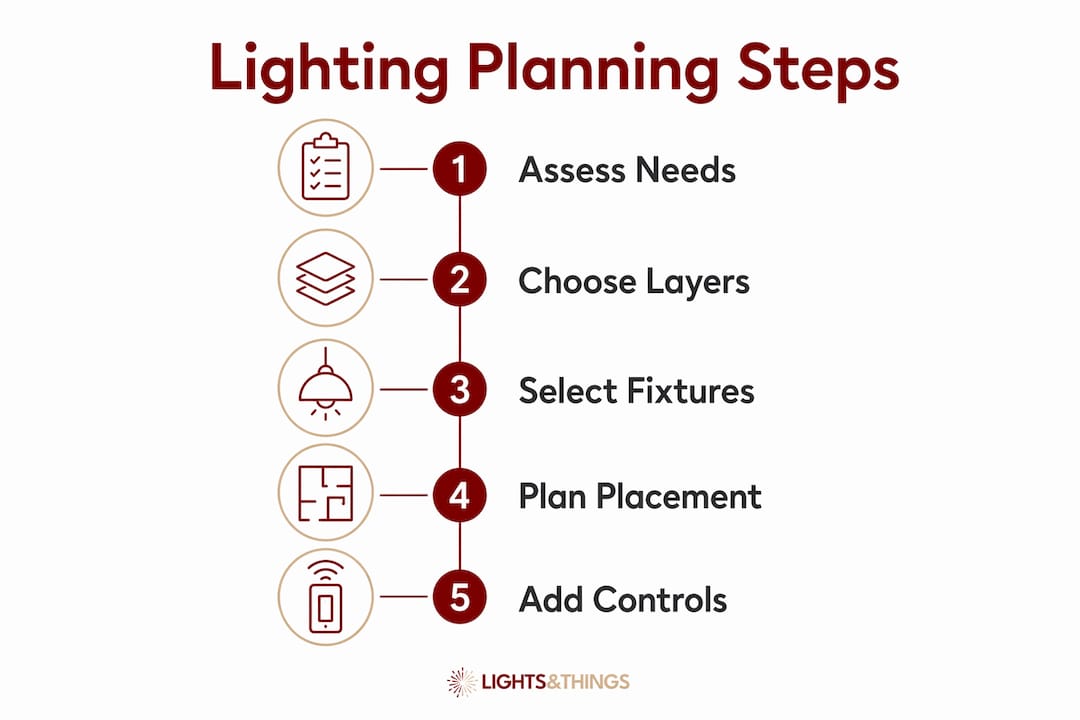
Start by listing every activity that happens in each room. A living room might include watching TV, reading, hosting guests, and working on a laptop. Each activity has a different lighting need. Once you have that list, you can map out which layer serves each task.
A practical room-by-room approach:
- Living room: Anchor the room with a chandelier or pendant for ambient light. Add a floor lamp beside the sofa for reading. Place table lamps on end tables for warm, low-level glow in the evening. Use a sconce or two to highlight art or a fireplace wall.
- Kitchen: Recessed lights or a ceiling fixture handle ambient needs. Under-cabinet lights are non-negotiable for prep work. A pendant over an island adds both task light and style.
- Bedroom: A ceiling fixture or chandelier sets the ambient tone. Bedside table lamps or wall-mounted reading lights handle task needs. A dimmer on every circuit gives you full control from bright morning light to soft evening wind-down.
- Bathroom: Overhead lighting alone creates unflattering shadows on the face. Side-mounted vanity lights at eye level are far more effective for grooming tasks. Add a small accent light or backlit mirror for depth.
Room size and ceiling height also shape your choices. A room with 9-foot ceilings can handle a pendant hung lower for intimacy. A room with 8-foot ceilings needs a flush-mount or semi-flush fixture to avoid the fixture feeling cramped.
Pro Tip: Install dimmers on every circuit you can. Dimming is the single most cost-effective upgrade you can make to an existing lighting plan. It gives one set of fixtures the range of a full lighting system.
Natural light matters too. A north-facing room with little sunlight needs warmer, brighter artificial light to compensate. A sun-drenched south-facing room can rely on softer, lower-wattage fixtures during the day.
How to select and mix fixtures for a cohesive, stylish look
Cohesive lighting does not mean perfectly matching fixtures. Designers recommend a 60/40 or 70/30 metal finish ratio when mixing fixtures in a room. This means one finish dominates, say brushed brass, while a secondary finish, like matte black, appears as an accent. The result feels curated and collected rather than builder-basic.
Repeating a finish or silhouette across sightlines is the key technique. If you have a brass chandelier in the dining room and a brass floor lamp in the adjacent living room, your eye connects them naturally as you move through the space. That visual thread is what makes a home feel designed rather than assembled.
- Pick a dominant finish and let it appear in your largest or most visible fixture.
- Introduce a secondary finish in smaller supporting pieces like table lamps or sconces.
- Avoid three or more competing finishes in a single room. Two is intentional. Three starts to feel accidental.
- Mix shapes deliberately. A round chandelier pairs well with rectangular sconces. Matching shapes in every fixture reads as monotonous.
- Choose bulbs with care. Kelvin temperatures between 2700K and 3000K produce warm, flattering light for most home settings. Anything above 3500K feels clinical and cold.
For renters, plug-in sconces offer a genuine architectural lighting solution without any rewiring. Routing the cord along a baseboard or painting a cord cover to match the wall makes the installation look intentional. You get the visual impact of a hardwired fixture without touching the walls.
Pro Tip: When mixing styles, check out the LightsThings guide on blending modern and traditional lighting for specific pairing strategies that work across different interior styles.
| Finish combination | Visual effect |
|---|---|
| Brushed brass + matte black | Warm, contemporary contrast |
| Polished nickel + white ceramic | Clean, transitional look |
| Oil-rubbed bronze + natural wood | Earthy, organic warmth |
| Chrome + smoked glass | Modern, minimal edge |
Best placement practices for layering light sources effectively
Distributing light sources at different heights and angles is the single most effective way to avoid flat, uninviting rooms. Most homeowners default to one ceiling fixture per room. That approach leaves the lower half of the room in shadow and makes walls feel distant and cold.
Follow these placement principles:
- Vary the height of your sources. Combine ceiling fixtures, wall sconces at eye level (roughly 60–66 inches from the floor), floor lamps, and table lamps. Each height zone lights a different part of the room.
- Position task lights close to the work. A reading lamp should sit just above shoulder height when you are seated. A desk lamp should illuminate the work surface without shining directly into your eyes.
- Place sconces flanking a bed, mirror, or artwork rather than above them. Side lighting is more flattering and more functional than top-down light in most situations.
- Use mirrors to amplify light. A mirror placed opposite a lamp or window reflects light back into the room, effectively doubling the perceived brightness without adding a fixture.
- Avoid placing task lights directly overhead for desk work or video calls. Side lighting perpendicular to windows reduces glare and harsh shadows on the face, which matters more than ever for remote work.
| Fixture type | Recommended placement height |
|---|---|
| Wall sconce | 60–66 inches from floor |
| Pendant over dining table | 30–36 inches above table surface |
| Chandelier in entryway | 7 feet minimum clearance from floor |
| Table lamp | Eye level when seated |
For a deeper look at how these principles apply room by room, the LightsThings living room lighting guide covers specific placement strategies with practical examples.
Common mistakes to avoid when building your lighting collection
Most lighting problems come down to a short list of avoidable errors. Recognizing them before you shop saves both money and frustration.
- Relying on a single overhead light. One ceiling fixture cannot do the work of a layered system. It creates flat, even light with no depth, no warmth, and no flexibility.
- Choosing fixtures based only on looks. A beautiful pendant that casts light upward into a vaulted ceiling does nothing for the people sitting beneath it. Function must come before form in the selection process.
- Over-matching fixtures. Buying a matched set of chandelier, sconces, and table lamps from the same collection produces a builder-basic look. Mixing finishes and styles creates a space that feels personal and considered.
- Skipping dimmers. A fixture without a dimmer is locked into one mood. Dimmers cost very little to install and give you complete control over atmosphere at any hour.
- Ignoring bulb color temperature. Swapping in a 5000K daylight bulb to save money on a warm-toned fixture undoes all your design work. The fixture and the bulb must work together.
- Shopping without a plan. Buying fixtures room by room, without mapping out lighting zones first, leads to gaps, redundancies, and a collection that never quite comes together.
Lighting cohesion is best achieved through repeated finishes rather than exact matching. A space built this way feels curated and personal rather than assembled from a catalog. Plan your zones first, then let your fixture choices follow the function.
Key takeaways
A well-curated home lighting collection combines ambient, task, and accent layers, mixes finishes with intention, and places fixtures at varied heights to create depth and warmth in every room.
| Point | Details |
|---|---|
| Layer all three types | Every room needs ambient, task, and accent lighting to feel complete and functional. |
| Plan by activity first | List what happens in each room before selecting any fixture to avoid mismatched function. |
| Mix finishes, don’t match | Use a 60/40 or 70/30 finish ratio to create a collected look rather than a builder-basic set. |
| Warm bulbs matter | Choose bulbs between 2700K and 3000K for flattering, inviting light in living spaces. |
| Dimmers multiply your options | Installing dimmers on every circuit gives one set of fixtures the range of a full lighting system. |
Lighting is the most overlooked design decision in most homes
After years of thinking about how light shapes a room, I am still surprised by how often homeowners treat it as an afterthought. Paint colors get agonized over. Furniture gets measured twice. But lighting? People grab whatever fits the ceiling box and call it done.
The truth is that lighting has more impact on how a room feels than almost any other single element. A room with mediocre furniture but great layered lighting feels warm and inviting. A room with beautiful furniture and a single flat overhead light feels like a waiting room.
What I have found actually works is starting with the activities, not the fixtures. When you know you need reading light beside the sofa, task light over the kitchen island, and accent light on the bookshelf, the fixture choices become obvious. You stop shopping for “a nice lamp” and start shopping for a specific solution.
The mixing-finishes principle also changed how I think about cohesion. Perfectly matched sets look like they came out of a box because they did. A room with a brass chandelier, a matte black floor lamp, and a ceramic table lamp with a linen shade looks like someone actually lives there and has collected things they love over time. That is the feeling worth chasing.
Invest in your bulbs and your dimmers. They are the cheapest upgrades with the highest return. A $15 dimmer switch and a set of warm 2700K bulbs will do more for your living room than a new sofa throw.
— Norm Blain
LightsThings: your starting point for a curated lighting collection
Building a lighting collection that balances style and function is easier when you have the right fixtures to choose from.
LightsThings carries a wide range of decorative and functional lighting across every category, from statement chandeliers and sculptural floor lamps to wall sconces and accent pieces that work together across rooms. The catalog spans accessible entry points to premium statement pieces, so you can build a layered collection at your own pace. The decorative lighting buying guide on the LightsThings blog walks through fixture selection by room, helping you match the right piece to the right purpose. Free shipping thresholds, easy returns, and price matching make it straightforward to shop with confidence.
FAQ
What does it mean to curate a home lighting collection?
Curating a home lighting collection means selecting and arranging ambient, task, and accent fixtures with intention to create a layered, cohesive atmosphere. The goal is a system where every fixture serves a purpose and the overall look feels personal rather than assembled by default.
How many light sources does a room need?
Every room benefits from at least 2–3 layered light sources combining ambient, task, and accent lighting. Larger living rooms can support 10 or more sources without feeling cluttered when fixtures are distributed at varied heights.
Do lighting fixtures need to match throughout a home?
Fixtures do not need to match. Designers recommend a 60/40 or 70/30 metal finish ratio, with one dominant finish and a secondary accent finish, to create visual cohesion without a builder-basic, over-matched look.
What bulb color temperature is best for home lighting?
Bulbs between 2700K and 3000K produce warm, flattering light suited to most living spaces. Temperatures above 3500K feel clinical and are better suited to garages or utility areas than bedrooms or living rooms.
Can renters build a stylish lighting collection without rewiring?
Yes. Plug-in sconces, floor lamps, and table lamps give renters full access to layered lighting without any electrical work. Cord management with paintable covers or architectural routing makes plug-in fixtures look intentional and polished.