Accent lighting is defined as a focused lighting method that directs brighter light onto specific objects or areas to create contrast, depth, and visual hierarchy within a room. Unlike ambient lighting, which fills a space with general illumination, accent lighting draws the eye to a focal point. The industry standard recommends that accent light be 3–5 times brighter than the surrounding ambient light to achieve the contrast needed for real visual impact. Design experts classify it as the third layer in a layered lighting design, sitting alongside ambient and task lighting. Without it, even well-furnished rooms tend to feel flat and unfinished.
Accent lighting explained: what it is and why it matters
Accent lighting is the layer that makes a room feel curated rather than simply lit. It works by creating contrast. When one area of a wall or shelf is noticeably brighter than the rest of the room, your eye moves there naturally. That directed attention is what gives a space depth and personality.
Design experts note that accent lighting is often treated as optional, which explains why so many otherwise well-designed rooms feel visually flat. A room with only ambient lighting has no hierarchy. Every surface competes equally for attention, and nothing stands out. Adding accent lighting fixes that by giving the eye a clear path to follow.
The concept of layered lighting, which combines ambient, task, and accent sources, is the foundation of professional interior design. Accent lighting is what separates a functional room from an inviting one. It shapes how large or intimate a space feels, how warm or cool the mood reads, and whether a room feels finished or still in progress.
What are the main types of accent lighting fixtures?
The right fixture type determines how light falls, how far it reaches, and how well it suits your space. Track lighting, recessed directional fixtures, picture lights, wall washers, and LED strips are the most common options for residential accent lighting. Each has a distinct purpose.
- Track lighting mounts on a ceiling rail and holds multiple adjustable heads. You can aim each head independently, making it ideal for galleries, shelving walls, or any room where focal points shift.
- Recessed spotlights sit flush with the ceiling and direct a tight beam downward. They work well over artwork, kitchen islands, or architectural details like a fireplace surround.
- Picture lights mount directly above or below a framed piece and cast light across the surface. They are the most precise option for accent lighting for artwork because they minimize glare on glass.
- Wall sconces provide directional light while also functioning as decorative fixtures. Positioned correctly, they graze textured walls to create shadow and depth.
- LED strip lights offer a low-profile way to accent shelving, under-cabinet edges, or toe kicks. They produce a soft, continuous glow rather than a focused beam.
Beam angle matters as much as fixture type. Narrow beams highlight artwork with precision, while wider beams suit textured walls or architectural features where you want light to spread across a surface rather than concentrate on a single point.
Pro Tip: When choosing between recessed spotlights and track heads, go with track if you plan to rearrange furniture or art regularly. Track heads adjust without any rewiring.
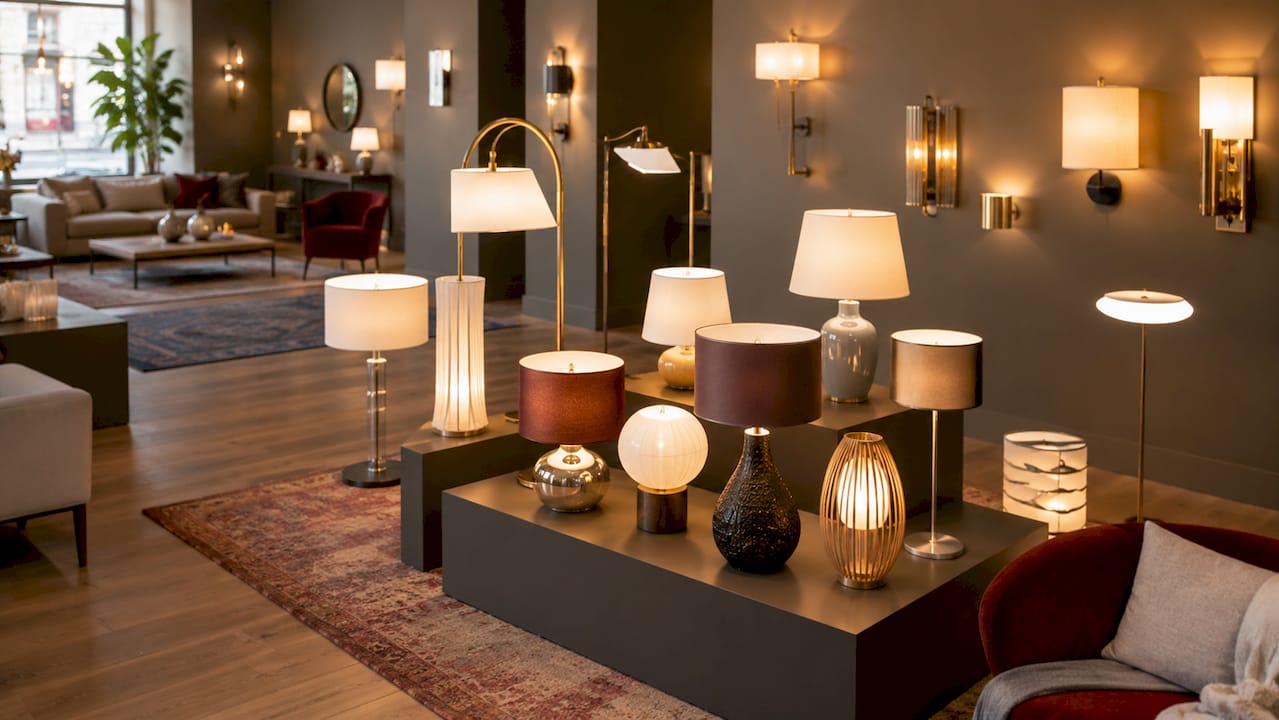
The style of the fixture also contributes to the room’s overall look. A sleek, minimal recessed spotlight suits a contemporary interior. An ornate picture light or a brass wall sconce works better in a traditional or transitional space. Reviewing modern vs. classic lighting styles before purchasing helps you match the fixture to the room’s character.
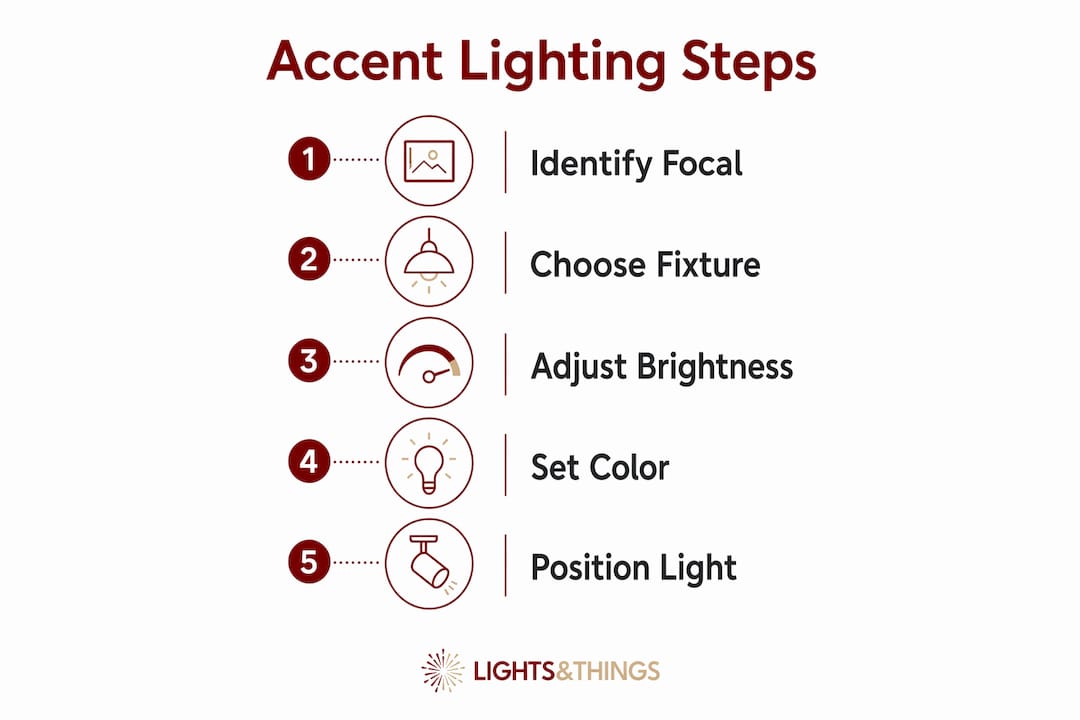
How do you design and position accent lighting for maximum effect?
Good placement is what separates accent lighting that looks intentional from lighting that looks like an afterthought. Follow these steps to get it right.
- Identify your focal points first. Decide what you want to highlight before choosing a fixture. A painting, a textured stone wall, a bookshelf, or a fireplace all require different approaches.
- Set the brightness ratio. Accent light should be 3–5 times brighter than ambient light to create the contrast needed for a focal point. Dimmer accents simply blend into the room.
- Aim the fixture at the correct angle. For wall-mounted art, position the light source at roughly a 30-degree angle from the wall. This minimizes glare on glass and avoids harsh shadows at the frame’s edge.
- Check for glare. Proper fixture placement and angle prevent harsh shadows and glare, which are the most common complaints about poorly executed accent lighting.
- Match color temperature across layers. Warm white (2700K–3000K) suits living rooms and bedrooms. Cool white (3500K–4000K) works better in kitchens and bathrooms. Mixing temperatures across the same room creates visual dissonance.
- Layer with ambient and task lighting. Accent lighting works because of contrast. If ambient light is too bright, the accent effect disappears. Dimming ambient sources in the evening lets accent fixtures do their job.
Pro Tip: Install dimmable fixtures for every accent light in the room. Dimmable and color-temperature adjustable fixtures let you shift the mood from bright and energetic during the day to warm and intimate at night without changing a single bulb.
Color temperature consistency is one of the most overlooked details in residential lighting. Mixing a 2700K wall sconce with a 4000K recessed spotlight in the same room creates a jarring effect that most people notice but cannot immediately name. Keeping all accent sources within the same temperature range ties the room together.
What are creative accent lighting ideas for different rooms?
Accent lighting works in every room of the house, and the best applications go well beyond simply lighting a painting. Accent lighting highlights artwork, architectural details, landscaping, and pathways, which means the technique applies indoors and outdoors.
- Living room fireplace: Aim two recessed spotlights at the stone or tile surround from above. The grazing light pulls out texture and makes the fireplace the clear anchor of the room.
- Bookshelves and display cabinets: LED strip lights mounted inside shelving units cast a warm glow across books, objects, and collections. This works especially well in built-ins where overhead light does not reach the lower shelves.
- Crown molding and cove details: LED strips tucked into a cove or behind crown molding create indirect accent lighting that outlines the room’s architecture without any visible fixture.
- Kitchen open shelving: Small recessed puck lights or LED strips under upper cabinets highlight dishware and glassware while also adding functional light to the counter below.
- Artwork and photography walls: Picture lights or adjustable track heads aimed at a gallery wall make each piece feel intentional. Vary the beam width based on the size of each piece.
- Outdoor facades and landscaping: Uplights buried at the base of trees or mounted at ground level cast dramatic shadows up through branches. Wall-mounted spotlights on a home’s exterior highlight architectural features and improve curb appeal after dark.
The most effective accent lighting ideas share one quality: they make you look at something specific. If a fixture does not direct your eye to a clear focal point, it is functioning as ambient light, not accent light. That distinction is worth keeping in mind when you plan your layout.
What are common pitfalls in accent lighting design?
Most accent lighting mistakes fall into a small number of predictable patterns. Knowing them in advance saves you from costly fixture repositioning or rewiring.
- Overusing accent lighting. Overusing accent lighting makes rooms feel cluttered or overly bright, which defeats the purpose. Accent lighting works through restraint. Highlight three to five focal points per room, not every surface.
- Relying on brightness instead of contrast. Success in accent lighting relies on contrast rather than sheer brightness. Turning up the wattage without managing ambient levels just raises the overall light level. The focal point disappears.
- Inconsistent color temperature. Inconsistent color temperature in accent fixtures disrupts room cohesion and creates a disjointed look that no amount of furniture arrangement can fix.
- Poor fixture angle. A spotlight aimed too steeply creates a hot spot directly below the fixture and leaves the intended focal point in shadow. Aim for a 25–35 degree angle from vertical for most wall-mounted subjects.
- Skipping the layered approach. Accent lighting placed in a room with no ambient or task lighting looks harsh and theatrical. The three layers work together. Removing one undermines the others.
- Ignoring dimmability. Fixed-output accent fixtures lock you into one mood. Dimmable fixtures give you the flexibility to adjust as natural light changes throughout the day.
If your existing accent lighting feels off, start by dimming the ambient sources and observing whether the focal points become more visible. That single adjustment often reveals whether the problem is placement or simply a brightness imbalance between layers. For a broader view of how to approach ceiling lighting choices, reviewing fixture specifications before purchasing prevents most of these issues.
Key Takeaways
Accent lighting creates visual hierarchy by directing focused, brighter light onto specific focal points, making it the layer that transforms a functional room into a finished, inviting space.
| Point | Details |
|---|---|
| Brightness ratio matters | Accent light should be 3–5 times brighter than ambient light to create effective contrast. |
| Fixture type shapes the effect | Track heads, recessed spotlights, picture lights, and LED strips each suit different focal points and room styles. |
| Contrast beats raw brightness | Lowering ambient light levels often does more for accent impact than increasing fixture wattage. |
| Color temperature consistency | Keep all accent fixtures within the same Kelvin range to maintain room cohesion. |
| Restraint is the rule | Highlight three to five focal points per room; more than that creates visual clutter, not depth. |
Why contrast matters more than brightness in accent lighting
I have walked through a lot of homes where the accent lighting was technically correct but emotionally flat. The fixtures were aimed at the right objects, the wattage was adequate, and the color temperature was consistent. The problem was that the ambient light was too bright. The accent fixtures were fighting a losing battle.
The insight that changed how I think about this: accent lighting is not about the fixture. It is about the gap between the lit object and the surrounding room. You can achieve a more dramatic focal point by dimming your ambient sources than by upgrading to a more powerful spotlight. That is counterintuitive for most people, who assume that better accent lighting means more light.
The other thing I see consistently underestimated is the role of fixture style. Homeowners spend considerable time choosing the right sofa or the right paint color, then select a lighting fixture based purely on output. A beautiful piece of art deserves a picture light that complements the frame, not just one that illuminates it. The fixture is visible even when the light is on. It contributes to the room’s character whether you notice it or not.
My practical advice: start with one room, one focal point, and one fixture. Get that right before adding more. Accent lighting rewards patience and iteration far more than it rewards a wholesale redesign.
— Norm Blain
Accent lighting fixtures worth considering at LightsThings
Ready to put these principles into practice? LightsThings carries a wide selection of decorative accent lighting designed for residential spaces, from adjustable track heads and recessed spotlights to sculptural wall sconces and picture lights that complement both contemporary and traditional interiors.
The ceiling lighting collection includes directional fixtures suited to artwork, shelving, and architectural features. Every order comes with free shipping above the threshold, easy returns, and price matching, so you can shop with confidence. Browse by style, room type, or fixture category to find the right fit for your space.
FAQ
What is accent lighting in simple terms?
Accent lighting is a focused light source aimed at a specific object or area to make it stand out from the rest of the room. It creates contrast and draws the eye to a focal point.
How bright should accent lighting be?
Accent lighting should be 3–5 times brighter than the ambient light in the room. That brightness ratio is what creates the contrast needed for an effective focal point.
What fixtures work best for accent lighting?
Track lighting, recessed spotlights, picture lights, wall sconces, and LED strip lights are the most common choices. The best option depends on what you are highlighting and the style of your space.
Can accent lighting make a room look bigger?
Accent lighting shapes spatial perception by drawing attention to specific features and creating depth. Highlighting a far wall or a tall architectural element makes a room feel larger and more dimensional.
What color temperature is best for accent lighting?
Warm white (2700K–3000K) suits living rooms and bedrooms, while cool white (3500K–4000K) works better in kitchens. Keeping all accent fixtures within the same Kelvin range maintains room cohesion.