How accent pieces complete a room’s design
Accent pieces do something furniture alone cannot: they give a room its personality. A sofa, a bed frame, a dining table — these are the foundation. But without the right accents layered on top, even a beautifully furnished room can feel flat and unresolved. Proper layering using accent pieces creates visual movement and hierarchy, shifting a space from “furnished” to “fully realized.”
The role of accent pieces goes beyond decoration. They connect your furniture, lighting, and art into a single cohesive story. A sculptural side table bridges the gap between a sofa and a bare wall. A handwoven throw ties the color of your rug back to your curtains. These are the details that make a room feel intentional rather than assembled.
Here is what accent pieces actually do for a space:
- Add depth, texture, and contrast that flat furniture surfaces cannot provide
- Create visual hierarchy by drawing the eye to focal points
- Shift a room’s visual center of gravity without requiring renovations or repainting
- Connect disparate elements like art, lighting, and upholstery into a unified palette
- Express personal taste in a way that can be updated without a full redesign
What types of accent pieces are there, and what does each one do?
Accent pieces fall into two broad camps: sculptural and functional. Sculptural pieces prioritize silhouette and material — a travertine pedestal, a ceramic vase with an unusual form, a statement chair displayed almost like art. Functional accents earn their place through daily use: a side table beside a sofa, a stool tucked near an armchair, a console behind a seating area. A well-balanced room contains both. Choosing only functional pieces leaves the space feeling complete but uninteresting.
Here is a breakdown of the main categories and their roles:
- Sculptural objects (pedestals, statues, abstract forms): anchor corners and empty walls, introduce material contrast, and give the eye somewhere to land
- Accent furniture (side tables, stools, accent chairs): add a layer between your primary furniture and the room’s perimeter, contributing both utility and visual texture
- Textiles (throw pillows, blankets, rugs): the fastest way to shift mood and color without moving a single piece of furniture; a patterned rug can reframe an entire seating area
- Lighting (table lamps, floor lamps, sculptural pendants): statement lighting acts as the jewelry of the room, drawing attention and setting mood while smaller fixtures support the narrative
- Art and wall accents: establish tone and sophistication; hanging artwork at eye level creates cohesion with furniture lines
- Natural elements (plants, branches, stone objects, wood bowls): break up the manufactured quality of a styled room and introduce organic variation that softens hard edges
Materials matter as much as form. Mixing a soft upholstered sofa with a hard stone side table, or pairing warm wood tones with brushed metal, creates the tactile variety that makes a room feel layered and lived-in.
Pro Tip: When choosing accent lighting, think of it as a two-job hire: it should illuminate and decorate simultaneously. A sculptural table lamp on a side table does more design work than a recessed can light ever could. Explore decorative lighting options to find fixtures that pull double duty.
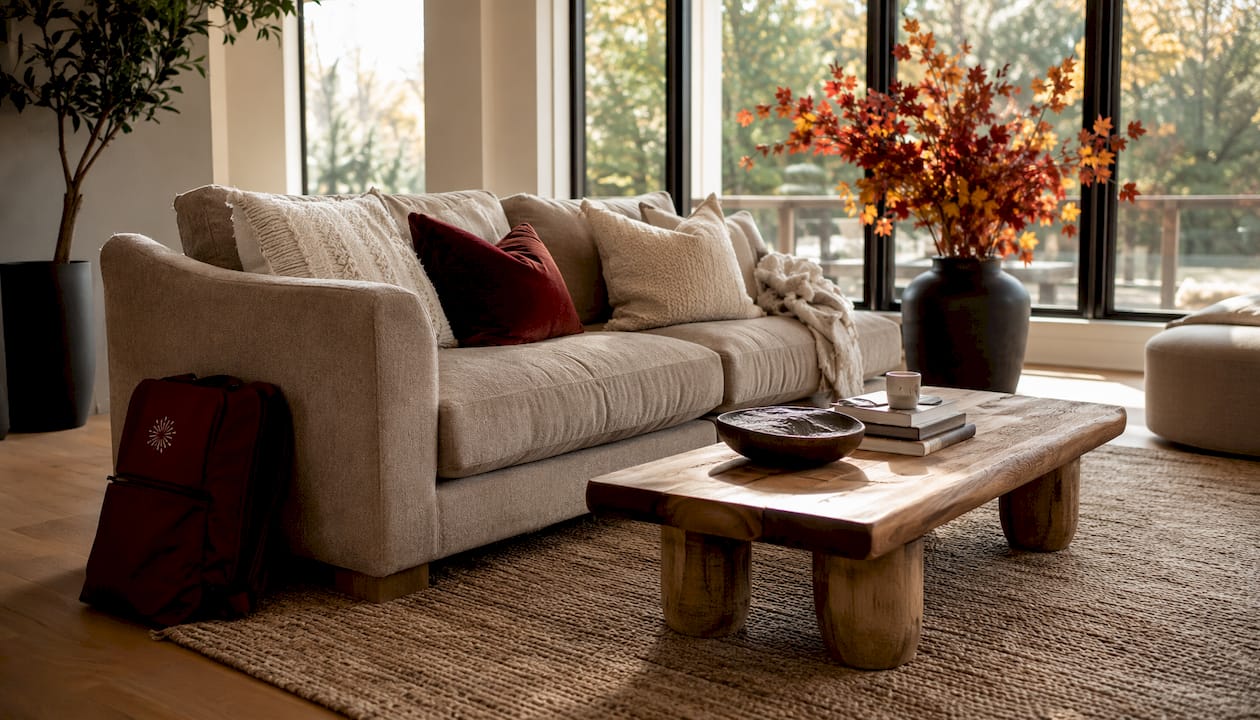
What are the core rules for decorating with accent pieces?
The most common decorating mistake is treating accent pieces as an afterthought — buying a few small objects and scattering them across surfaces. The result looks busy without feeling intentional. A few clear principles prevent that outcome.
Group in odd numbers. Professional designers recommend grouping accents in odd numbers — three, five, or seven — because odd groupings guide the eye fluidly rather than stopping it abruptly. Two objects feel symmetrical and static. Three objects create movement.
Get proportion right. Oversize pieces overwhelm, while too-small accents get lost and fail to anchor the room. A tiny vase on a large console reads as an afterthought. When in doubt, go slightly larger rather than smaller — a bigger piece gives the eye somewhere to land.
Contrast in one dimension, harmonize in the other. If your sofa is soft fabric, pair it with a hard sculptural piece in warm stone or wood. If your palette is cool and gray, introduce warmth through cream travertine or honey-toned oak. Contrasting in both material and tone simultaneously creates visual noise rather than layered interest.
Vary height and depth within groupings. Place taller pieces toward the back and shorter ones in front, letting them overlap slightly so the eye moves through the arrangement. Flat arrangements where everything sits at the same level feel staged rather than collected.
Key mistakes to avoid:
- Too many small items scattered across surfaces — this creates clutter, not character
- Ignoring scale relative to the furniture and room size
- Choosing only functional pieces and skipping sculptural ones
- Placing a beautiful piece in the wrong spot, where it has no visual context
Pro Tip: When you are unsure what to add, choose one larger sculptural piece over several small ones. A single well-proportioned object anchors a surface more effectively than a collection of competing items. Empty space around a strong piece is not a problem — it is part of the composition.
How do you use accent pieces in different rooms?
The principles stay consistent across rooms, but the application shifts depending on the space’s function and mood.
Living room
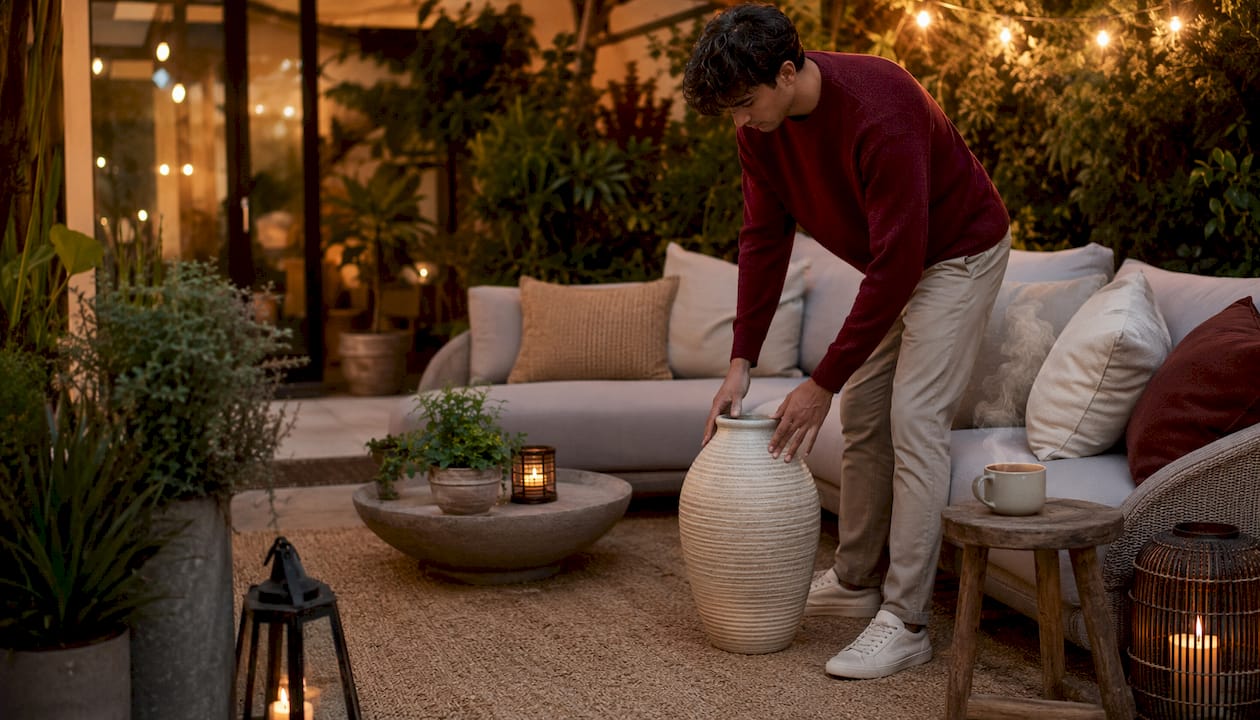
The living room carries the most design weight in most homes, so accent pieces work hardest here. Anchor the seating area with a rug that defines the zone, then layer in a sculptural side table, a statement floor lamp, and one or two carefully chosen objects on the coffee table. Accessories help unify open-plan homes by repeating materials and color themes across zones, so if your living area flows into a dining space, carry one material — brass, linen, or natural wood — through both areas. For lighting ideas that anchor a seating area, the living room lighting guide covers placement and fixture types in detail.
Bedroom
Accent pieces in a bedroom should support rest, not compete for attention. A pair of table lamps with warm-toned shades, a textured throw at the foot of the bed, and one sculptural object on a nightstand create depth without visual noise. An accent wall behind the headboard — using one strong shade, one soft shade, and one neutral — can update the room’s character without a full redesign. Keep the accent count lower here than in a living room; restraint reads as calm.
Dining area
A sculptural centerpiece on the dining table is one of the highest-impact accent choices in any home. It sets the tone for every meal without requiring permanent changes. Layer in a pendant light above the table as a second accent, and repeat one material from the centerpiece in smaller objects nearby — a ceramic bowl, a linen runner, a wooden tray.
Entryway
The entryway sets expectations for the rest of the home, so one strong accent piece here does significant work. A console table with a mirror above it, a sculptural object, and a single plant creates a layered first impression. Keep the floor clear — an entryway cluttered with small items signals disorder before a guest has seen anything else.
What do professional designers say about layering and accent selection in 2026?
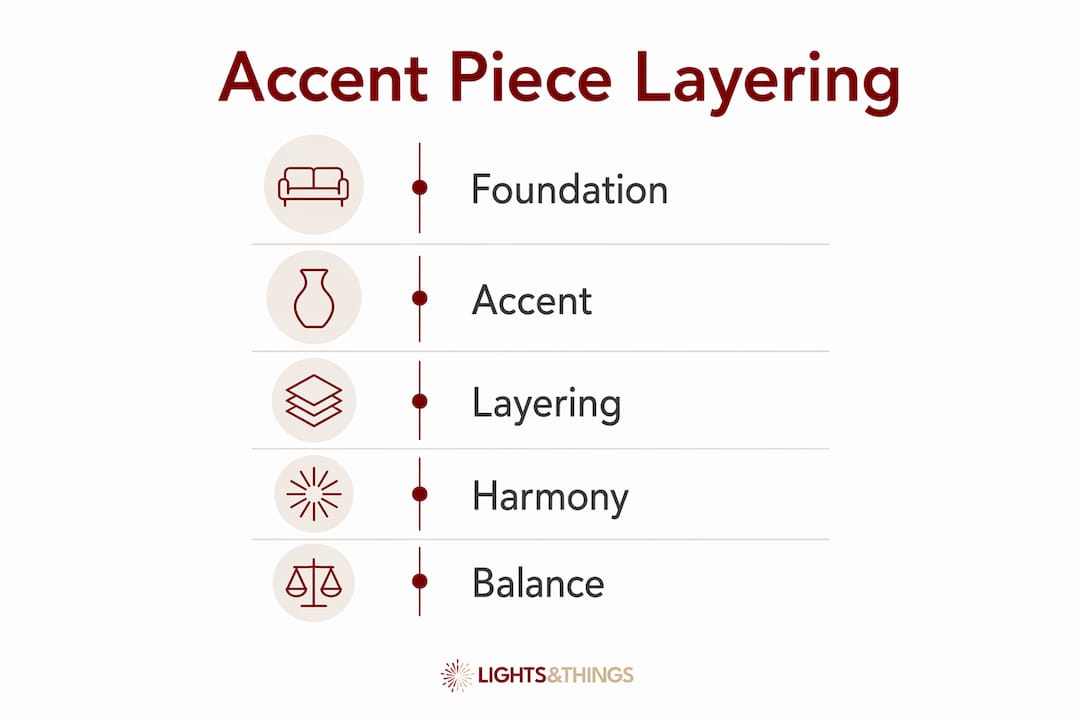
The layering process follows a clear sequence that professional designers apply consistently. Start with foundational furniture, add mid-level items like lamps and plants, then finish with personal accents such as art and vases. Attempting to add all layers at once disrupts the curated calm that well-designed interiors achieve. Each layer needs space to read before the next one is introduced.
In 2026, the dominant direction in interior design favors tactile materials, sculptural silhouettes, and what designers are calling “refined restraint.” Travertine, warm-toned natural stone, brushed metals, and hand-formed ceramics are leading material choices, replacing the cooler minimalism that defined the previous decade. The principle of “less but better” applies directly: two or three considered pieces outperform a room full of small statements.
The layering framework in practice:
| Layer | Examples | Design role |
|---|---|---|
| Foundation | Sofa, bed, dining table, area rug | Sets scale, proportion, and primary color |
| Mid-level | Table lamps, floor lamps, plants, books | Adds height variation and ambient warmth |
| Finishing accents | Vases, sculptures, throw pillows, art | Introduces personality, texture, and focal points |
A single well-chosen piece can shift the mood of an entire room because it changes the visual center of gravity. Replace a generic glass table with a sculptural travertine side table, and the eye anchors on stone instead of air — which in turn changes how every other element in the room reads. For readers ready to find pieces that work at this level, LightsThings carries sculptural accent decor and decorative lighting designed to function as finishing accents with genuine visual presence.
Key Takeaways
Accent pieces complete a room by adding the personality, texture, and visual hierarchy that furniture alone cannot provide, working through deliberate layering from foundation to finishing details.
| Point | Details |
|---|---|
| Layering is the method | Build from foundation furniture to mid-level objects to finishing accents for a cohesive, curated result. |
| Odd-number groupings work the best | Group accents in threes, fives, or sevens to guide the eye naturally and avoid static symmetry. |
| Contrast in one dimension only | Pair a soft sofa with a hard sculptural piece, or a cool palette with warm stone — never contrast both material and tone at once. |
| Proportion determines impact | One well-scaled sculptural piece anchors a room more effectively than several small competing objects. |
| Lighting counts as an accent | A sculptural lamp or pendant acts as the room’s jewelry, setting mood while contributing to the design layer. |