Modern elegance in interior design is defined by clean lines, warm neutral tones, organic curves, and thoughtfully layered textures that create spaces feeling both sophisticated and genuinely livable. The style sits between stark minimalism and ornate traditional decor, offering a middle path that feels calm without being cold. Designers call this approach “restrained sophistication,” and it is the defining quality separating modern elegance from every other contemporary decor idea. Whether you rent an apartment or own a house, these modern elegance interior decor examples give you a practical, room-by-room framework to work from.
1. Build your palette around a neutral continuum
Color is the foundation of every elegant interior design. Modern elegant interiors use a “neutral continuum” palette, where 90% of surfaces stay in soft whites, warm greige, cream linen, or oatmeal tones. This creates a calm, unified base that lets textures and shapes do the visual work.
The remaining 10% carries your accent color. Choose one muted, earthy tone: dusty terracotta, sage green, or deep slate blue. Place it in two or three areas only, such as a throw pillow, a ceramic vase, and a single upholstered chair. Multiple accent colors compete with each other and break the cohesion that makes a room feel curated.
- Walls: Warm white or greige in a flat or matte finish
- Large furniture: Cream, oatmeal, or warm taupe upholstery
- Rugs: Natural jute, wool, or linen in a tone close to the wall color
- Accent pieces: One muted earthy color repeated in two or three small objects
Pro Tip: Paint a large sample card (at least 12 inches by 12 inches) and live with it for 48 hours before committing. Warm whites shift dramatically under different light conditions throughout the day.
2. Introduce warmth through organic shapes and natural materials
Organic forms are what separate modern elegance from cold, clinical minimalism. The 2026 shift toward warm minimalism favors arched openings, curved niches, and sculptural silhouettes over sharp, boxy geometry. These shapes soften a room without adding visual clutter.
Materials carry equal weight. Aim for 60–70% of hard surfaces in stone or wood. Bardiglio marble and statuario marble bring veining and depth to countertops and feature walls. Wood veneers on cabinetry and shelving add warmth that painted surfaces simply cannot replicate. Together, stone and wood create the layered, tactile quality that makes a room feel rich rather than sparse.
“Warm minimalism is not about removing everything. It is about choosing materials and forms that have enough inherent beauty to carry a room without decoration doing all the work.”
- Arched doorways or niches add architectural interest without renovation
- Curved sofas or armchairs soften the geometry of a square room
- Marble or stone surfaces on coffee tables, side tables, or feature walls
- Wood veneer cabinetry in kitchens and living rooms for tactile warmth
- Sculptural ceramic or stone objects as table accents
Structural challenges in a space, like exposed columns or awkward corners, can become design focal points when wrapped in grasscloth wallcovering or integrated into custom display niches. This technique, sometimes called architectural camouflage, turns a problem into a considered design element.
3. Layer your lighting across three sources
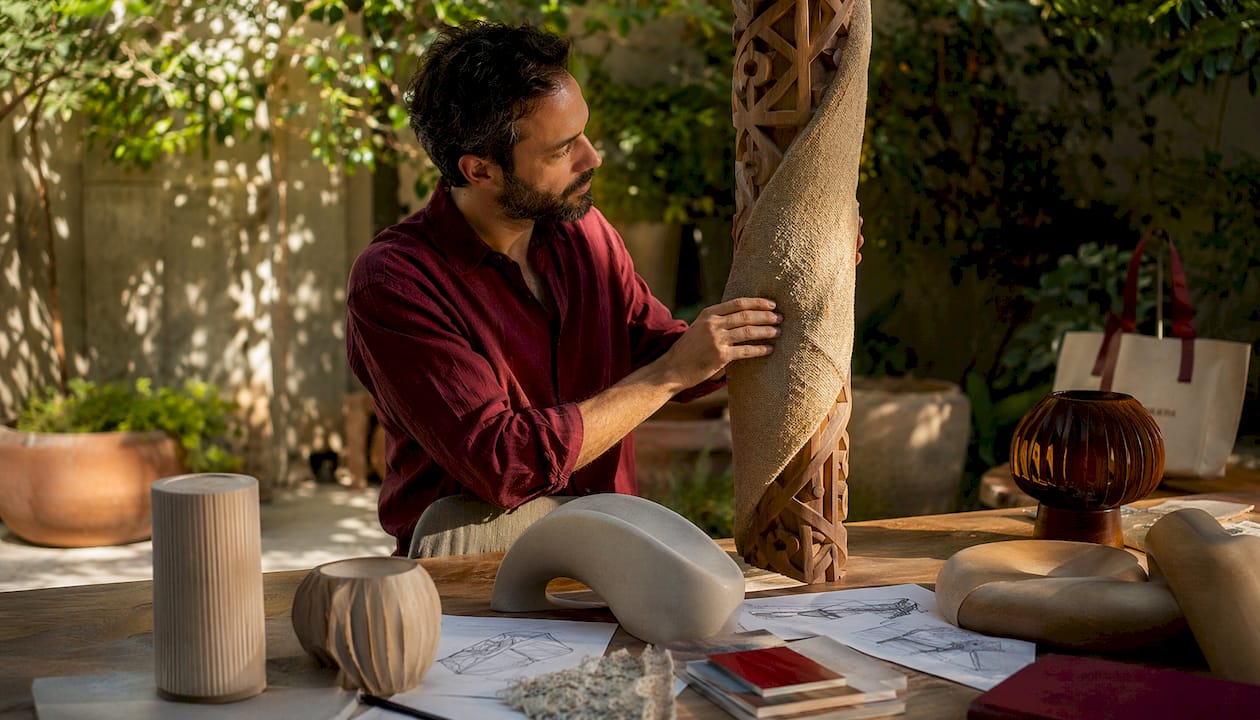
Lighting is the single most underused tool in residential interior design. Layered lighting combines floor lamps, table lamps, and ambient ceiling sources to prevent the flat, clinical look that a single overhead fixture creates. Each layer serves a different purpose: ambient light sets the room’s overall tone, task lighting supports reading or work, and accent lighting highlights art or architectural features.
Warm 2700K bulbs are the standard for modern elegant interiors. This color temperature produces the soft, golden light that makes neutral palettes glow rather than look washed out. Floor lamps placed at 58–65 inches tall and table lamps at 26–28 inches create dimension by lighting the room at multiple heights simultaneously.
Pro Tip: Swap a single ceiling fixture for a sculptural pendant or chandelier and add one floor lamp in a corner. That one change shifts a room from functional to designed.
Here is the five-element framework that transforms modern elegant interiors without full renovation:
- Layered lighting from three sources at different heights
- A large, high-quality rug that extends under all main furniture legs
- Clean-lined storage that keeps surfaces clear and uncluttered
- One large-scale art piece as a deliberate focal point
- Textural wall treatments such as grasscloth, limewash, or plaster panels
Rug sizing is a common mistake. A rug that is too small makes furniture float and breaks the room’s visual anchor. The front legs of every main seating piece should rest on the rug. For a standard living room, that typically means a rug of at least 8 feet by 10 feet.
Sculptural lighting fixtures also function as decor. A statement chandelier or an arc floor lamp with a sculptural base contributes to the room’s visual interest even when switched off. Explore how modern and traditional lighting can work together to build this layered effect.
4. Unify finishes across the room
Finish consistency is one of the most overlooked details in elegant interior designs. Using a single metal finish throughout a room, whether brushed brass, matte black, or satin nickel, creates visual unity that mixed finishes undermine. This applies to light fixtures, cabinet hardware, faucets, and decorative objects.
Limiting metal accents to one finish and selecting two or three statement items per room produces interiors that feel disciplined and intentional. More than three statement pieces in a single room compete with each other. The result is visual noise rather than elegance. Think of each room as having one hero piece, supported by two quieter companions.
This principle extends to textiles. Limit fabric patterns to one per room and keep the rest in solid, textured weaves. A single patterned throw or cushion reads as a considered choice. Three different patterns read as indecision.
5. Mix existing furniture with new pieces thoughtfully
Modern elegance does not require starting from scratch. Blending existing beloved furniture with new contemporary pieces creates authentic, layered interiors that feel personal rather than showroom-perfect. A vintage armchair reupholstered in mohair velvet becomes a bespoke accent that no catalog piece can replicate.
The key is curation, not accumulation. Every surface should have a reason for what sits on it. Positive empty space, meaning areas with nothing on them, is as important as the objects you choose to display. A console table with one sculptural object and a lamp reads as elegant. The same table covered in ten objects reads as cluttered.
- Reupholster vintage chairs or sofas in high-quality fabrics like mohair velvet or bouclé
- Edit surfaces down to one or two intentional objects per area
- Use art to inject personality: one large piece per wall rather than a gallery cluster
- Keep sentimental pieces that have good proportions, even if the style is not perfectly contemporary
- Add new lighting around existing furniture to update the room’s feel without replacing anything
Sculptural decor accents placed with intention add character without clutter. A single ceramic sculpture or a stone figure on a side table contributes more to a modern elegant room than a shelf crowded with smaller pieces.
Key takeaways
Modern elegance is built on restraint: a neutral palette, layered lighting, organic materials, and curated pieces create spaces that feel sophisticated without feeling cold.
| Point | Details |
|---|---|
| Neutral continuum palette | Keep 90% of surfaces in soft whites, greige, cream, or oatmeal for a calm, unified base. |
| Warm minimalism materials | Use stone and wood on 60–70% of hard surfaces to add tactile warmth and depth. |
| Three-source lighting | Layer floor, table, and ambient lights at warm 2700K to prevent flat, clinical interiors. |
| Single finish rule | Commit to one metal finish throughout a room to maintain visual cohesion. |
| Intentional curation | Limit statement pieces to two or three per room and leave positive empty space on surfaces. |
Why proportion matters more than price
I have walked through a lot of beautifully furnished rooms that felt wrong, and it took me years to understand why. The furniture was expensive. The materials were genuine. But the proportions were off, and no amount of styling fixed that.
Luxury in modern elegance is restrained sophistication, not extravagance. A room built on proportion, craftsmanship, and material honesty will always outperform a room assembled from expensive pieces without a coherent spatial logic. A sofa that is too large for a room does not become elegant because it cost more. It just dominates the space and crowds everything around it.
The advice I give most often is this: measure before you buy anything, and then measure again. A floor lamp at the right height in the right corner does more for a room than a chandelier hung too low over a table. Comfort and livability are not compromises you make against aesthetics. They are part of the aesthetic. A room that nobody wants to sit in has failed, regardless of how it photographs.
Intentionality is the real skill. Choosing fewer things with more care produces better results than filling every surface and corner. The interplay of light and shadow, of filled space and empty space, is what allows your best pieces to actually be seen.
— Norm Blain
Lighting and decor that fits the modern elegant look
LightsThings carries a range of sculptural lighting fixtures, statement chandeliers, and curated decor accents built for exactly this aesthetic. Whether you are building a three-source lighting layer or searching for a single hero piece to anchor a room, the catalog spans accessible accents to premium statement pieces.
Floor lamps, arc lamps, and table lamps in brushed brass and matte black finishes work directly with the single-finish rule. Sculptures and decorative statues in muted, earthy tones complement a neutral continuum palette without competing with it. Visit LightsThings to browse decorative lighting and home decor designed for modern elegant interiors, with free shipping thresholds, easy returns, and financing available.
FAQ
What is modern elegance in interior design?
Modern elegance is a design style that combines clean lines, warm neutral palettes, organic shapes, and layered textures to create spaces that feel sophisticated and livable. It sits between stark minimalism and ornate traditional decor.
What colors work best for a modern elegant interior?
Soft whites, warm greige, cream, and oatmeal cover 90% of surfaces, with one muted earthy accent color such as dusty terracotta or sage green used in two or three areas only.
How do I achieve modern elegance on a budget?
Reupholster existing furniture in quality fabric, add a large neutral rug, and layer lighting with a floor lamp and table lamp alongside your existing ceiling light. These three changes produce the most visible shift without replacing furniture.
What lighting temperature suits modern elegant interiors?
Warm 2700K bulbs are the standard. This color temperature produces soft, golden light that makes neutral palettes glow and prevents the flat, clinical look of cooler white bulbs.
How many accent pieces should a modern elegant room have?
Limit statement pieces to two or three per room. More than three compete with each other and create visual noise rather than the intentional, curated feel that defines elegant interior designs.