Decorative statues are defined as three-dimensional sculptural objects placed in residential spaces to add depth, personality, and visual focus. Unlike flat wall art, a well-chosen statue creates shadows, catches light, and commands attention from multiple angles. These qualities explain why decor statues elevate rooms in ways that paint colors and framed prints simply cannot match. Interior designers recognize sculpture, the standard industry term for this category, as one of the most powerful tools for making a room feel finished and intentional. Whether you place a single ceramic figure on a console table or a 36-inch floor piece in an empty corner, the effect is immediate and lasting.
Why decor statues elevate rooms: the visual and spatial principles
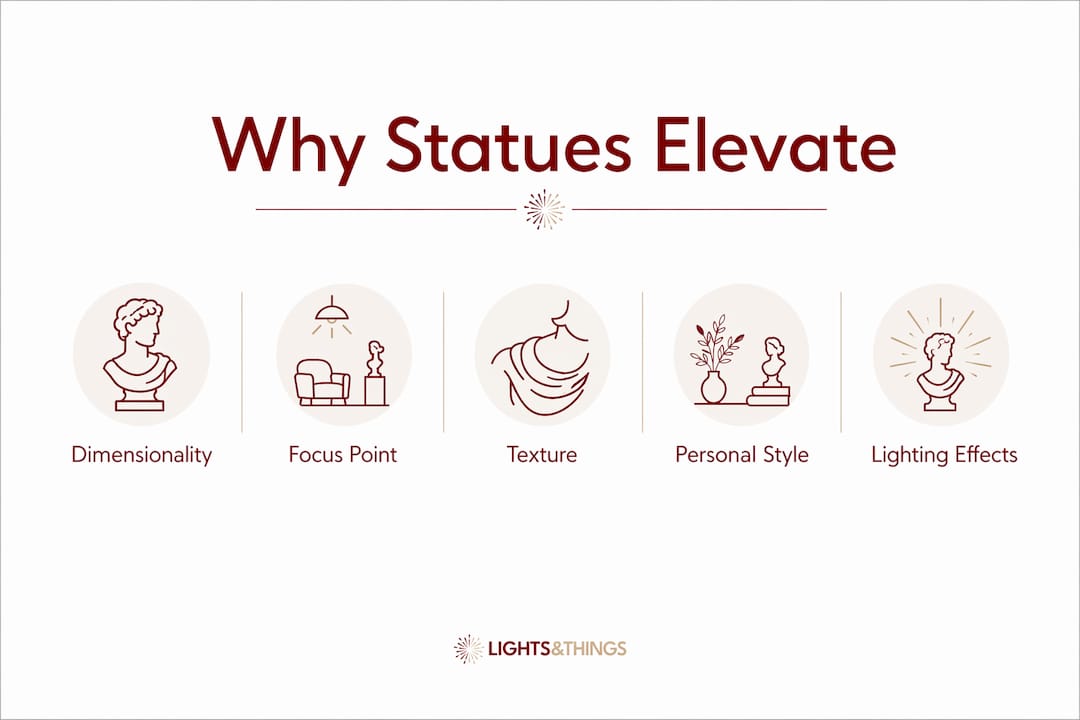
Statues bring dimensionality to a room, and that quality alone separates them from every other decorating tool. A flat print hangs on a wall and stays there. A sculpture adds depth, texture, and visual interest that shifts as you move through the space, creating a living quality no two-dimensional piece can replicate.
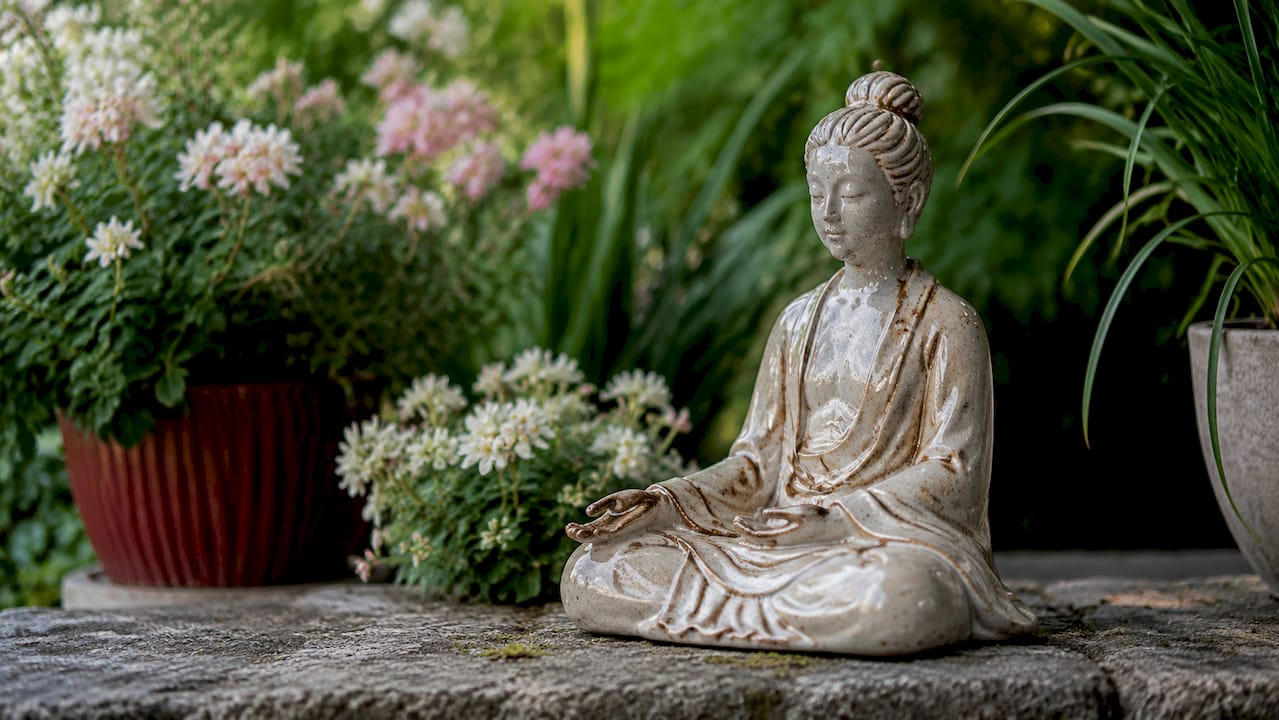
Material choice drives much of that effect. Ceramic surfaces scatter light softly, while polished metal reflects it sharply. Raw stone absorbs light and creates a matte, grounded presence. Wood grain adds warmth and organic texture. Each material produces a different mood, which means the same abstract form in bronze reads very differently than it does in white resin.
Scale matters just as much as material. A statue that is too small for its setting reads as clutter. One that is too large overwhelms the room. Floor sculptures between 24 and 48 inches tall function as architectural elements, defining zones and adding sophistication without competing with furniture. Tabletop pieces work best when they occupy roughly one-third of the surface they sit on, leaving breathing room around them.
Lighting is the final multiplier. Focused light from a directional floor lamp or a ceiling spot throws shadows across a sculpture’s surface, revealing every contour and making the piece feel alive after dark. Ambient lighting alone flattens a statue. Pairing a sculpture with a dedicated light source is one of the fastest ways to raise the perceived quality of an entire room.
- Texture: Rough, matte, or carved surfaces create visual complexity and draw the eye in.
- Reflectivity: Polished finishes like brass or lacquered resin add brightness and energy.
- Form: Organic, curved shapes soften angular rooms; geometric forms add structure to soft spaces.
- Color: Neutral statues anchor a palette; bold-colored pieces act as accent punctuation.
Pro Tip: Place a small directional lamp at a 45-degree angle to your statue. The resulting shadow pattern on the wall behind it effectively doubles the visual impact of the piece.
How does placement and hierarchy shape a statue’s impact?
Placement is where most homeowners lose confidence, and it is also where the biggest gains are available. The principle that professional designers rely on is hierarchy: one statue should lead, and everything else should support it. Framing a single “hero” sculpture with thoughtful placement commands attention and sets the tone for the entire room.
The hero piece concept works because the human eye needs a clear resting point. When multiple objects compete at the same visual weight, the eye bounces between them and the room feels busy. When one piece clearly leads, the room feels curated. This is the same principle that governs gallery curation, and it applies directly to your living room or entryway.
The best locations for a statement statue follow natural sightlines. Think about where your eyes land when you first walk into a room. That spot is your prime placement zone. Specific locations that consistently work well include:
- Entryways and foyers: The first thing a visitor sees sets the tone for the entire home. A single strong piece here signals that the space is intentional.
- Empty corners: Corners are dead zones in most rooms. A floor sculpture between 24 and 48 inches tall fills the corner, defines the space, and adds vertical interest.
- Fireplace mantels: The mantel is already a natural focal point. One well-proportioned statue centered or offset on the mantel reinforces that hierarchy.
- Console and credenza tops: Long, low surfaces benefit from a taller statue at one end to create visual rhythm and prevent the surface from reading as flat.
- Pedestals: Placing a sculpture on a pedestal signals it as an art object and literally raises it into the viewer’s sightline, increasing its presence in the room.
Negative space is as important as the statue itself. Resist the urge to surround a sculpture with other objects. The empty space around it is what allows the piece to breathe and command attention. A home decor accent pieces checklist can help you audit each surface and identify where you are overcrowding versus where a single strong piece would perform better.
Pro Tip: Stand at the main entry point of your room and photograph it. Review the photo to identify where your eye lands first. That is your hero placement zone.
What statue styles work best with different interior aesthetics?
Decorative sculptures work across styles from minimalist modern to classical and botanical, which makes them one of the most versatile categories in home decor. The key is matching the statue’s visual language to the room’s existing design intent.
For contemporary and minimalist interiors, abstract forms in matte white, concrete gray, or brushed metal read cleanly without adding visual noise. These pieces suggest sophistication without demanding attention. A single abstract figure on a floating shelf in a modern living room does more for the space than a gallery wall of prints.
Traditional and transitional spaces respond well to figurative and classical forms. Think busts, figurative sculptures, and architectural fragments in stone, resin, or aged bronze. These pieces carry historical weight and add the sense of a collected, layered interior that takes time to build. They also pair naturally with warm wood tones, upholstered furniture, and layered textiles.
Eclectic and personalized interiors benefit from unexpected combinations. A botanical sculpture in glazed ceramic next to a mid-century lamp creates the kind of tension that makes a room feel genuinely personal rather than catalog-styled. The goal is not to match everything but to create a conversation between pieces.
- Abstract and geometric: Best for contemporary, Scandinavian, and minimalist rooms.
- Figurative and classical: Best for traditional, transitional, and maximalist spaces.
- Botanical and organic: Best for biophilic, bohemian, and eclectic interiors.
- Industrial and raw: Best for loft-style, urban, and mixed-material rooms.
Material variety also signals design intent. Ceramic and porcelain read as refined and collected. Metal reads as modern or industrial depending on finish. Wood reads as warm and organic. Mixing two materials within a single room, such as a ceramic figure alongside a metal abstract piece, creates depth without chaos, provided both pieces share a common color temperature or finish tone.
For room-specific ideas, sculptural decor accent examples show how different statue styles perform across living rooms, bedrooms, dining areas, and entryways.
What practical tips help you choose and care for decor statues?
Choosing the right statue starts with the room’s scale, not your personal preference. Decorative statues have evolved from gallery exclusives to accessible home decor staples, which means the range of sizes, materials, and price points is wider than ever. That range is an advantage, but it also requires discipline in selection.
- Match size to surface: A tabletop statue should stand no taller than two-thirds the height of the lamp or object beside it. A floor piece should reach at least hip height to register as a statement.
- Check weight before buying: Heavy stone or concrete pieces need stable, load-bearing surfaces. Resin and ceramic are lighter and more flexible in placement.
- Group in odd numbers: When using multiple small statues on a shelf or tabletop, groups of three or five create more natural visual rhythm than pairs or even-numbered arrangements.
- Style with complementary accents: A statue paired with a small tray, a stack of books, or a single vase creates a vignette that feels intentional rather than isolated.
Care is straightforward but often overlooked. Regular dusting and awareness of light exposure preserve a statue’s appearance and longevity. Resin and stone require less maintenance than metal or wood. Metal pieces can oxidize or tarnish in humid rooms. Wood can warp near heat sources or in direct sunlight. Knowing your material before you buy saves you from placing a piece in a location that will degrade it.
Budget does not determine impact. A $40 ceramic figure placed correctly in a well-lit entryway outperforms a $400 piece dropped randomly on a crowded shelf. For guidance on choosing sculptures for your living room, the selection criteria remain the same regardless of price point: scale, material, placement, and lighting.
Pro Tip: Before buying a new statue, cut a piece of cardboard to the intended statue’s dimensions and place it in the spot you have in mind. Live with it for a day. If the size and placement feel right, buy with confidence.
Key Takeaways
Decor statues elevate rooms because they add three-dimensional form, direct the eye to a focal point, and express personal style in ways that flat art and furniture cannot achieve.
| Point | Details |
|---|---|
| Dimensionality is the core advantage | Statues create shadows and texture that shift with light, giving rooms a living quality flat art cannot match. |
| One hero piece beats many small ones | Framing a single statement sculpture in a key sightline creates a focal point without visual clutter. |
| Placement follows sightlines | Entryways, empty corners, and pedestal surfaces are the highest-impact locations for decorative statues. |
| Style must match design language | Abstract forms suit contemporary rooms; figurative and classical pieces suit traditional and transitional spaces. |
| Care preserves long-term impact | Dust regularly and match material to environment to maintain the elegance a statue brings to a room. |
Statues do more than decorate: a perspective on what they actually signal
By Norm Blain
After years of watching homeowners approach interior decorating, the pattern I see most often is this: people spend months choosing paint colors and furniture, then treat sculpture as an afterthought. They buy a small figurine at the end of a shopping trip and set it on a shelf without much thought. The room still feels incomplete, and they cannot explain why.
The reason is that statement sculptures anchor a space and reflect personal style in a way that no other decorating element does. A sofa communicates comfort. A rug communicates warmth. A sculpture communicates who you are. That is a fundamentally different kind of signal, and it is the one most rooms are missing.
The mistake I see most often is buying too small. A 6-inch figurine on a 10-foot console table is invisible. It does not anchor anything. It just sits there. The instinct to “start small” makes sense financially, but it often produces rooms that feel unresolved. One well-scaled piece, even a modestly priced one, does more than a collection of small objects ever will.
My honest advice is to treat your first statue purchase the way you would treat buying a sofa. Measure the space. Consider the light. Think about what the piece says about you. Statues have moved well beyond gallery exclusives. They are now one of the most accessible ways to make a room feel genuinely personal and sophisticated. The homeowners who get this right are the ones whose rooms feel lived-in and curated at the same time. That combination is harder to achieve than it looks, and sculpture is one of the few tools that delivers it reliably.
— Norm Blain
LightsThings: where statues and lighting come together
Finding a statue you love is one thing. Knowing how it will look in your actual room, under your actual lighting, is another. LightsThings brings both sides of that equation together in one place.

The LightsThings sculptures and statues collection spans accessible accent pieces and premium statement sculptures, giving you real options at every scale and price point. Pair any piece with decorative lighting from the same catalog and you get the full picture: the statue and the light source that will make it perform at its best. Free shipping thresholds, easy returns, and price matching mean you can shop with confidence and take your time getting the combination right.
FAQ
What makes a decorative statue different from regular home decor?
A decorative statue is a three-dimensional sculptural object that creates depth, shadow, and texture in a room. Unlike flat decor, it reads differently from every angle and responds to light in ways that wall art and textiles cannot.
How big should a statue be for a living room?
Floor sculptures between 24 and 48 inches tall work as architectural elements in living rooms, while tabletop pieces should stand no taller than two-thirds the height of surrounding objects. Scale to the room first, then to personal preference.
Where is the best place to put a statue in a room?
The best placement follows natural sightlines, specifically where your eyes land when you first enter the room. Entryways, empty corners, fireplace mantels, and pedestal surfaces consistently produce the strongest visual impact.
Do I need expensive statues to make a room look good?
Price does not determine impact. A modestly priced ceramic figure placed correctly in a well-lit spot outperforms a costly piece placed without thought. Scale, placement, and lighting matter more than budget.
How do I care for decorative statues at home?
Regular dusting and matching the material to the room’s environment are the two most important steps. Resin and stone require minimal maintenance, while metal can tarnish in humid spaces and wood can warp near heat sources or direct sunlight.