Getting table lamp height right comes down to two numbers: your table’s height and your seated eye level. The combined height of a side table and lamp should fall within a comfortable range from the floor to the top of the shade to suit living room setups. Your lamp itself should be no more than 1.5 times the table height, and the bottom of the shade should sit at or just below your seated eye level, typically near seated eye level, generally between the low forties and mid-forties inches from the floor.
Here are the core proportions to keep in mind:
- Total height rule: Lamp height should be about one and a half times the table height. For example, a 24-inch table benefits from a lamp no taller than 36 inches.
- Combined floor height: Table plus lamp together should reach a comfortable total height suitable for most living room setups.
- Shade bottom alignment: The shade’s lower edge should sit at seated eye level (typically 42–48 inches from the floor) to hide the bulb and prevent glare.
- Shade-to-base ratio: Shade height should be roughly two-thirds of the lamp base height for visual balance.
- Base width: The lamp base should occupy no more than one-third to one-half of the table’s surface width.
How to measure for the right table lamp height
Start with your tape measure on the floor and record your table’s height from floor to surface. Standard end tables run 24–30 inches tall, but yours may differ. That single measurement anchors every decision that follows.
Next, sit in the chair or sofa next to the table and measure from the floor to your eye level. For most adults, seated eye level falls between 40 and 48 inches. The shade’s bottom edge should land right at your seated eye level so the bulb stays hidden and the light falls where you actually need it.
From there, apply the 1.25–1.5 times rule to find your lamp’s target height range. If your table is about two feet tall, choose a lamp sized proportionally to complement it. Factor in the shade height separately, since it adds to the overall silhouette without contributing to the base’s visual weight.
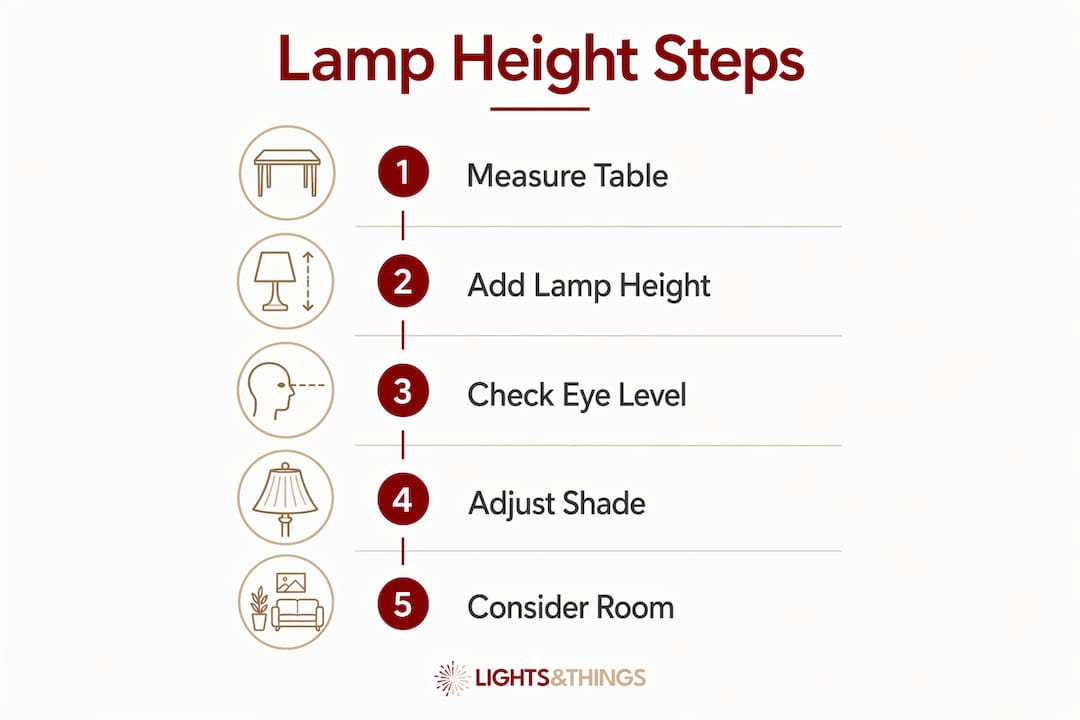
- Measure table height (floor to surface).
- Measure your seated eye level (floor to eyes while sitting).
- Multiply table height by 1.5 to get your lamp height maximum.
- Confirm the shade bottom will land near your seated eye level.
- Check that the base width leaves room for other items on the table surface.
Pro Tip: Check where the on/off switch sits before you buy. A switch buried under the shade or at the base of a tall lamp is awkward to reach from a relaxed seated position. The switch should be easy to operate without leaning forward or getting up.
How lampshade size affects the whole lamp’s proportion
The shade does more visual work than most people realize. A shade that is too tall makes the lamp look top-heavy; one that is too short exposes the hardware and looks unfinished. The reliable fix is the two-thirds rule: shade height should equal roughly two-thirds of the lamp base height. An 18-inch base calls for a 12-inch shade.
Width matters just as much. According to Washington Post home design guidance, the lamp base should take up no more than one-third to one-half of the table’s surface, and the shade should never extend beyond the table’s edge. A shade that overhangs the table looks precarious and blocks access to whatever else sits on the surface.
- Shade height: two-thirds of lamp base height.
- Shade width: never wider than the table’s edge.
- Shade width should stay within about 2 inches of the lamp base’s height for a balanced silhouette.
- A bulky base may need a slightly wider shade to avoid looking pinched at the top.
Adjusting lamp height by room type and function
Room context changes the math. A lamp that looks perfect beside a living room sofa can feel completely wrong on a bedroom nightstand or a console table in the entryway. Each setting has its own proportional logic.
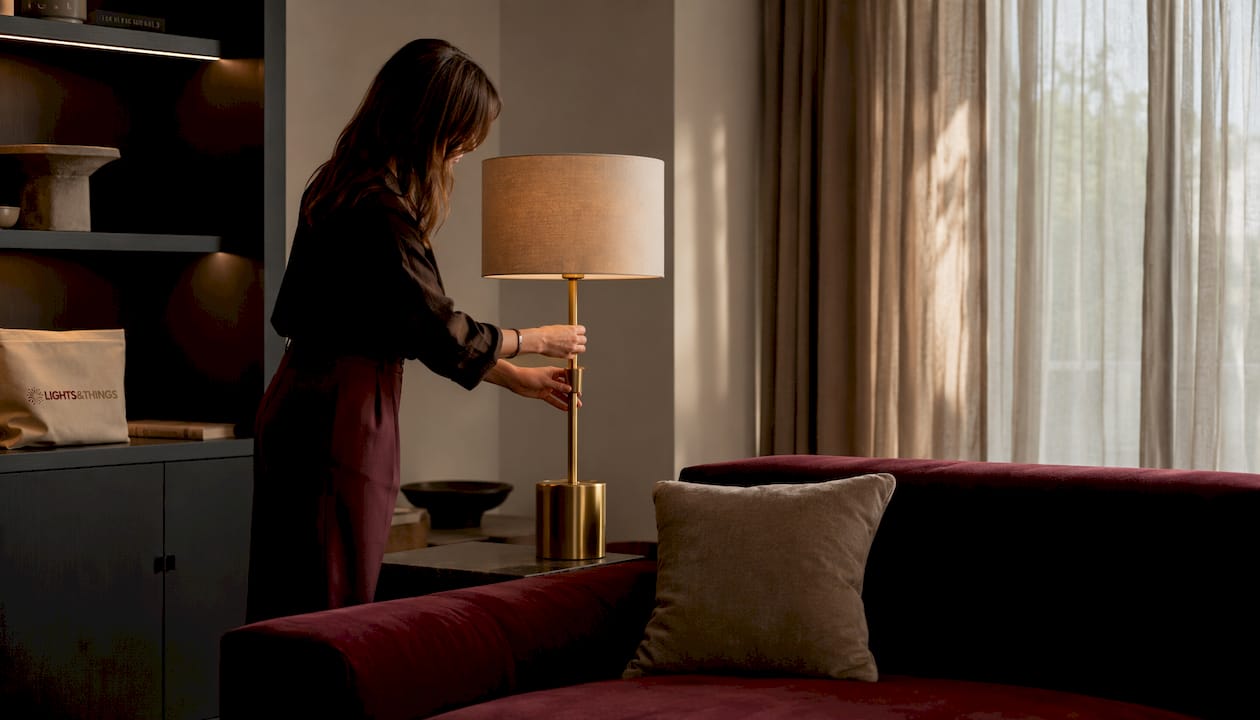
Living room side tables are the most common placement. Sarah Speck, director of product strategy at Hudson Valley Lighting Group, recommends aiming for 28–32 inches for lamps on living area side tables, with the shade staying inside the table’s footprint. That range suits the typical 24–28-inch end table and keeps the shade bottom near armrest height.
Bedroom nightstands call for a slightly different approach. You’re often reading while propped up in bed, so the shade bottom should align with your chin when sitting up, not your standing eye level. For a standard nightstand at 20–24 inches, a lamp in the 24–28-inch range usually works well. For more detailed bedroom-specific guidance, LightsThings covers bedroom lamp selection in depth.
Console and entryway tables sit higher and serve a different purpose. They’re about ambiance and proportion, not task lighting. Lamps on consoles can run 28–34 inches tall, which compensates for the taller furniture and fills vertical space without looking squat.
- Living room side tables typically use lamps sized to match standard end table heights for balanced proportion.
- Bedroom nightstands usually require lamps proportionate to their height to provide comfortable task lighting…
- Console and entryway tables often use slightly taller lamps to complement their higher surfaces and room scale…
- Task reading lamps: height should direct light onto the lap or book without shining into the eyes.
- High-ceiling rooms can accommodate taller lamps, but seated eye level still sets the primary limit.
Common mistakes that throw off lamp sizing
The most frequent error is skipping the eye-level check entirely. Buyers choose a lamp based on style, bring it home, and discover the bulb sits right at eye level, creating glare every time they glance toward it. Picking a lamp too tall or too short relative to the table and seated eye level is the single most common sizing mistake.
A close second is ignoring the table’s width when sizing the base. A wide, heavy base on a narrow accent table looks unstable and crowds out everything else on the surface. The reverse, a tiny lamp on an oversized table, looks lost and provides inadequate light coverage.
- Skipping the seated eye-level measurement before buying.
- Choosing a shade so wide it overhangs the table edge.
- Picking a lamp base that takes up more than half the table surface.
- Ignoring the shade transparency: a short lamp with a very sheer shade can still cause glare.
- Forgetting switch placement, which can make an otherwise beautiful lamp frustrating to use daily.
If your current lamp misses the mark, simple adjustments can help. A small riser under the base adds 1–2 inches. Swapping to a taller or shorter shade changes the silhouette without replacing the whole fixture.
What interior lighting professionals say about lamp height
Experienced designers consistently push back against rigid measurements. The numbers are starting points, not rules carved in stone. What matters most is whether the lamp works for the person sitting next to it.
Switch ergonomics comes up repeatedly in professional guidance. A lamp that requires you to reach awkwardly or stand up to turn off is a decorative object, not a functional one. Adjustable lamps solve this in multi-purpose rooms where the seating arrangement changes. Balancing the lamp’s visual weight with nearby furniture, a tall, slender lamp beside a low, wide sofa, for example, creates tension that even non-designers notice immediately.
How bulb size and lamp design affect perceived height
The bulb and the fixture’s design shape how tall a lamp actually feels in a room, even when the measurements are identical. A large, globe-style bulb sitting above a shallow shade draws the eye upward and makes the lamp read as taller than it is. A recessed bulb inside a deep drum shade does the opposite, pulling visual weight downward and making the lamp feel grounded.
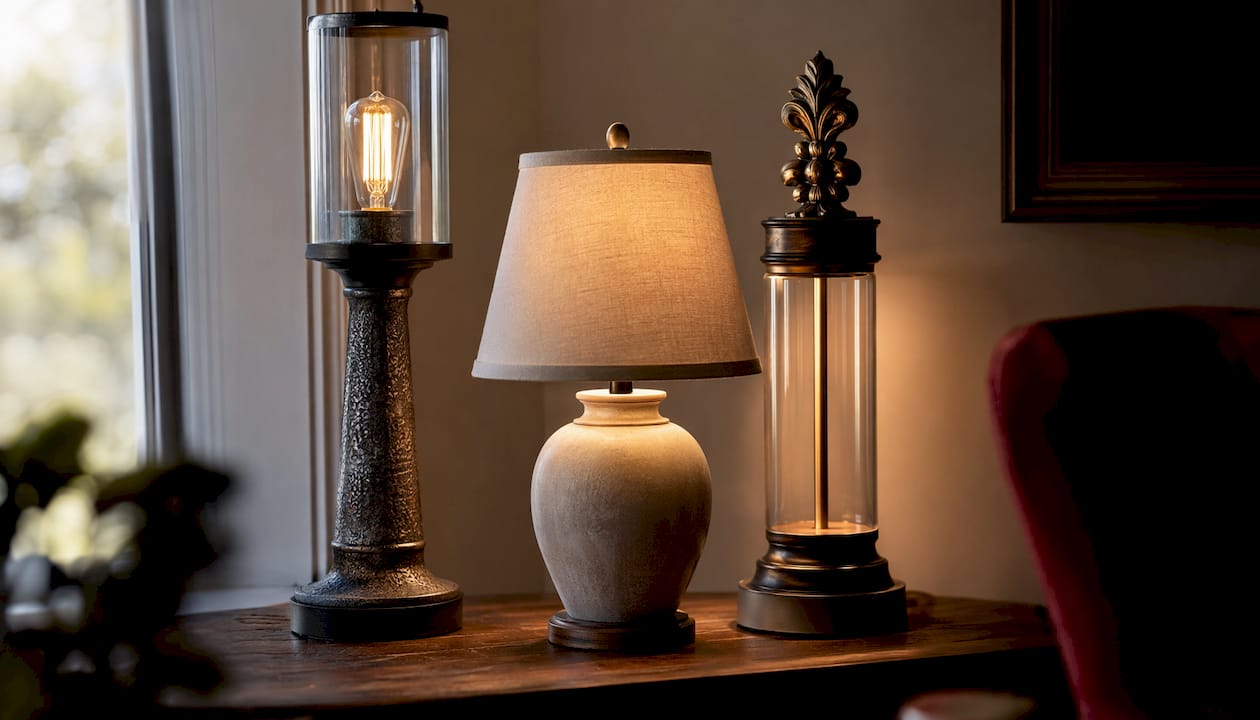
Lamp base design plays a similar role. A tall, slender column base looks taller than a squat urn base of the same measured height. Pairing a slender base with a wide shade creates visual tension; pairing it with a narrower shade keeps the proportions clean. For guidance on matching lamp designs with the right bulb choices, LightsThings has a dedicated resource worth checking.
Finials and decorative hardware at the top of the shade add an inch or two that many buyers overlook when measuring. Always measure to the top of the finial, not just the shade, when comparing lamp heights.
Why seating height shapes your ideal lamp height
Your sofa or chair does as much to determine the right lamp height as the table does. A deep, low-slung sectional puts your eye level several inches lower than a firm, upright dining chair. The same 26-inch lamp can work perfectly beside one and feel too tall beside the other.
The practical approach: sit in the actual seat you use most often next to that table, then measure from the floor to your eyes. That number is your target for the shade’s bottom edge. For ambient lighting, the shade bottom can sit slightly above eye level to cast a softer, more diffused glow upward and outward. For reading, it should land right at eye level or just below to direct light onto the page.
If you have two seats of different heights flanking the same table, aim for the midpoint between the two eye levels. It’s a small compromise that keeps the lamp comfortable for both positions.
Task lighting vs. ambient lighting: how height changes the goal
Task lighting and ambient lighting ask for different things from the same fixture. For task lighting, the priority is directing focused light onto a specific surface, a book, a notepad, or a craft project, without the bulb shining directly into your eyes. That usually means a lamp tall enough to angle light downward from above and slightly to the side of the activity area. Adjustable-arm lamps are particularly useful here because they let you reposition the light source as the task changes.
Ambient lighting works differently. The goal is a soft, diffused glow that fills the room rather than spotlights a surface. A slightly taller lamp with an opaque or fabric shade that diffuses light upward and outward serves this purpose well. The shade bottom can sit at or just above eye level, since the light isn’t meant to land on a specific task. For living rooms where you want layered lighting across multiple fixtures, table lamps typically handle the ambient layer while floor lamps or overhead fixtures fill in the rest.
Key Takeaways
The most reliable rule in lamp sizing is this: the shade’s bottom edge should align with your seated eye level, and the lamp’s total height should stay within 1.5 times the table height.
| Point | Details |
|---|---|
| Combined height target | Table plus lamp together should reach 58–64 inches from the floor to the top of the shade for living room setups. |
| Lamp-to-table ratio | Lamp height should be 1.5 times the table height; a 24-inch table needs a lamp no taller than 36 inches. |
| Shade bottom alignment | The shade’s lower edge should sit at seated eye level, typically near seated eye level, generally between the low forties and mid-forties inches from the floor. |
| Shade-to-base proportion | Shade height should equal roughly two-thirds of the lamp base height to avoid a top- or bottom-heavy look. |
| Base width limit | The lamp base should occupy no more than one-third to one-half of the table’s surface width. |
Find the Right Lamp at LightsThings
Getting the proportions right is only half the work. The other half is finding a lamp that actually fits your style. At LightsThings, you’ll find a curated selection of table lamps, floor lamps, and decorative lighting designed for real living spaces, from compact bedside fixtures to statement pieces built for high-ceiling rooms. Every order comes with free shipping on qualifying purchases, easy returns, and price matching, so you can shop with confidence. Browse the full collection and find the lamp that fits both your measurements and your aesthetic.