The fastest way to brighten a dark room is to layer ambient, task, and accent light at different heights, then swap in higher-lumen LEDs at 2700K to 3000K. Put a lamp at eye level, set a mirror across from your window, and choose bulbs by lumens rather than watts. At Lights & Things, we carry the decorative lamps and fixtures that make each layer look good.
TL;DR:
- Aim for 10–20 lumens per square foot in living rooms and bedrooms, 30–40 in kitchens and bathrooms, and 40–50 in home offices.
- Choose 2700K to 3000K bulbs for living spaces, 3000K to 4000K for task areas, and CRI 90 or higher where color accuracy matters.
- Spread light across ambient, task, and accent sources; add lamps at eye height, then aim adjustable fixtures at walls and uplights toward dark ceilings.
- Keep daylight flowing by moving furniture from windows, trimming exterior plants, and mounting curtain rods wider than the frames so panels do not cover glass.
- For dimmed lamps, verify that both the LED bulb and dimmer are compatible; otherwise, brightness control may not work as intended.
Table of Contents
- How does layered lighting make a dim room feel brighter?
- Which bulbs should you buy: lumens, Kelvin, and CRI explained
- Which fixtures work best in a dim room?
- How do mirrors and paint amplify the light you already have?
- How can you let more daylight in without construction?
- What are the best renter-friendly quick wins?
- Why do dimmers and smart lighting make a room feel better?
- How much light does each room need?
- Which lighting mistakes make a dark room feel darker?
- How should you install and use a statement chandelier?
- How do you make a decorative light a focal point and still get real light?
- How do you match lighting to your interior design style?
- How do you balance daylight and lamps from morning to night?
- A designer’s view on lighting a dark room
- Where to find lamps and fixtures that brighten and style your room
- FAQ
- Sources
How does layered lighting make a dim room feel brighter?
Most dark rooms don’t need more raw power. They need light in more places. Stewart Milne Homes makes the same point: better-placed light beats a bigger bulb in a single spot. Lighting serves three jobs, and the Department of Energy’s efficient lighting guide describes them as ambient, task, and accent uses. Each one fills a gap the others leave.
- Ambient light is the general glow that fills the room. Think chandeliers, ceiling fixtures, and uplights that wash the ceiling.
- Task light serves a specific activity: a reading lamp beside the sofa, a desk lamp, or a light over a kitchen counter.
- Accent light adds depth by highlighting art, a bookshelf, or a dark corner.
Place ambient light first, then add lamps at eye level so the room has light at human scale. Designers quoted by Architectural Digest recommend table lamps and wall sconces for exactly this reason. Finish with accent lights in corners and on art, because corners that fall into shadow are what make a room feel like a cave.
Here is a simple way to find your missing layer. After dark, turn on what you have and walk the room. Wherever you see a hard shadow or a dim corner, that’s where a lamp belongs. If the ceiling looks dark, you need an uplight. If faces look shadowed while you sit, you need eye-level lamps.
For overhead or recessed fixtures, distribute them evenly to avoid dark gaps. Height matters because a light that sits closer to eye level feels softer and more welcoming than one blasting down from the ceiling.
Pro Tip: Turn off the single ceiling fixture for one evening and use only two or three lamps at different heights. If the room already feels better, you’ve found your fix.
Which bulbs should you buy: lumens, Kelvin, and CRI explained
A great fixture with the wrong bulb still leaves a room dim or harsh. Three specs decide the result, and all three are printed on the box.
Lumens measure brightness, not watts. Watts only tell you how much power a bulb draws. The ENERGY STAR bulb purchasing guide tells shoppers to choose by lumens and includes charts that map old incandescent wattages to equivalent lumen output. If you’re replacing a bulb you liked, find its wattage on that chart and buy the matching lumens in an LED.
Kelvin sets the color of the light. The same guide explains that white light options are measured on the Kelvin scale. Lower numbers look warm and yellow, while higher numbers look cool and bluish. Designers in Architectural Digest suggest keeping mood lighting below 3000K.
CRI shows how accurately a bulb renders color. A higher CRI makes wood, fabric, and skin tones look true. Aim for 80 to 90 or higher where color matters.
Here is how those specs map to room roles:
- Living rooms and bedrooms: 2700K to 3000K for a warm, flattering glow.
- Kitchens and task spaces: 3000K to 4000K for crisper, clearer light.
- Color-sensitive areas, such as a vanity or craft table: CRI 90 or higher.
- Any lamp on a dimmer: confirm the bulb is dimmable. Our guide, Are LED bulbs dimmable?, walks through compatibility.
Choose bulbs by lumens, not watts: ENERGY STAR guidance pairs a lumen target with a Kelvin range, so one box tells you how bright and how warm the light will be.
Which fixtures work best in a dim room?
Different fixtures solve different problems, so match the tool to the gap you found in your shadow check.
- Table and floor lamps: the easiest way to add eye-level light. Use them on side tables, consoles, and beside seating.
- Wall sconces: ideal when floor space is tight. They put light at human scale without taking up a surface.
- Uplights and torchieres: bounce light off the ceiling for soft ambient fill, which is especially helpful when the ceiling is the darkest part of the room.
- Recessed and track lighting: useful for even coverage. Track heads can be aimed at walls, art, and corners.
- Chandeliers and pendants: give a warm, even glow overhead, and they double as décor.
Adjustable fixtures deserve special attention. Aim them at a wall rather than at the floor, because a lit wall makes a room feel larger and more open than a lit rug does.
Ceiling height changes the strategy. In a low-ceiling room, avoid heavy hanging fixtures and use flush mounts, wall sconces, and lamps that keep light out at eye level. In a vaulted room, uplights and tall floor lamps help bring the light down to where you actually sit. Whichever fixtures you choose, use shades or frosted glass. Popular Science reports designers recommending diffused light over exposed bare bulbs, which look harsh and add visual clutter.
How do mirrors and paint amplify the light you already have?
Reflective surfaces are free brightness. They bounce the light you already pay for deeper into the room.
- Hang a mirror opposite or beside your main window. It reflects daylight into the back of the room. At night, place one where it catches a lamp’s glow.
- Choose lighter wall colors. Pale, warm whites and soft neutrals reflect more light than deep shades, which absorb it.
- Go glossier on the ceiling. A higher-sheen ceiling paint bounces light back down.
- Add small metallic or lacquered accents. Brass trays, glossy vases, and lacquered furniture scatter light in small sparkles. Homes & Gardens lists mirrors and lacquered finishes among its expert tips.
If you love dark walls, keep them and compensate with lighting. Place a lamp or sconce near the dark surface so the light has something to play against.
How can you let more daylight in without construction?
Before adding more electricity, stop blocking the light you have.
- Move furniture away from windows. A tall bookcase or bulky sofa in front of glass can cut daylight more than you’d expect.
- Trim exterior plantings where you can. Shrubs and tree branches can quietly shade a room.
- Swap heavy drapes for sheers or adjustable treatments. Sheer panels or light-filtering shades soften glare but keep the room bright.
- Mount curtain rods wider than the frame. The panels can then rest against the wall instead of covering glass.
- Choose interior doors with glass panels. They let light flow between rooms. One Day Doors & Closets covers this in its interior door design trends article.
If a room still stays dim after all this, a skylight or solar tube is worth a look. That’s a bigger project, so treat it as a later step and talk with a contractor.
What are the best renter-friendly quick wins?
You don’t need a landlord’s permission or an electrician to fix a dark room. These upgrades plug in, stick on, or charge up.
- Add plug-in table lamps on side tables and consoles. Two lamps at eye level on opposite sides of the room often do more than any overhead change. Browse our floor and table lamps for options.
- Place a floor lamp or torchiere in a dark corner. Aim it upward to light the ceiling.
- Stick on LED strips. Clean the surface, peel the backing, and press the strip firmly. Good spots include under shelves, behind a TV, and along the underside of cabinets.
- Use rechargeable accent lights. Battery-powered uplights and small lamps work on shelves or in corners with no outlet nearby.
- Swap in higher-lumen LEDs in the fixtures you already have.
Pro Tip: For under-cabinet strips, choose a warm color and a high CRI for a color-true result. Forever Glow Lighting recommends that combination.
Why do dimmers and smart lighting make a room feel better?
A dimmer lets one lamp serve many moods. You run it brighter when you’re working and softer in the evening, so the room never feels either too dark or too glaring. Architectural Digest also points to dimmers as a way to avoid glare.
- Use LED-compatible dimmers. Not every dimmer works with every LED, so check the bulb and the dimmer together.
- Try smart bulbs for lamps. They let you save scenes, such as a brighter, cooler daytime setting and a warmer evening one. Our roundup of smart bulbs for table lamps shows what works best.
- Schedule changes through the day. The Illuminating Engineering Society explains in a science-based approach to controls that color temperature and brightness influence circadian rhythms, and that LEDs paired with controllers can support daylight harvesting and circadian-friendly changes.
- Keep it simple. Pick one app or one hub so your scenes don’t fight each other.
How much light does each room need?
Numbers help you size your lighting instead of guessing. Use these lumens-per-square-foot targets as starting points:
- Living rooms and bedrooms: about 10 to 20 lumens per square foot.
- Kitchens and bathrooms: about 30 to 40 lumens per square foot.
- Home offices: about 40 to 50 lumens per square foot.
To use them, multiply the room’s square footage by the target. Say a living room is 200 square feet (a worked example, not market data). At 10 to 20 lumens per square foot, that’s 2,000 to 4,000 lumens spread across all your sources, not packed into one.
Match lumens to the box, then spread them out: the ENERGY STAR bulb charts let you convert old wattages into lumens, so you can add up what your lamps deliver.
Then run this checklist:
- One ambient source, such as a ceiling fixture or uplight.
- Two eye-level lamps on different sides of the room.
- One task light where you read or work.
- One accent light for art or a corner.
- Overhead fixtures distributed to avoid dark gaps.
Our living room lighting checklist goes deeper if you want to plan lamp counts step by step.
Which lighting mistakes make a dark room feel darker?
A few habits keep rooms gloomy no matter how many bulbs you buy.
- Relying on one overhead light. It flattens the room and throws shadows in the corners.
- Using bare bulbs. They glare and look unfinished. Use shades or frosted domes.
- Mixing unmatched Kelvin and CRI values. One warm lamp beside one cold one makes a space feel patchy.
- Blocking your light sources. Furniture and heavy curtains in front of windows or lamps waste the light you have.
How should you install and use a statement chandelier?
A statement chandelier does two jobs at once: it lights the room and it becomes the first thing people notice. That makes the choice of size and height important.
Start with scale. A fixture that is too small looks lost, while one that is too large crowds the room. Over a dining table, the fixture should be noticeably narrower than the table so people at the ends don’t bump into it. In a living room or entry, let it float in the open center of the space.
Hang it so the bottom sits well above head height, and keep it clear of ceiling fans and sightlines to windows. In a room with a low ceiling, pick a flush or semi-flush style rather than a long drop.
Heavy fixtures need proper support. The electrical box must be rated for the fixture’s weight, and wiring work belongs with a licensed electrician. If you rent, ask your landlord before changing a ceiling fixture.
Chandeliers rarely provide enough light alone, because the glow comes from above. Put the fixture on a dimmer, use warm bulbs, and add table lamps and sconces around it. Architectural Digest notes that chandeliers and pendants can give a soft, even ambient glow, and the surrounding lamps fill in the eye-level layer.

How do you make a decorative light a focal point and still get real light?
The best decorative lights earn their spot twice: they look striking and they work. The trick is deciding which role each piece plays before you buy.
- Pick one hero. Let a sculptural floor lamp, an oversized pendant, or a bold table lamp lead the room, and keep the other fixtures quieter so they support it.
- Give the hero a job. Place a statement table lamp where you read, or a sculptural floor lamp where you need uplight, so beauty and function share one spot.
- Choose shades that diffuse. A fabric or rattan shade turns a harsh bulb into a soft glow and adds texture.
- Repeat a finish. Echo the lamp’s brass, black, or wood tone in a frame, a vase, or a tray so the piece feels intentional.
- Balance the room. A pair of matching lamps on either side of a sofa creates symmetry, while a single tall lamp balances a heavier piece of furniture.
For example, a floor lamp with a rattan shade, like our traditional brass floor lamp with a 2-light rattan shade, brings height, texture, and diffused light together in one piece.
How do you match lighting to your interior design style?
Your lighting should speak the same language as the rest of the room. A mismatch in style can make even a bright room feel off.
- Traditional: brass, warm metals, and fabric or rattan shades. Think classic table lamps and candle-style chandeliers.
- Modern and contemporary: clean lines, matte black or polished finishes, and geometric shapes. Simple pendants and slim floor lamps fit well.
- Rustic and farmhouse: wood, iron, and woven textures, with warm bulbs that echo the cozy materials.
- Glam: crystal, mirrored surfaces, and bold metallics that throw light around.
- Transitional: a blend of the two, such as a classic lamp base with a clean, modern shade.
When you’re unsure, follow the finishes already in the room. If your hardware and frames are brass, brass lamps will feel at home. You can also mix styles with a common thread, like one repeated color or metal.
Whatever the style, keep the technical choices consistent: warm bulbs in the 2700K to 3000K range for living spaces, and diffused shades for comfort. Style decides the look, but layering and bulb choice still decide how bright and inviting the room feels.
How do you balance daylight and lamps from morning to night?
Natural light changes all day, so your electric light should change with it. The goal is for the room to feel evenly lit at every hour, not bright in one spot and gloomy in another.
In the morning and midday, let daylight do the heavy lifting. Open sheer treatments, and use lamps only to fill in the shadowy side of the room, usually the side farthest from the window. A mirror across from the window helps carry that light deeper.

As the afternoon fades, turn on your lamps before the room goes dark, not after. Switching on lights early keeps the shift gentle, and your eyes won’t strain as the daylight drops.
In the evening, shift to warm, lower light. Dim the overheads, favor table and floor lamps, and let accent lights glow. This is where dimmers and smart scenes pay off. The IES controls article explains how LEDs and controllers can adjust color and brightness through the day, so your lighting can run brighter and cooler by day and warmer at night.
Rooms with few or no windows need a steadier approach. Treat artificial light as the main source, use several layers, and pick bulbs with good CRI so the space doesn’t feel flat or tired.
A designer’s view on lighting a dark room
The most common mistake in a dim room is buying one stronger bulb and hoping it fixes everything. It rarely does, because the problem is almost never power. It’s distribution. A room feels dark when light is missing from corners, walls, and eye level, and a single bright source only makes the shadows around it deeper.
Our approach is simple and design-led. Layer your light, keep living spaces warm, and bring the glow down to human scale with lamps you actually enjoy looking at. A decorative lamp is not a luxury add-on here. It’s the tool that puts light where you live, and it makes the room feel curated instead of merely lit.
That’s why we pair decorative lighting with complementary accents. A lamp that lights a corner and anchors a console does two jobs, and a room that has both brightness and style rarely feels like a cave. Start small, change one layer at a time, and let the room tell you what it needs next.
— Norm Blain
Where to find lamps and fixtures that brighten and style your room
Everything above comes down to a short shopping list, and we’ve built our catalog around it. Start with table lamps for eye-level light, then add a floor lamp or torchiere for ambient uplight, and choose shades or diffusers so no bare bulb is ever exposed.
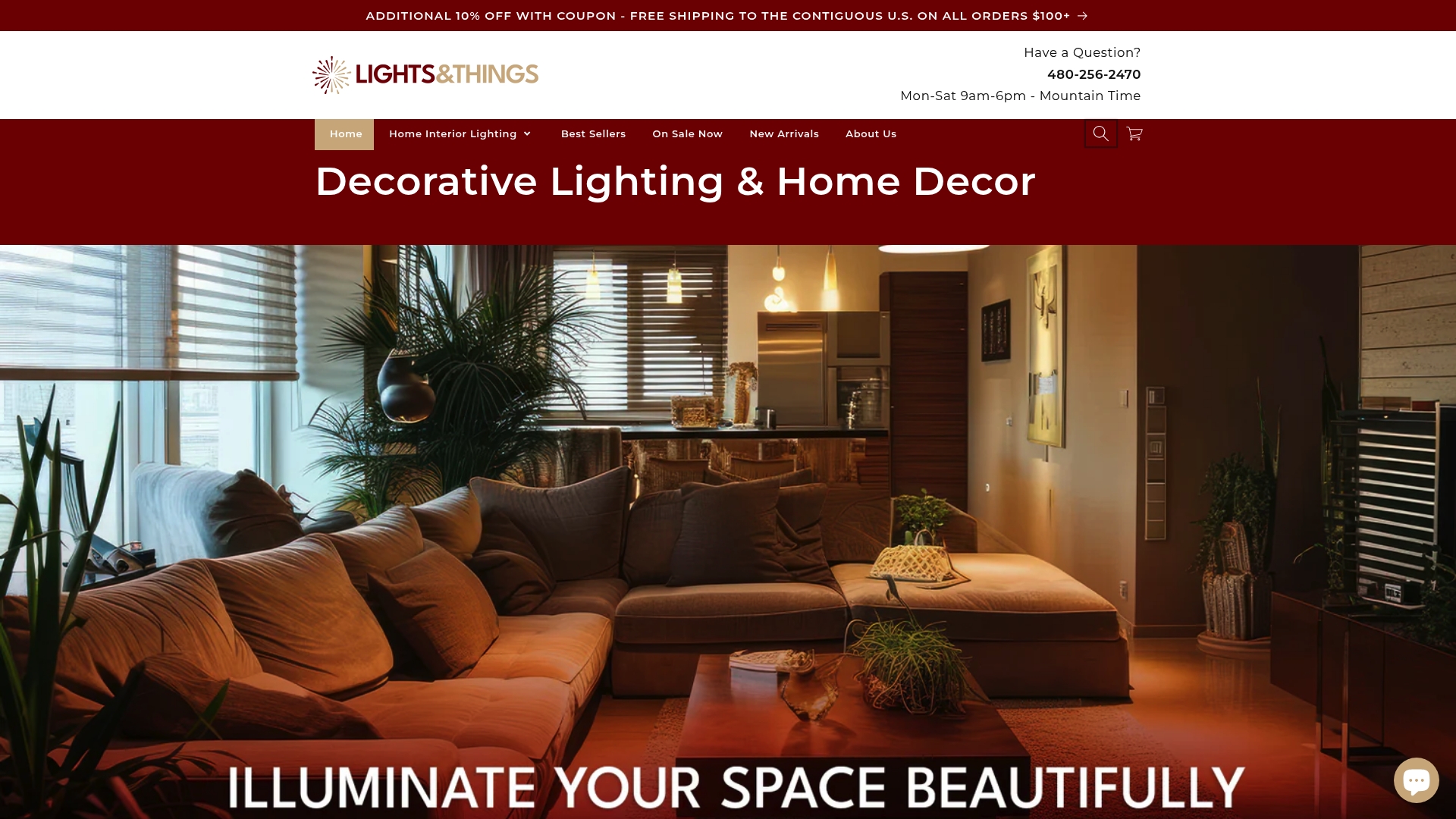
Our floor and table lamps collection is the place to begin. You’ll find pieces like our weathered brass mini accent table lamp with a dimmer, which suits a console or bedside, and our table lamp with shade for a softer glow. We also offer ceiling lighting, chandeliers, and home décor, so one order can cover the light and the styling around it.
We aim to make buying simple: free shipping thresholds, easy returns, secure checkout, price matching, and financing for larger pieces. Browse the full range at Lights & Things, pick the layer your room is missing, and add it this week.
FAQ
What is the 3 lighting rule?
The three-layer rule means combining ambient, task, and accent lighting in one room. Ambient light fills the space, task light supports activities like reading, and accent light adds depth. The Department of Energy’s lighting guide describes these same three uses.
How can you make a dark room look like it has natural light?
Use warm, diffused bulbs, add lamps at several heights, and place a mirror across from your brightest light source. Lighter wall colors and glossy finishes help bounce light around. Lamps on dimmers let you match the glow to the time of day.
What is the best type of lighting for a dark room?
A mix works best: an ambient source overhead, eye-level table or floor lamps, and an accent light for corners. Choose LED bulbs with warm Kelvin for living spaces, and shades that diffuse the light. Layering beats relying on one fixture.
What color brightens a dark room?
Light, warm neutrals such as soft whites, creams, and pale grays reflect the most light. A higher-sheen ceiling paint adds extra bounce. If you prefer deeper colors, offset them with lamps and sconces placed near the darker walls.
Sources
- Bulb Purchasing Guide
- Efficient Lighting Strategies: Wise Design Choices Can Meet Lighting Needs and Save Energy. Building Technologies Program, Office of Energy Efficiency and Renewable Energy (EERE)
- A Science-Based Approach To Controls
- Mood Lighting 101: Expert Tips on How to Illuminate a Home (2025) | Architectural Digest