Most floor lamps sell for $40 to $150, with the sweet spot for a well-made, mid-range piece landing around $75 to $120. Smart or premium designer models push that range to $150–$300 or more. Basic reading lamps sit at the low end, statement pieces at the top, and size, materials, and features explain almost all of the differences in between.
TL;DR:
- Most standard floor lamps cost between $75 and $120, with premium designer models reaching $150 to $300 or more due to materials and features.
- Materials like brass or solid wood significantly increase the price compared to painted steel, and larger shades or heavier bases also raise costs.
- Smart and LED-integrated lamps add 15% to 35% to the price, but a basic $15 smart bulb can replicate many smart features at a lower cost.
- For long-term use, investing in a mid-range or higher-quality lamp with durable materials and a good warranty provides better value than cheaper, short-lived options.
- Shopping at direct-brand or specialty retailers ensures detailed product information and better support, reducing the risk of surprises or buyer’s remorse.
Table of Contents
- How Much Do Floor Lamps Cost by Style?
- What Actually Drives the Price of a Floor Lamp?
- What Should You Budget for Each Type of Lamp?
- Where Should You Shop to Get the Best Price?
- A Buying Checklist From Lights & Things Author Norm Blain
- Is It Worth Paying More Upfront for a Floor Lamp?
- Find Floor Lamps That Fit Your Budget at Lights & Things
- Sources
- FAQ
How Much Do Floor Lamps Cost by Style?
The style you choose sets your baseline before you even think about finish or features. A slim reading lamp and a sculptural arc lamp are built for different jobs, and their price tags reflect that.
A standard floor lamp with a fabric shade and metal base, in the common 64 to 74 inch height range, typically runs $40 to $150, with most mid-range models clustering around $75 to $120. Arc lamps cost more because of the engineering involved in a cantilevered arm that has to stay stable over a sofa or reading chair. Tripod lamps track close to standard pricing but often add $10 to $20 for the wood or metal leg assembly. Smart and LED-integrated lamps carry the widest range, since app controls, dimming modules, and color-changing bulbs all add to the bill.
- Basic table-height or accent floor lamps: $40–$90
- Standard reading or living-room lamps: $75–$150
- Arc lamps: $100–$250
- Tripod lamps: $60–$180
- Smart or LED-integrated lamps: $100–$250
- Premium or designer statement pieces: $150–$300 and up
| Style | Typical Low | Typical High | Why |
|---|---|---|---|
| Basic/accent | $40 | $90 | Simple base, small shade, minimal materials |
| Standard reading | $75 | $150 | Balanced height, common finishes |
| Arc | $100 | $250 | Cantilever engineering, larger footprint |
| Tripod | $60 | $180 | Extra leg hardware, mixed materials |
| Smart/LED | $100 | $250 | Added electronics and app integration |
| Premium/designer | $150 | $300+ | Hand-finished materials, brand design |
Height plays its own role here. Lamps under 60 inches often land at $40 to $90, mid-height models between 60 and 72 inches run $70 to $150, and taller 72 to 90 inch statement lamps frequently reach $100 to $250.
What Actually Drives the Price of a Floor Lamp?
Two lamps that look nearly identical in a photo can differ significantly in price once you account for underlying materials and construction. Base material is the biggest lever: cast iron and solid brass cost more to produce than powder-coated steel, and that difference shows up directly in the price tag. Wood bases with a hand-applied stain sit somewhere in the middle.
Shade material matters more than most shoppers expect. A linen or pleated fabric shade costs more to manufacture than a plain drum shade in synthetic fabric, and larger shades simply require more material.
- Metal, brass, and wood finishes add $10 to $40 over basic painted steel.
- Fabric or pleated shades cost more than plain synthetic drum shades.
- Integrated LEDs and smart modules typically add 15% to 35% to the base price.
- Taller lamps need heavier bases for stability, which raises shipping weight and cost.
- A longer warranty or hassle-free return policy is usually built into the retail price, not billed separately.
Integrated LEDs cost more up front but lower your running costs over time, while lamps with replaceable bulbs are cheaper to buy but cost a little more in bulbs down the road.
Pro Tip: If a smart floor lamp’s main appeal is dimming, a $15 smart bulb in a standard lamp often gets you 90% of the benefit for a fraction of the smart-lamp markup.
What Should You Budget for Each Type of Lamp?
Matching your goal to a realistic price target keeps you from either overspending or ending up with something that won’t hold up.
- Budget reading lamp ($40–$90): Look for a simple metal base, standard drum shade, and a replaceable bulb socket. Skip dimmers and smart features here. This is the right call for a dorm room, guest bedroom, or a rental you won’t be in long.
- Mid-range living-room lamp ($80–$200): Expect a heavier base for stability, a nicer fabric shade, and possibly a built-in dimmer switch. This is where most buyers land for a lamp that anchors a reading corner or sits beside a sofa for years.
- Premium or smart arc lamp ($150–$300+): Here you’re paying for design, brass or marble detailing, and often app-controlled lighting. Keep the base and shade quality nonnegotiable; if you need to trim cost, drop the smart module before you drop the materials.
Where Should You Shop to Get the Best Price?
Direct-brand ecommerce sites and specialty lighting retailers tend to offer better detail on materials and dimensions than big-box stores, which helps you avoid surprises at delivery. Marketplace listings can undercut both on price, but service and return support vary widely from seller to seller.
Sales cluster around Presidents’ Day, Memorial Day, and the post-holiday clearance window in January, when retailers move older inventory. Open-box or refurbished lamps can be good value for a guest room or home office, but check the wiring and socket assembly before you plug one in.
- Choose lamps with replaceable bulbs over sealed integrated LEDs if upfront cost matters more than long-term savings.
- Stick to standard finishes like matte black or brushed nickel; specialty finishes like antique brass or hand-painted detail carry a premium.
- Skip smart features entirely if your budget is tight. A $15 smart plug does the same job on a standard lamp.
Pro Tip: Inspect the plug and cord on any imported or heavily discounted lamp before buying. A glued-on adapter or nonstandard plug assembly is a sign to return it or replace the cord.
A Buying Checklist From Lights & Things Author Norm Blain
Before you check out, run through the details that separate a lamp you’ll love from one you’ll return. Confirm the overall height against your ceiling and seating, check the shade diameter against the space it needs to fill, and note whether the bulb is replaceable or sealed into the fixture.
- Confirm height, shade diameter, and bulb type before adding to cart.
- Check the return policy and warranty length, especially for higher-priced pieces.
- Avoid fabric shades in high-traffic homes with pets or kids; they show wear faster than metal or glass.
- Favor finishes like brushed nickel or matte black over polished brass if you want something that resists fingerprints and scratching.
- Look for detailed product pages with exact dimensions and included accessories; vague listings are the biggest source of buyer’s remorse.
A retailer that lists clear specs, offers price matching, and backs the purchase with easy returns and financing takes most of the guesswork out of an online lamp purchase.
— Norm Blain
Is It Worth Paying More Upfront for a Floor Lamp?
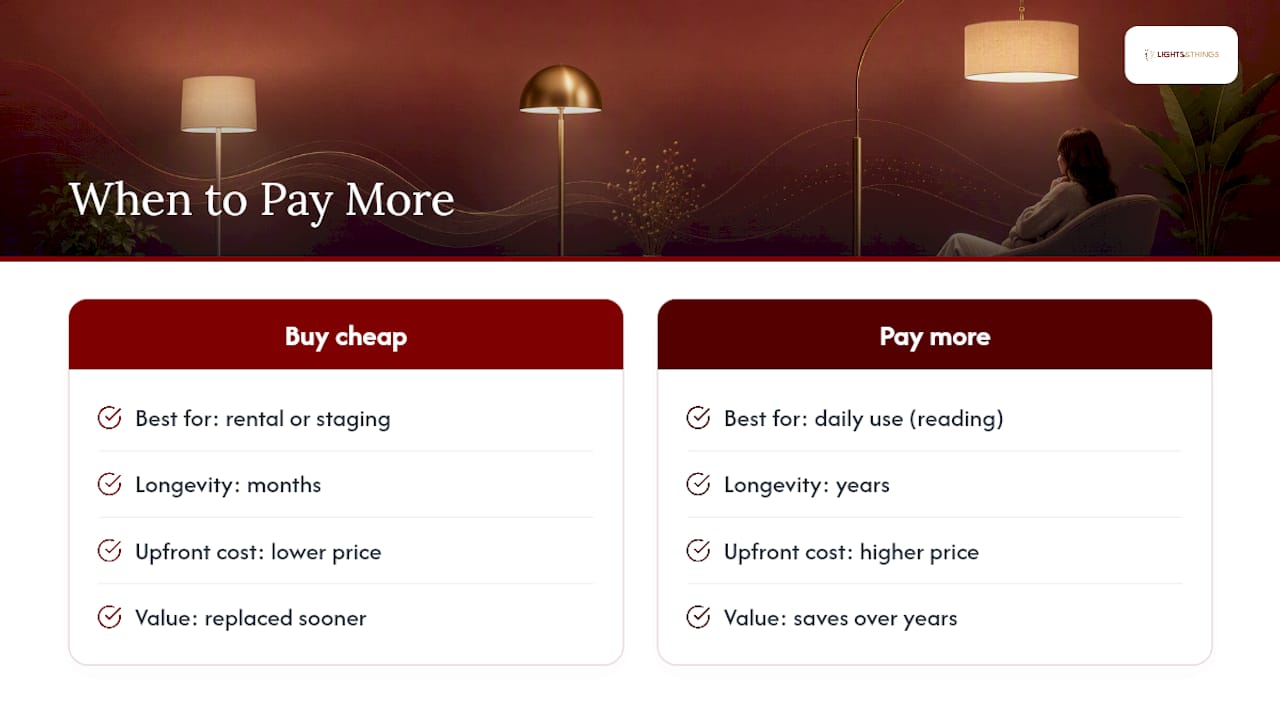
Buying cheap and replacing it later makes sense for a rental, a staging project, or a room you know will change soon. But for a lamp you’ll use daily, like a reading light beside your favorite chair, spending more upfront on a sturdy base and quality shade pays off over years, not months. Always weigh the warranty and shipping cost into your comparison. A lamp that’s $20 cheaper but charges $40 for delivery isn’t actually the better deal.
Find Floor Lamps That Fit Your Budget at Lights & Things
LightsThings carries floor lamps across every price band this guide covers, from accessible everyday pieces to premium statement designs like the Traditional Brass 65" 2-Light Rattan Shade floor lamp, which lands squarely in the mid-to-premium range discussed above. Every product page lists exact dimensions, materials, and bulb specifications, so you know what you’re buying before it ships.
That kind of detail matters more than most shoppers realize, because vague listings are exactly what leads to returns and disappointment. The retailer backs every purchase with easy returns, price matching, and financing options, so you can commit to a piece without worrying about getting stuck with the wrong fit. If you’re ready to compare styles side by side, browse the full floor and table lamp collection and filter by the price range that matches your budget scenario.
Sources
- Floor Lamp Price Guide: Cost Ranges for Popular Styles and Options 2026 – Current Cost
- Lamp Price and Cost Guide for U.S. Buyers 2026 – One and Done Prep
- Imported electrical equipment safety risks you need to know – UCL Safety Services
FAQ
What Is a Reasonable Price for a Floor Lamp?
A reasonable price for a standard floor lamp with a fabric shade and metal base falls between $40 and $150, with most quality mid-range models around $75 to $120. Premium or designer pieces can run $150 to $300 or more, depending on materials and smart features.
Why Are Floor Lamps Expensive?
Floor lamp prices climb with the cost of materials like brass or solid wood, larger or hand-finished shades, and added electronics like integrated LEDs or smart dimming modules. Height and base weight also raise shipping and assembly costs, and smart features alone can add 15% to 35% to the base price.
Is $100 a Lot for a Lamp?
No, $100 sits right in the middle of the typical range for a standard floor lamp, which runs $40 to $150 for most common styles. At that price point, expect a sturdy metal or wood base, a decent fabric shade, and a standard replaceable bulb socket.
What Is the Average Price of a Floor Lamp?
Most standard floor lamps average around $75 to $120, based on typical retail ranges for common styles with fabric shades and metal or wood bases. Arc, tripod, and smart lamps tend to average higher, often between $100 and $250, because of added materials or electronics.
Does LightsThings Sell Floor Lamps in Every Price Range?
LightsThings offers floor lamps spanning accessible everyday styles through premium statement pieces, matching the full range covered in this guide. Current prices and specifications are listed on each product page in the floor and table lamp collection.