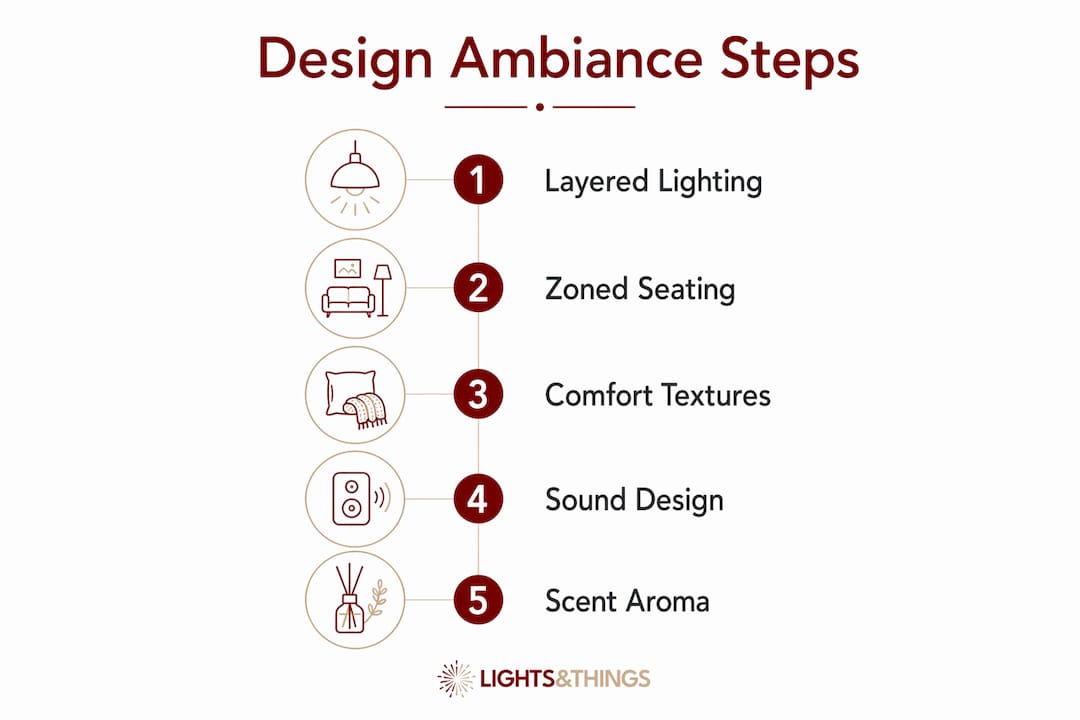
The best entertaining spaces share one quality: guests feel comfortable the moment they walk in. That feeling isn’t accidental. It comes from five deliberate design decisions: distinct zones for eating and socializing, clear traffic paths, ample flexible seating, smooth indoor-outdoor flow, and layered lighting. Get those right, and the square footage barely matters.
Here’s what every well-designed entertaining space has in common:
- Distinct zones for dining, conversation, and relaxed lounging
- Flexible seating that scales from two guests to twelve
- Layered lighting with dimmable controls for every occasion
- Seamless indoor-outdoor transitions that expand your usable space
- Textures and decor that add warmth without creating clutter
Layout and lighting do more work than any single furniture purchase. A thoughtfully arranged room with warm, layered light will outperform a beautifully furnished space with harsh overhead fixtures every time.
How do you zone and arrange seating for entertaining?
Zoning is the foundation of any space designed for hosting. When eating, dining, and socializing areas overlap without definition, guests feel uncertain where to settle, and conversations stall. Defined zones solve that by giving each activity its own territory.
- Dining zone: A table with enough clearance for chairs to pull out fully, ideally sufficient clearance from the nearest wall or furniture to allow easy movement
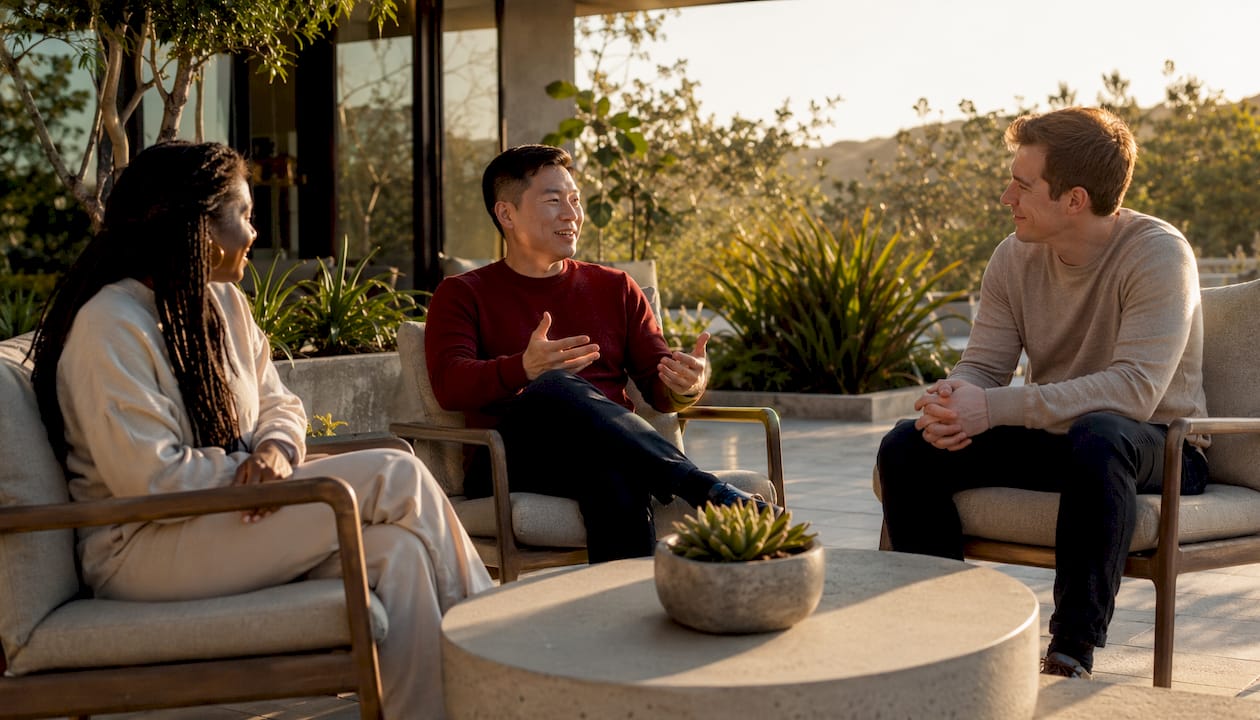
- Conversation zone: Seating pulled inward, away from walls, so guests face one another naturally
- Transition zone: A bar cart, console table, or drinks station between areas to encourage movement and mingling
Floating furniture inward to create conversation clusters is one of the most effective changes you can make. Chairs angled toward a sofa, with a low table between them, create the kind of intimate grouping where conversation happens without effort. For larger rooms, two distinct seating groups work better than one long row of furniture pushed against the walls.
Flexible seating matters just as much as arrangement. Poufs, ottomans, and nesting stools can move wherever the gathering shifts. Keep a few lightweight extras nearby so you’re never scrambling for chairs when the guest count grows.
Pro Tip: Aim for a clear main walkway through your entertaining area to keep traffic flowing and make the space accessible for all guests.
Safety belongs in this conversation too. Secure rugs with quality pads, keep lamp cords routed behind furniture, and avoid placing low side tables where guests might catch them in the dark.
What makes indoor-outdoor flow work in an entertaining space?
A well-connected indoor-outdoor transition effectively doubles your entertaining capacity. The goal is continuity: guests should move between spaces without feeling like they’ve left the party.
Consistent flooring materials and a matching color palette are the most reliable tools for creating that connection. When the same tile, wood tone, or neutral palette carries from inside to a covered patio, the two spaces read as one.
Practical tips for strengthening the flow:
- Use large sliding or folding glass doors to remove the visual barrier between rooms
- Extend interior rugs or use coordinating outdoor rugs to mirror the indoor seating arrangement outside
- Match lighting fixtures in style and color temperature across both spaces
- Install smart controls so you can adjust indoor and outdoor lighting from one place
- Add outdoor heaters or a fire pit to extend the season and keep guests comfortable after dark
Climate comfort is often overlooked until the first cold evening. Ceiling fans on a covered porch, portable heaters, and good ventilation indoors all contribute to how long guests stay and how relaxed they feel. Pathway lighting along steps or transitions isn’t just decorative; it prevents trips and keeps the space safe after sunset.
Why does layered lighting matter so much for ambiance?
Lighting is the most overlooked element in entertaining design, yet it’s the one that most dramatically changes how a space feels. A single overhead fixture flattens a room. Layered lighting gives you control over mood, depth, and warmth at every stage of the evening.
The three layers work together:
- Ambient lighting: General illumination from ceiling fixtures, recessed lights, or shaded floor lamps
- Task lighting: Focused light over a bar cart, serving area, or reading corner
- Accent lighting: Softer light that highlights artwork, shelving, or architectural details
Dimmable controls are non-negotiable for entertaining. They let you shift from a bright, welcoming scene when guests arrive to a low, relaxed atmosphere as the evening settles in. When choosing bulbs, warm white at 2700K is the standard for hospitality settings. It’s flattering, cozy, and easy on the eyes.
Circadian biology explains why: warm amber light signals evening to the brain, triggering relaxation, while cool blue-white light above 5000K signals midday alertness. The difference between a 2700K and a 5000K bulb in the same fixture is the difference between a dinner party and a waiting room. For dimmable LED options that give you full control, it’s worth understanding how your fixtures and bulbs interact before you buy.
Pro Tip: After dark, turn off every overhead light and rely entirely on floor lamps, table lamps, and candles. Sources below eye level mimic firelight and create the kind of warmth no ceiling fixture can match.
How do textures and decor create warmth in a gathering space?
Entertaining spaces work best as multi-sensory environments that consider how a room feels, not just how it looks. Texture is the fastest way to shift a space from polished to genuinely warm.
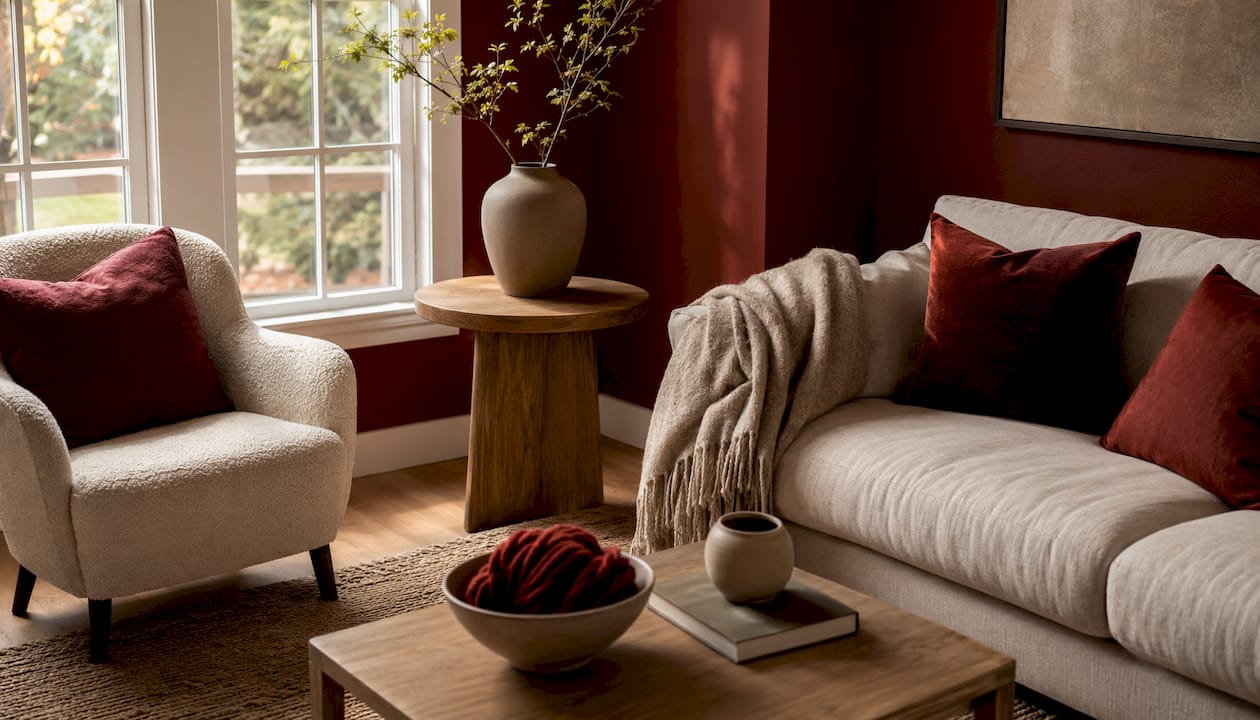
Soft materials like velvet, boucle, linen, and wool signal comfort before a guest even sits down. Layer them through throw pillows, area rugs, and upholstered seating. Natural elements, including wood trays, woven baskets, and potted plants, add organic warmth that manufactured finishes can’t replicate.
The Hygge philosophy frames coziness as emotional security, achieved through enclosed spaces, soft textures, and warm light working together. Practically, that means pulling furniture into tight groupings, using a rug to define the seating area’s boundary, and keeping the lighting low and warm. Environmental psychology supports this through the concept of “prospect and refuge”: guests feel most comfortable in spaces that feel enclosed yet connected, with defined boundaries and clear sightlines.
Decor should serve double duty wherever possible. A build-your-own cocktail bar functions as both a practical hosting station and a visual centerpiece. Concentrate your best pieces at high-impact focal points like the entryway, the dining table, and a photo backdrop wall, rather than spreading decor evenly across every surface.
Pro Tip: Add at least one personal object to every entertaining area, a book you’ve actually read, a souvenir, a framed photo. Guests notice, and it gives them something to ask about.
For multifunctional furniture that earns its place in smaller entertaining areas, pieces that offer storage, extra seating, or flexible configuration are worth prioritizing over purely decorative options.
How LightsThings helps you style a space that entertains beautifully
LightsThings is a direct-to-consumer decorative lighting and home decor retailer built specifically for homeowners who want both illumination and aesthetic impact. Their catalog spans ceiling lighting and chandeliers to floor lamps, table lamps, sculptures, and curated decor accents, making it straightforward to build a layered lighting scheme without sourcing from multiple retailers.
For entertaining spaces, a few product categories stand out:
- Crystal chandeliers as statement ambient fixtures that anchor a dining zone with visual drama
- Modern table lamps for warm, below-eye-level accent light in conversation areas
- Floor lamps with warm shades that serve as both task and ambient sources after dark
LightsThings supports purchase confidence with free shipping thresholds, easy returns, price matching, and financing options. Their editorial content, developed with input from design expert Norm Blain, helps you match fixtures to room proportions and lighting goals before you buy. Browse the full decorative lighting collection to find pieces that work for your specific entertaining setup.
How does sound design improve the atmosphere at a gathering?
Sound shapes how a room feels just as much as lighting does. A space with bare walls and hard floors creates an echoey, institutional quality that makes guests raise their voices and feel subtly on edge. Soft furnishings, including thick rugs, upholstered panels, heavy curtains, and bouclé or chenille upholstery, absorb sound and bring the room’s acoustic character down to a comfortable level.
Music sets the social pace. A low-volume ambient playlist running before guests arrive signals that the space is ready and welcoming. As the evening progresses, a slightly higher volume encourages energy without drowning out conversation. The key is keeping music at a level where guests can talk without leaning in.
For outdoor spaces, consider the acoustic environment too. Hard surfaces like concrete patios reflect sound and can feel harsh. Outdoor rugs, fabric shade sails, and dense plantings all soften the acoustic profile of an exterior entertaining area.
How do scents and aromas enhance the ambiance?
Scent has a direct line to the brain’s emotional center, which makes it one of the fastest ways to shift how a space feels. A familiar, warm fragrance like vanilla, cedar, sandalwood, or cinnamon can trigger comfort before a guest has even looked around the room.
One well-placed candle in the main entertaining area is enough. Choose a scent that complements the season and the mood you’re setting: lighter citrus or linen for daytime gatherings, warmer spice or wood notes for evening events. Avoid layering multiple scents in the same space, as competing fragrances quickly become overwhelming.
A built-in diffuser near the entry, or a signature reed diffuser placed where guests first arrive, creates a consistent scent association with your home. Over time, guests connect that fragrance with comfort and welcome, which is exactly the ambiance you’re designing for.
Key Takeaways
Layered lighting, defined zones, and thoughtful textures are the three pillars of a well-designed entertaining space that feels warm, flexible, and genuinely inviting.
| Point | Details |
|---|---|
| Zone your space deliberately | Separate dining, conversation, and transition areas so guests know where to settle. |
| Use warm white bulbs | 2700K bulbs create a flattering, relaxed atmosphere suited to hospitality settings. |
| Layer three light types | Combine ambient, task, and accent lighting with dimmers to shift mood throughout the evening. |
| Apply prospect and refuge | Use rugs and furniture groupings to create enclosed yet connected zones that feel safe and comfortable. |
| Engage all five senses | Sound, scent, and texture shape ambiance as much as lighting and layout do. |