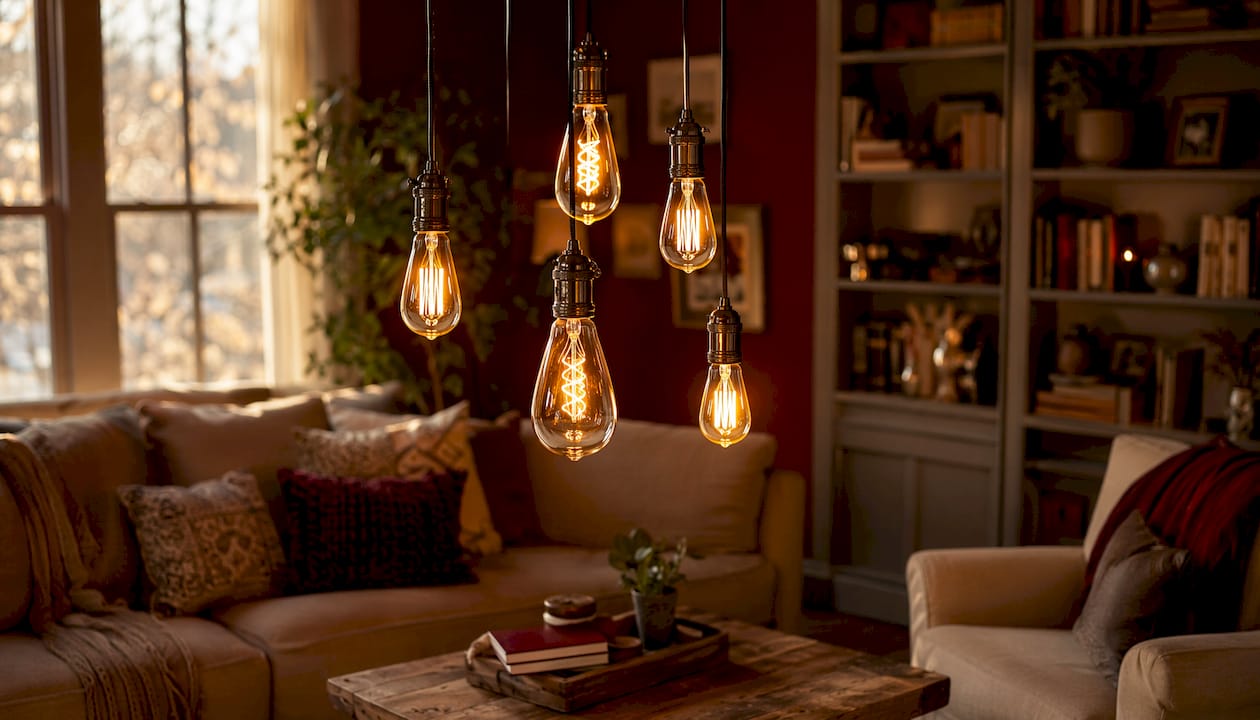
A decorative bulb is a purpose-built light bulb designed to serve as a visual element in a room, not just a light source. Unlike standard utility bulbs hidden inside shades, decorative bulbs are meant to be seen. They feature distinctive shapes, exposed filaments, and tinted or textured glass finishes that make them integral parts of fixtures like chandeliers, pendant lights, and wall sconces. If you have ever wondered what is a decorative bulb and why it matters for your home’s atmosphere, the answer starts with understanding that these bulbs combine style and function in equal measure.
What is a decorative bulb, and how does it differ from a standard bulb?
A decorative bulb is defined primarily by its aesthetic design, including unique shapes, exposed filaments, and tinted glass, rather than by raw light output. Standard utility bulbs prioritize lumens and efficiency. Decorative bulbs prioritize how they look when lit, which is why they appear in exposed sockets where the bulb itself is part of the design statement.
The industry term you will see on packaging and in lighting specs is “decorative lamp.” Lighting professionals use “lamp” to mean any light source, so a decorative lamp is the technical equivalent of what most homeowners call a decorative light bulb. Both terms refer to the same product, and you can use them interchangeably when shopping or specifying fixtures.
These bulbs appear most often in chandeliers, pendant clusters, exposed Edison-style fixtures, wall sconces, and string light arrangements. Their placement is intentional. The fixture and the bulb work together as a single design object, which is why choosing the wrong bulb shape or finish can undermine an otherwise well-designed room.
What are the main types of decorative bulbs?
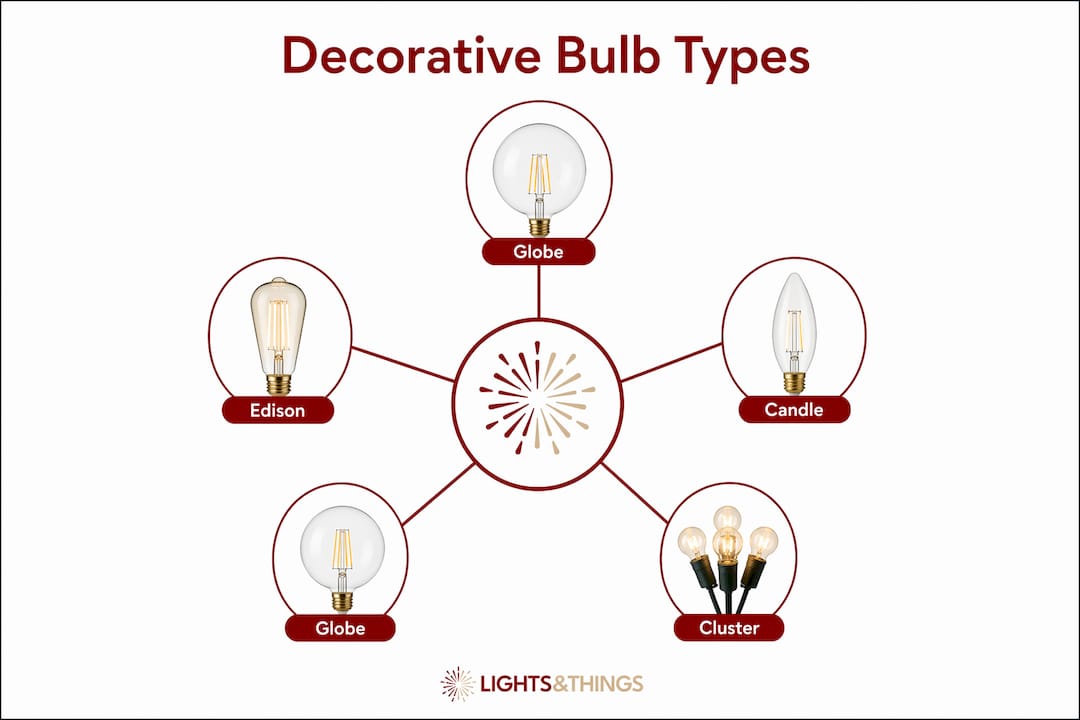
Common shapes include globes, flame tips, and tubular bulbs, each producing a different visual effect and suiting different fixture styles. Here is how the major categories break down:
- Globe (G-series): Round bulbs that cast soft, even light in all directions. They work well in bathroom vanity strips, pendant clusters, and open cage fixtures.
- Flame tip (CA/B-series): Tapered bulbs that mimic the shape of a candle flame. They are the standard choice for chandeliers and candelabra-style wall sconces.
- Tubular (T-series): Long, cylindrical bulbs with a clean, linear profile. They suit industrial and mid-century modern fixtures.
- Bullet and torpedo shapes: Subtle variations on the flame tip with a rounded or pointed top, used in smaller sconces and accent fixtures.
| Shape | Visual effect | Typical fixture use |
|---|---|---|
| Globe (G-series) | Soft, omnidirectional glow | Pendants, vanity strips, cage fixtures |
| Flame tip (CA/B-series) | Candlelight silhouette | Chandeliers, candelabra sconces |
| Tubular (T-series) | Clean, linear light | Industrial pendants, wall fixtures |
| Bullet/torpedo | Subtle upward accent | Small sconces, accent fixtures |
Glass finishes shape the character of the light as much as the bulb’s shape does. Clear glass produces direct, visible filament glow with higher contrast and sparkle. Frosted glass softens the output and reduces glare, making it better for fixtures at eye level. Amber or tinted glass warms the light significantly, which is why it dominates farmhouse, industrial, and vintage-inspired interiors.
How do color temperature, dimming, and base size affect your choice?
Color temperature dramatically affects room mood. A 2200K bulb produces a deep amber glow suited to intimate dining rooms or moody bedroom corners. A 2700K bulb delivers a warmer, balanced white that works well across most living spaces. Choosing the wrong Kelvin rating is the most common reason homeowners feel dissatisfied with their decorative lighting after installation.
Color rendering matters too. A bulb with a high Color Rendering Index (CRI) shows the true colors of furniture, art, and textiles more accurately. For decorative applications, a CRI of 90 or above makes a room feel richer and more intentional.
Dimming compatibility is a detail many DIYers overlook. LED decorative filament bulbs require LED-compatible dimmer switches. Using an older incandescent dimmer with an LED decorative bulb causes flickering, audible humming, or incomplete shutoff. Check the dimmer’s compatibility list before purchasing bulbs, not after.
Base size is equally critical. Decorative bulbs often use a candelabra base (E12) rather than the standard medium base (E26) found in most table lamps. Forcing a bulb with the wrong base into a socket can damage both the socket and the bulb. Always read the fixture label or check the existing bulb before ordering replacements.
- Confirm the base size (E12 or E26) before purchasing.
- Match the Kelvin rating to the room’s intended mood.
- Verify dimmer compatibility if the fixture is on a dimmer circuit.
- Check the fixture’s maximum wattage rating, especially for enclosed or semi-enclosed housings.
Pro Tip: If you are unsure about dimmer compatibility, look for decorative LED bulbs labeled “dimmable” and cross-reference the bulb brand’s compatibility list with your dimmer model. Most reputable bulb manufacturers publish these lists on their websites.
Where and how should you use decorative bulbs in your home?
Decorative bulbs work best in ambient and accent lighting roles, not as primary task lighting. Amber filament bulbs are ideal for ambiance but not for high-visibility tasks like kitchen prep work. Placing a warm, low-lumen decorative bulb directly over a cutting board creates a mood problem and a safety problem at the same time. Layer your lighting instead: use recessed or under-cabinet lights for task work, and let decorative bulbs handle the atmosphere.
Here are the most effective placements by room:
- Kitchen island pendants: Globe or tubular bulbs in clear or amber glass add warmth above an island without competing with task lighting below cabinets.
- Dining room chandeliers: Flame tip bulbs at 2200K–2700K create the candlelit effect that makes dinner feel like an occasion.
- Bedside sconces: Small globe or bullet bulbs in frosted glass provide soft, glare-free reading light that does not disrupt the room’s calm.
- Living room floor and table lamps: Warm decorative bulbs for ambient lighting anchor a seating area and make the space feel curated rather than lit by default.
- String light arrangements: Tubular or globe bulbs strung across a covered patio or draped inside a bedroom create depth and a layered, relaxed mood.
Style matching matters as much as placement. Amber-tinted bulbs with visible filaments reinforce farmhouse and industrial aesthetics. Frosted globe bulbs suit Scandinavian and minimalist interiors. Clear tubular bulbs with tight spiral filaments read as mid-century modern. If you are working with a contemporary or classic lighting style, the bulb finish should echo the fixture’s finish, whether that is matte black, brushed brass, or polished chrome.
Pro Tip: Cluster three pendant lights at slightly different heights over a kitchen island and use matching globe bulbs in the same Kelvin temperature. The repetition creates visual rhythm, and the slight height variation adds depth without looking accidental.
Are LED decorative bulbs worth it compared to incandescent?
LED decorative bulbs are the better choice for most homeowners. Modern LED filament bulbs replicate traditional filament styles while generating significantly less heat and lasting far longer than incandescent equivalents. That matters most in open fixtures where the bulb is fully exposed to the room, because less heat means less stress on the socket and surrounding materials over time.
The common misconception is that LED decorative bulbs look cold or clinical. Early LED technology earned that reputation, but current LED filament designs closely match the warm glow of traditional incandescent bulbs, especially at 2200K–2700K. The choice of color temperature and filament type shapes the room atmosphere far more than the technology behind the bulb.
A few practical points on LED decorative bulb performance:
- LED decorative bulbs consume a fraction of the energy of incandescent equivalents at the same lumen output.
- Their longer lifespan reduces how often you need to replace bulbs in hard-to-reach fixtures like high chandeliers.
- Heat dissipation is less of a concern with LED bulbs, which extends the life of both the socket and the fixture housing.
- Decorative LED bulbs are now available in minimalist and contemporary designs, not just vintage Edison styles.
For a deeper comparison of bulb technologies, the LED vs. incandescent breakdown at LightsThings covers performance, aesthetics, and cost in practical terms.
Key Takeaways
Decorative bulbs serve both as light sources and as design objects, and selecting the right one requires matching shape, finish, color temperature, and base size to your fixture and room style.
| Point | Details |
|---|---|
| Design comes first | Decorative bulbs are chosen for their visible shape, filament, and glass finish as much as their light output. |
| Color temperature sets the mood | Use 2200K for intimate warmth or 2700K for a balanced, cozy glow in most living spaces. |
| Base size must match | Confirm E12 or E26 base before purchasing to avoid socket damage and returns. |
| LED filament is the practical choice | Modern LED decorative bulbs replicate incandescent warmth while generating less heat and lasting longer. |
| Layer your lighting | Use decorative bulbs for ambiance and accent roles; add task lighting separately for work areas. |
Why I think most people choose decorative bulbs backward
Most homeowners pick the fixture first, then grab whatever bulb fits the socket. That approach produces rooms that look almost right but never quite land. The bulb is not an afterthought. It is half the design.
I have seen beautiful brass chandeliers completely undermined by cool-white LED bulbs that read as office lighting. I have also seen modest, inexpensive pendants look genuinely striking because someone took the time to choose a 2200K amber filament globe that matched the fixture’s warm metal finish. The bulb made the fixture.
The other mistake I see constantly is ignoring dimmer compatibility until after installation. Flickering lights in a dining room are not just annoying. They signal that the whole system is fighting itself. Spending five minutes checking a compatibility chart before purchase saves a frustrating reinstallation later.
My honest advice: start with the mood you want, then work backward to the Kelvin rating, then the shape, then the base size. Treat the bulb as a design decision, not a hardware decision. When you approach it that way, the room comes together faster and the results hold up over time. Decorative bulbs are one of the lowest-cost, highest-impact changes you can make in a room. Use that leverage well.
— Norm Blain
Decorative lighting, all in one place at LightsThings
LightsThings carries a wide selection of decorative lighting designed for real residential spaces, from statement chandeliers to bedside sconces and everything in between. Whether you are outfitting a kitchen island with pendant clusters or finding the right floor lamp for a living room corner, the catalog pairs fixtures with the style guidance you need to get the look right.
Free shipping, easy returns, and price matching mean you can shop with confidence. Browse the full decorative lighting collection at LightsThings to find fixtures and bulbs that work together as a complete design.
FAQ
What is a decorative bulb used for?
A decorative bulb is used primarily for ambient and accent lighting in exposed fixtures like chandeliers, pendants, and sconces. It functions as a visible design element, not just a light source.
What color temperature is best for decorative bulbs?
2700K is the most versatile choice for general living spaces, while 2200K suits intimate or dramatic settings like dining rooms and bedrooms. Wrong Kelvin choice is the leading cause of dissatisfaction with decorative lighting.
Can I dim LED decorative bulbs?
Yes, but only with an LED-compatible dimmer switch. Using an older incandescent dimmer causes flickering, humming, or incomplete shutoff with LED decorative bulbs.
What base size do decorative bulbs use?
Decorative bulbs commonly use either the standard medium base (E26) or the smaller candelabra base (E12). Always check your fixture’s socket size before purchasing to avoid compatibility issues.
Are decorative bulbs bright enough for task lighting?
Decorative bulbs, especially amber filament styles, have lower lumen output and are not suited for task lighting. Layer them with recessed or under-cabinet lights to maintain both style and practical brightness.