Premium lamps anchor bedrooms by acting as visual focal points that organize light, define zones, and give the room a sense of intentional design. This is what interior designers call “layered lighting,” and it is the single most effective way to transform a bedroom from a basic sleeping space into a curated retreat. The right lamp does more than illuminate. It sets proportion, creates mood, and ties together every other design decision in the room. Understanding how premium lamps anchor bedrooms means understanding scale, placement, light quality, and style, all working together.
How do lamp sizing and placement standards anchor bedroom aesthetics?
Proportion is the foundation of anchoring. A lamp that is too tall overwhelms a nightstand; one that is too short disappears visually. The standard for a bedside table lamp is a total height of 24–30 inches, with the light source sitting near shoulder height when you are seated in bed. That position puts light exactly where you need it for reading without casting harsh shadows across the room.
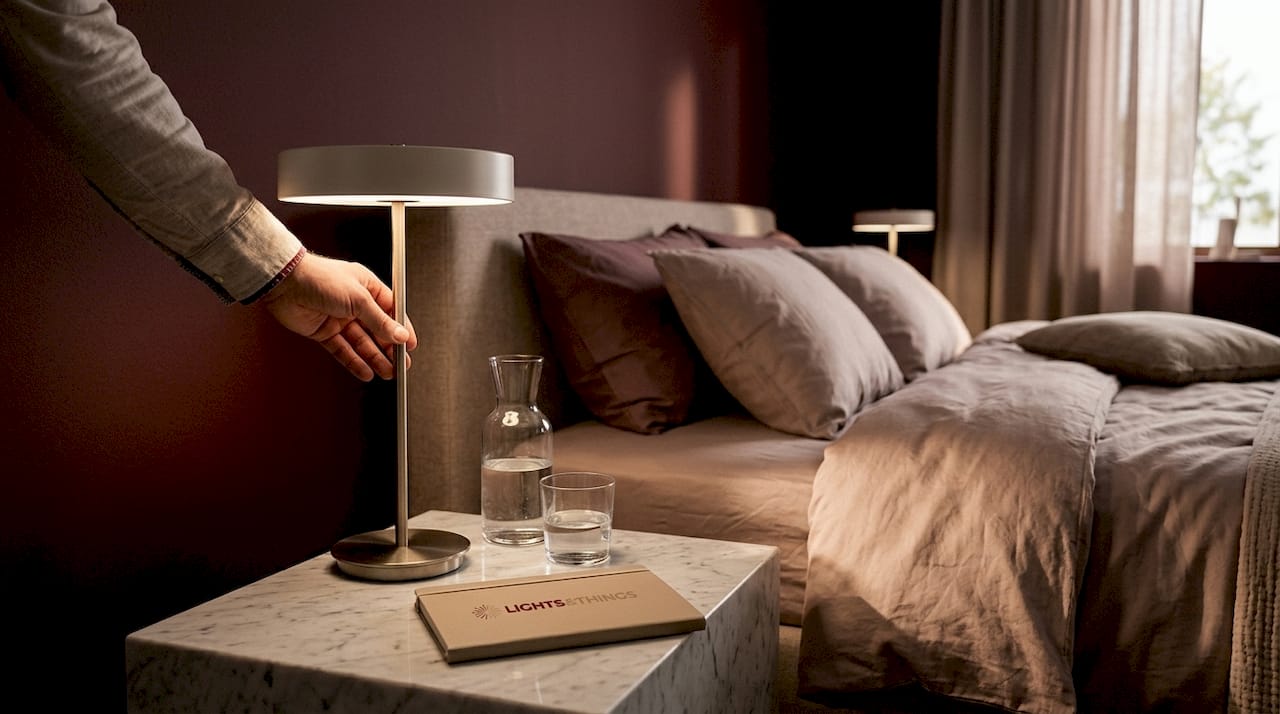
Width matters just as much as height. A lamp’s base should not exceed one-third of the nightstand’s width. Exceed that ratio and the lamp crowds the surface and throws the visual balance off. Stay within it and the lamp looks intentional, like it belongs.
Overhead fixtures follow their own sizing logic. A chandelier’s diameter in inches roughly equals the sum of the room’s length and width in feet. For a 12-by-14-foot bedroom, that means a fixture around 26 inches wide. A central pendant or chandelier should hang 30–36 inches above the mattress to serve as a visual anchor without cutting into headspace.
- Bedside lamps: 24–30 inches tall, base no wider than one-third of the nightstand
- Pendants and chandeliers: hang 30–36 inches above the mattress surface
- Chandelier diameter: add room length and width in feet, convert to inches
- Light source position: near shoulder height when seated in bed
Pro Tip: If your nightstand is narrow, consider a wall-mounted swing-arm sconce instead of a table lamp. It frees up surface space and still hits the correct light-source height.
How does layering ambient, task, and accent lighting create cohesive bedroom anchors?
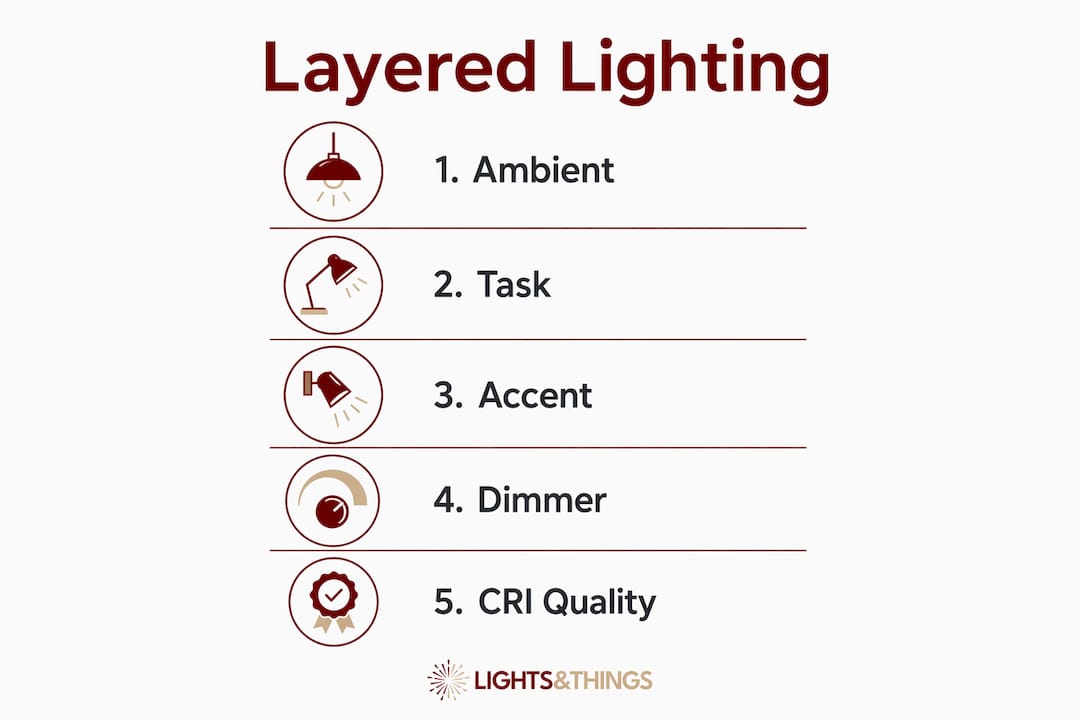
Layered lighting uses ambient, task, and accent fixtures together to create distinct zones of light that make a bedroom feel curated rather than flat. Each layer serves a different purpose, and premium lamps are the tools that deliver all three.
- Ambient lighting provides the room’s base illumination. A central ceiling fixture, a chandelier, or a large pendant lamp fills this role. It sets the overall brightness level and establishes the room’s mood from the moment you walk in.
- Task lighting serves a specific function. Bedside table lamps and wall sconces fall into this category. They deliver focused light for reading, getting dressed, or working without flooding the entire room.
- Accent lighting adds depth and drama. Floor lamps positioned behind a headboard, uplighting in a corner, or a lamp placed near a piece of art draws the eye and creates spatial dimension.
Symmetry is one of the most effective tools in this layered approach. Matching table lamps or identical wall sconces flanking the bed create balance and a sense of permanence that anchors the entire room. The effect reads as deliberate and luxurious, even in a modestly furnished space.
Bulb choice ties the layers together. A color temperature of 2700K–3000K produces the soft, warm glow associated with high-end hotels. Temperatures above 3500K shift toward a clinical, unwelcoming light that works against the bedroom’s purpose. For brightness, bedside reading lamps perform best at 450–800 lumens, while mood lamps work best at 200–400 lumens.
“Moving away from a single overhead light source toward balanced, layered lighting is the single most effective change you can make to anchor a bedroom’s design. One ceiling fixture cannot do what three well-placed premium lamps can.”
Dimmer switches make layered lighting practical. They let you shift from bright task light to low ambient glow without changing a single fixture. Independent controls for each layer give you full command over the room’s atmosphere at any time of day.
Pro Tip: Use bulbs with a CRI of 90 or higher. High CRI bulbs render bedding textures, wood tones, and wall colors accurately, which makes every premium fixture look its best.
What lamp styles and material choices best contribute to premium bedroom anchors?
Style alignment between a lamp and its architectural context is what separates a well-designed bedroom from a merely well-lit one. A sculptural brass table lamp reads as intentional in a mid-century modern room. That same lamp in a traditional bedroom with crown molding and upholstered panels creates visual tension. Matching fixture style to room architecture is not a preference. It is a design rule.
Shade material controls how light behaves in the room. Linen and cotton shades diffuse light softly, spreading a warm glow across a wider area. Metal and glass shades direct light downward or outward with more precision, which suits task-focused fixtures. The shade you choose determines whether a lamp anchors through atmosphere or through function.
Metal finishes are the connective tissue of a premium bedroom. Brushed brass, matte black, polished nickel, and antique bronze each carry a distinct visual weight. Repeating one finish across multiple fixtures, including lamp bases, cabinet hardware, and curtain rods, creates the cohesion that makes a room feel designed rather than assembled.
| Lamp style | Best room context | Shade material | Finish options |
|---|---|---|---|
| Sculptural/organic | Contemporary, eclectic | Linen, frosted glass | Brass, matte black |
| Column/urn base | Traditional, transitional | Cotton, pleated fabric | Antique bronze, nickel |
| Geometric/angular | Mid-century modern | Metal, glass | Brushed brass, chrome |
| Crystal/glam | Hollywood Regency, glam | Glass, acrylic | Polished chrome, gold |
- Coordinate finishes across all metal elements in the room, not just lamps
- Match shade opacity to the layer the lamp serves: diffuse for ambient, focused for task
- Scale the base to the surface it sits on, using the one-third width rule as a guide
- Choose bedroom lamp styles that reflect the room’s dominant architectural lines
The quality of the lamp itself signals premium status. A heavy ceramic base, a hand-blown glass shade, or a precision-cast metal column communicates craftsmanship in a way that a lightweight alternative cannot. That material quality is part of what makes a lamp an anchor rather than just a light source.
How can homeowners apply premium lamps to anchor bedrooms practically?
Small bedrooms require a different approach than large ones, but the anchoring principle stays the same. The goal is always to create visual weight and light layering without crowding the space. Swing-arm wall sconces solve the small-bedroom problem directly. They mount to the wall beside the bed, free up the nightstand entirely, and draw the eye upward, which makes the room feel taller and more open.
Pendant lamps hung from the ceiling on either side of the bed achieve the same spatial effect. They deliver task lighting at the correct height while keeping the floor and surface areas clear. This approach works especially well in rooms where nightstands are small or absent.
Floor lamps anchor reading nooks and seating areas with the same logic. A well-placed arc floor lamp beside an armchair creates a defined zone within the bedroom, giving the room a sense of purpose beyond sleeping. That zone becomes a visual anchor in its own right.
- Small bedrooms: use wall sconces or pendant lamps to preserve nightstand space
- Reading nooks: place a floor lamp beside seating to define the zone
- Symmetry: match lamps on both sides of the bed for a balanced, anchored look
- Asymmetry: use one statement floor lamp and one sconce for a more personal, editorial feel
- Smart controls: install dimmers on each circuit independently so you can adjust each layer separately
Symmetry is the default for good reason. Matching lamps on both sides of the bed create order and calm, which suits a bedroom’s function. Asymmetry, using one tall floor lamp on one side and a wall sconce on the other, works when you want a more personal or editorial feel. Both approaches anchor the room when the fixtures are proportional and the finishes coordinate.
Pro Tip: Run each lighting layer on its own dimmer switch. Being able to lower the bedside lamps independently of the overhead fixture gives you precise control over the room’s mood at any hour.
Key Takeaways
Premium lamps anchor bedrooms most effectively when sizing, layering, style, and material choices all work together toward a single cohesive design.
| Point | Details |
|---|---|
| Size to proportion | Bedside lamps should stand 24–30 inches tall with bases no wider than one-third of the nightstand. |
| Layer all three types | Combine ambient, task, and accent fixtures to create depth and define zones within the bedroom. |
| Match style to architecture | Align lamp style and finish with the room’s dominant design language for a cohesive anchored look. |
| Use warm bulbs | Bulbs at 2700K–3000K with CRI 90+ deliver the warm, accurate light that premium fixtures demand. |
| Control each layer | Independent dimmers on each circuit let you shift the room’s mood without changing any fixture. |
Why I stopped trusting single-source bedroom lighting
After years of advising homeowners on lighting decisions, the most common mistake I see is also the most avoidable. People install one ceiling fixture, usually a flush-mount or a basic pendant, and expect it to do everything. It never does. A single overhead source flattens the room, washes out texture, and creates harsh shadows that make even beautiful furniture look ordinary.
The shift that changes everything is committing to at least three light sources in a bedroom. Not three ceiling fixtures. Three distinct layers: one overhead anchor, two bedside sources, and at least one accent lamp. That combination creates the depth that makes a room feel designed. I have seen it work in a 200-square-foot studio and in a 600-square-foot primary suite. The principle scales.
What I find most homeowners underestimate is the impact of the lamp itself as a decorative object. A premium lamp is visible during the day, even when it is off. A sculptural ceramic base or a hand-blown glass shade contributes to the room’s aesthetic around the clock. That daytime presence is part of what makes it an anchor. Cheap lamps disappear. Quality lamps hold the room together.
My honest recommendation: invest more in two great bedside lamps than in one expensive ceiling fixture. The bedside lamps are the ones you interact with every morning and every night. They set the tone for the room more than any other single element. Get those right first, then build the rest of the layers around them.
— Norm Blain
LightsThings has the premium lamps your bedroom needs
Choosing the right lamps becomes much easier when you can see the full range of options in one place.

LightsThings carries a curated selection of decorative premium lighting that covers every layer of bedroom design, from sculptural table lamps and arc floor lamps to statement chandeliers sized for residential bedrooms. The floor and table lamp collection includes pieces that work as both functional fixtures and decorative anchors, with finishes and styles that span contemporary, traditional, and glam aesthetics. Every order comes with free shipping above the threshold, easy returns, and financing options, so investing in quality lighting is straightforward. Browse the full collection and find the fixtures that will anchor your bedroom the way it deserves.
FAQ
What height should a bedroom table lamp be?
A bedroom table lamp should stand 24–30 inches tall, with the light source positioned near shoulder height when you are seated in bed. That height delivers effective task lighting without creating glare.
How many lamps does a bedroom need to feel anchored?
A bedroom needs at least three light sources to feel anchored: one overhead ambient fixture, two bedside task lamps or sconces, and at least one accent lamp. This layered approach creates depth and visual cohesion.
What bulb color temperature works best for bedrooms?
Bulbs in the 2700K–3000K range produce the warm, relaxed light that suits bedrooms. Temperatures above 3500K create a harsher, more clinical atmosphere that works against rest and comfort.
How do I size a chandelier for a bedroom?
Add the room’s length and width in feet, then convert that number to inches. A 12-by-14-foot bedroom calls for a chandelier roughly 26 inches in diameter, hung 30–36 inches above the mattress.
Can wall sconces replace bedside table lamps?
Wall sconces are a direct replacement for bedside table lamps and often a better choice in small bedrooms. Swing-arm sconces free up nightstand space and draw the eye upward, making the room feel larger.