Ceiling light types are categorized fixtures designed to provide ambient, task, or accent lighting based on room size, ceiling height, and intended use. The main residential types include flush mounts, semi-flush mounts, chandeliers, pendants, recessed downlights, track lighting, and wall sconces. Each fixture serves a distinct role, and ceiling light types explained correctly means understanding not just what a fixture looks like, but where it belongs and what it does for a room. Choosing the wrong type creates both functional and aesthetic problems. Getting it right makes a space feel intentional, balanced, and genuinely comfortable.
What are the main ceiling light types and their defining features?
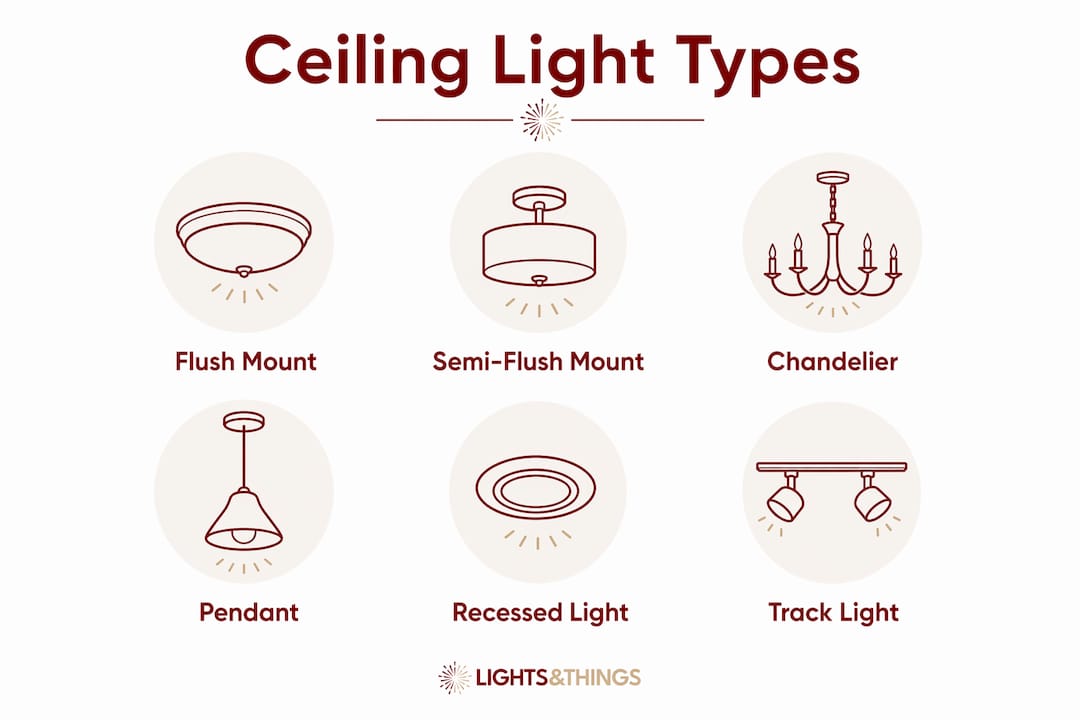
The seven core ceiling fixture types each have a specific shape, mounting style, and lighting purpose. Knowing the difference between them is the foundation of any good lighting plan.
-
Flush mounts sit directly against the ceiling with no gap. They work best in rooms with ceilings under 8 feet, such as bedrooms, bathrooms, and hallways, where headroom is limited and a hanging fixture would feel cramped.
-
Semi-flush mounts drop a few inches below the ceiling on a short stem. That small gap improves light spread and adds visual interest without requiring the ceiling height of a chandelier.
-
Chandeliers are decorative fixtures with multiple arms or tiers, designed to anchor a room visually. They work best in dining rooms, entryways, and living rooms with ceilings at 9 feet or higher.
-
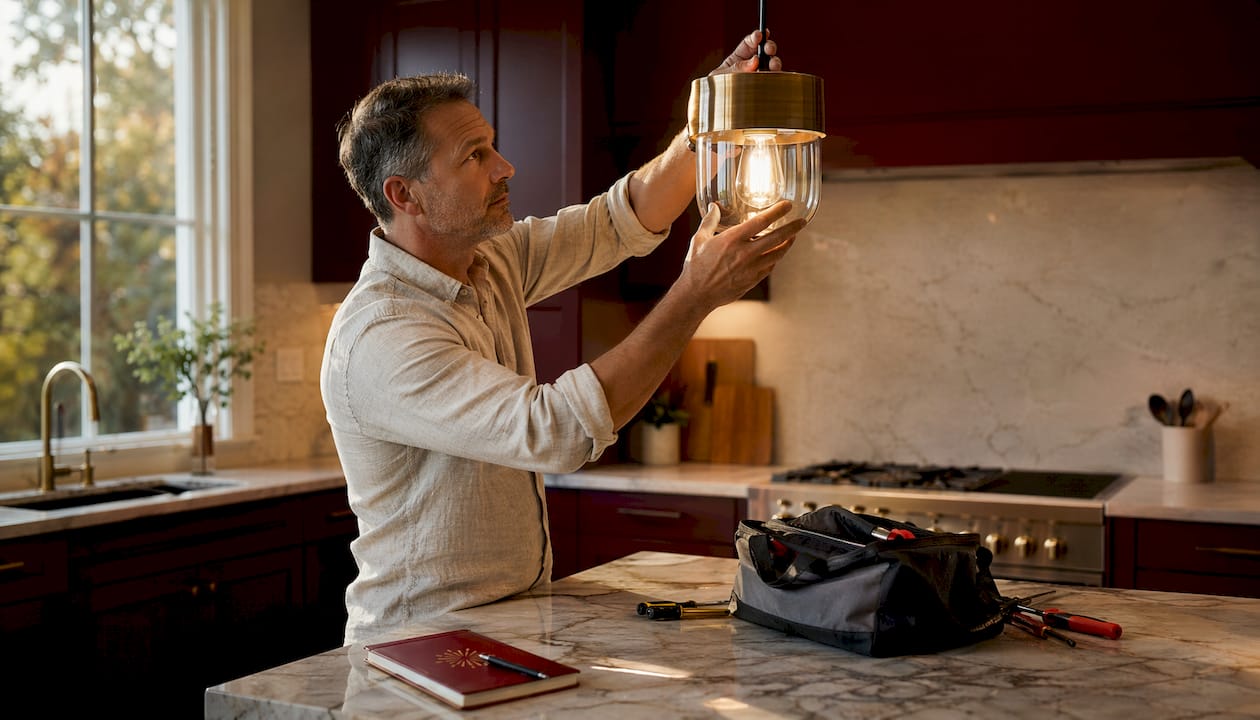
Pendants are single light sources that hang from a cord, rod, or chain. They deliver downward-focused task lighting and are a natural fit above kitchen islands, dining tables, and reception counters.
-
Recessed downlights (also called pot lights or can lights) sit flush inside the ceiling. They create a clean, uncluttered look and provide broad ambient coverage, though they work best when combined with other fixture types.
-
Track lighting mounts on an electrified track, with individual heads that reposition without rewiring. This makes it ideal for kitchens, studios, and accent lighting where you need directional flexibility.
-
Wall sconces mount on walls rather than the ceiling. They add layered light at eye level, which creates depth and warmth that ceiling fixtures alone cannot replicate.
Pro Tip: When shopping for a fixture, identify the primary job it needs to do first. Ambient coverage, task focus, and decorative impact each point to a different fixture type before style even enters the conversation.
How does ceiling height affect the choice of ceiling light type?
Ceiling height is the single most important factor in fixture selection. The wrong fixture for a given ceiling height either overwhelms the room or disappears into it.
Flush mounts suit ceilings under 8 feet. Semi-flush mounts work well in the 8–9 foot range, where a small drop adds style without creating a hazard. Chandeliers and pendants belong in rooms with 9-foot ceilings or higher, where their drop length can be adjusted to hang at the right visual level without crowding the space.
| Fixture type | Ideal ceiling height | Common rooms |
|---|---|---|
| Flush mount | Under 8 feet | Bedroom, bathroom, hallway |
| Semi-flush mount | 8–9 feet | Living room, kitchen, office |
| Chandelier | 9 feet and above | Dining room, entryway, great room |
| Pendant | 9 feet and above | Kitchen island, dining table |
| Recessed downlight | Any height | Kitchen, living room, hallway |
| Track lighting | Any height | Kitchen, studio, gallery wall |
Matching fixture scale to room volume prevents the most common lighting mistakes. A large chandelier in a low-ceilinged room feels oppressive. A small pendant in a double-height entryway looks lost. Both problems reduce the room’s visual harmony and the fixture’s practical effectiveness.
Pro Tip: For dining rooms with ceilings above 9 feet, read up on chandelier sizing by room before purchasing. A fixture that is too narrow for the table below it will look out of proportion regardless of how beautiful it is on its own.
What are the roles of ambient, task, and accent lighting in ceiling light design?
Every ceiling fixture falls into one of three lighting categories: ambient, task, or accent. Understanding these roles helps you build a lighting plan that actually works for how you live.
Ambient lighting is the general, room-wide illumination that replaces natural light when the sun goes down. Flush mounts, semi-flush mounts, and chandeliers are the primary ambient sources in most residential rooms. They spread light broadly and set the overall brightness level for the space.
Task lighting focuses on a specific work area. Pendants above a kitchen island, recessed downlights over a bathroom vanity, and track heads aimed at a desk all qualify as task lighting. The goal is concentrated, shadow-free light where you need to see clearly.
Accent lighting draws attention to something specific, such as artwork, a textured wall, or an architectural feature. Track lighting and directional recessed fixtures handle accent work well because their heads can be aimed precisely.
The most effective rooms use all three categories together. Layered lighting combining ambient fixtures with task and accent sources creates spaces that feel flexible and inviting rather than flat. A living room with only a central flush mount is functional but dull. Add recessed downlights near the bookshelves and a wall sconce beside the sofa, and the same room gains warmth, depth, and visual interest.
Wall sconces add depth at eye level, which is a quality that ceiling fixtures simply cannot replicate. In narrow hallways or small bedrooms where floor lamps are impractical, sconces deliver layered light without consuming any floor space.
How to layer and position ceiling lights for effective and stylish lighting
Layering is the practice of combining multiple fixture types so that no single source carries the entire load. Rooms lit by a single overhead fixture tend to feel institutional. Rooms with layered lighting feel curated and comfortable.
Here is a practical approach to building a layered ceiling light plan:
-
Start with ambient coverage. Choose a central fixture, whether a chandelier, semi-flush mount, or flush mount, based on ceiling height. This sets the baseline brightness for the room.
-
Add task lighting where you work. Pendants above an island, recessed downlights over a vanity, or track heads aimed at a desk all serve this purpose. Position them directly above or in front of the work surface.
-
Space recessed lights by ceiling height. A widely used spacing formula places recessed pot lights roughly half the ceiling height apart. In a room with 9-foot ceilings, that means spacing fixtures approximately 4–4.5 feet apart for even coverage without hot spots.
-
Layer in accent lighting. Aim track heads or adjustable recessed fixtures at artwork, shelving, or architectural details. This step adds the visual richness that separates a well-designed room from a simply lit one.
-
Finish with wall sconces. Place them at roughly 60 inches from the floor for the most flattering and functional eye-level light. They add warmth and reduce the harsh shadows that overhead-only lighting creates.
For vaulted or uneven ceilings, adjust pendant drop lengths so the fixture hangs at the same visual height as it would in a standard room. A pendant that hangs too high on a vaulted ceiling loses its connection to the furniture below it. For a deeper look at designing ceiling lighting across different room types, the principles of proportion and layering apply consistently regardless of ceiling shape.
Pro Tip: Install dimmer switches for every ambient circuit. Dimmers let you shift the same layered setup from bright and practical to warm and relaxed without changing a single fixture.
Key takeaways
Choosing the right ceiling light type comes down to matching fixture style and scale to ceiling height, room function, and a layered lighting plan that combines ambient, task, and accent sources.
| Point | Details |
|---|---|
| Match fixture to ceiling height | Flush mounts for under 8 feet, semi-flush for 8–9 feet, chandeliers and pendants for 9 feet and above. |
| Use all three lighting categories | Combine ambient, task, and accent fixtures to create a flexible, well-balanced room. |
| Space recessed lights correctly | Place pot lights roughly half the ceiling height apart for even, shadow-free coverage. |
| Add wall sconces for depth | Sconces at 60 inches deliver eye-level warmth that ceiling fixtures alone cannot provide. |
| Scale matters as much as style | A fixture that is the wrong size for the room will underperform regardless of how attractive it is. |
What I’ve learned from watching homeowners get ceiling lighting wrong
The most common mistake I see is treating recessed downlights as a complete lighting solution. Relying solely on recessed lighting produces flat, shadowless rooms that feel more like an office corridor than a home. Recessed lights are excellent as part of a layered plan. They are poor substitutes for the warmth and dimension that pendants, sconces, and statement fixtures bring.
The second mistake is underestimating how much ceiling height governs fixture choice. Homeowners often fall in love with a chandelier online, purchase it, and then discover it overwhelms their 8-foot dining room. Fixture scale relative to room volume is not a stylistic preference. It is a functional requirement. A fixture that is too large or drops too low creates a safety issue and makes the room feel smaller.
My honest advice: before you buy anything, confirm your ceiling height, identify the junction box location, and check the box’s weight rating. Chandeliers and heavy pendants require a rated junction box, and many older homes have boxes that cannot support them. A licensed electrician can verify this in under an hour, and that conversation will save you from a costly return or a dangerous installation.
The last thing I want homeowners to overlook is the aesthetic role of the fixture itself. A ceiling light is not just a light source. It is a piece of furniture that you see every time you enter the room. Choosing a fixture that fits the room’s style, not just its dimensions, is what makes a space feel finished rather than assembled.
— Norm Blain
Ceiling light collections worth exploring at LightsThings
LightsThings carries a wide range of ceiling light fixtures spanning flush mounts, semi-flush mounts, chandeliers, and pendants, with options suited to every ceiling height and room type. Whether you are outfitting a low-ceilinged bedroom or a double-height entryway, the catalog includes fixtures that balance proportion, style, and function.
The decorative lighting collection includes statement chandeliers and pendants designed to anchor a room visually while delivering genuine illumination. LightsThings also offers free shipping thresholds, easy returns, and financing, so you can invest in the right fixture without compromise. Browse the full ceiling lighting range and use the buying guides on the blog to match any fixture to your specific ceiling height and room dimensions.
FAQ
What are the main types of ceiling lights?
The main ceiling light types are flush mounts, semi-flush mounts, chandeliers, pendants, recessed downlights, track lighting, and wall sconces. Each type suits a different ceiling height and lighting purpose.
What ceiling height do I need for a chandelier?
Chandeliers work best in rooms with ceilings at 9 feet or higher. In lower ceilings, a semi-flush mount or flush mount is the safer and more proportional choice.
How far apart should recessed lights be spaced?
Space recessed pot lights roughly half the ceiling height apart. In a room with 9-foot ceilings, that means approximately 4–4.5 feet between fixtures for even coverage.
Can I use only recessed lights in a room?
Recessed downlights alone produce flat, shadowless lighting that lacks warmth. Layering them with pendants, a central fixture, or wall sconces creates a more comfortable and visually appealing result.
What is the difference between ambient and task lighting?
Ambient lighting provides general room-wide illumination, while task lighting focuses on a specific work area like a kitchen island or desk. Most well-lit rooms use both, along with accent lighting, to create a balanced and flexible space.